Indiana to receive at least $300M in settlement with Meta
Aug 26, 2026 | 11:11 am ET

Description
Meta Platforms, Inc. is paying billions to settle nationwide suit over social media harms to youth. (Photo Illustration by Justin Sullivan/Getty Images)
Indiana will receive a guaranteed $296 million — and up to $419 million — as part of a landmark $17.1 billion settlement with Meta Platforms, Inc.
The settlement resolves allegations that the company knowingly designed and deployed harmful features on its social media platforms intended to addict children and teens, as well as claims by 47 states and four territories.
Attorney General Todd Rokita submitted the settlement agreement in Indiana’s joint lawsuit against Meta in the Northern District of California. Subject to the federal court’s approval, a consent judgment will be entered.
“This settlement is a milestone victory for Hoosier families,” Rokita said in a statement. “For years, Meta prioritized engagement and profits over the mental health and well-being of our children. Today, we are securing both meaningful accountability and concrete changes that will help protect the next generation. Parents will finally have stronger tools, including opting their teens out of algorithm-driven scrolling designed to keep them hooked.”
As a parent, I'm proud of both the work Meta has done to protect kids historically, and of this new groundbreaking agreement. But its success depends on all other social media platforms following Meta’s lead.
Rokita’s office said the agreement marks one of the largest state consumer protection settlements in history outside the Big Tobacco settlements of the 1990s.
In addition to the payment, Meta must implement a sweeping set of safety features designed to protect children on Instagram and Facebook.
Beginning in 2021, nearly every attorney general in the country cooperated to investigate the social media industry for designing and promoting platforms to children and teens despite known harms. After a bipartisan nationwide investigation found that Meta designed Instagram’s features to addict children — while internally documenting the resulting mental health harms and failing to warn parents — attorneys general across the country sued the company.
The agreement requires Meta to implement changes to Facebook and Instagram to protect teens in states that join the settlement.
The release said key provisions include:
- Hard cap daily time limits and “productive pauses” for children: For its two platforms, Instagram and Facebook, a combined two-hour daily time limit with mandatory pauses after 15 minutes of continuous use and again at 60 and 90 minutes to interrupt endless scrolling. These limits remain in effect for five years. If Snapchat, TikTok, and YouTube adopt comparable terms, the daily limit on each platform will drop to 60 minutes for 10 years;
- “Nighttime blocks” restricting children’s access from 12:00 a.m. to 6:00 a.m.;
- Limited school-time access for children, eliminating push notifications on weekdays from 8:00 a.m. to 3:00 p.m. during the school year;
- Robust age assurance measures to more effectively verify the age of young users;
- Safer, age-appropriate content controls, including stronger safeguards against bullying, content promoting eating disorders, and content related to suicide and self-harm;
- Stronger, more user-friendly parental controls;
- Limits on social comparison features, including beauty filters and visible “like” counts, that have been linked to poor mental health outcomes in kids and teens.
“The framework we’ve negotiated will empower parents to easily manage how their children access our platforms. Our new Time Limit commitments, Night Mode features and usage limits during school hours set the right path forward for our whole industry, but this framework will only work if all our peers join us,” Meta’s chief legal officer C.J. Mahoney said in a statement.
“Because teens move fluidly across dozens of apps, we need an industry-wide solution. We therefore call on our industry peers, TikTok and YouTube, to implement this new framework, right away,” Mahoney continued. “As a parent, I’m proud of both the work Meta has done to protect kids historically, and of this new groundbreaking agreement. But its success depends on all other social media platforms following Meta’s lead.”
Rokita called the changes groundbreaking.
“They are designed to reduce compulsive use, mitigate risks of anxiety, depression, disordered eating, sleep disruption, and other documented harms, and give parents greater ability to supervise their children’s online activity,” he said.
The settlement equips Indiana to confront the documented harms social media platforms inflicted on children and young adults, giving the state resources to support affected Hoosier families while continuing to partner with other states on lasting protections, Rokita added.
The settlement also resolves the states’ claims against Meta for its sharing of nonpublic information about Facebook users with third parties, like Cambridge Analytica, leading up to the 2016 election.
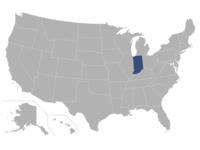
Indianapolis, IN