Off-site renewable projects will contribute more to infrastructure costs under latest reform
Aug 26, 2026 | 1:08 pm ET
Description
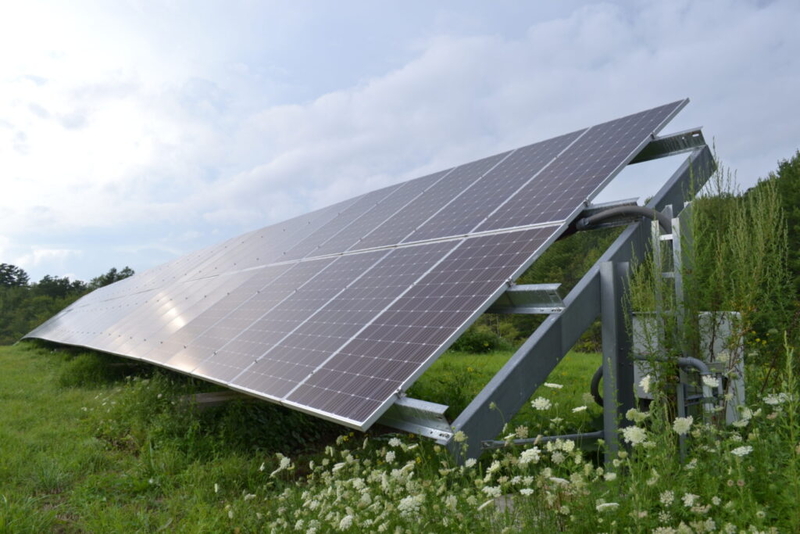
Solar panels in Damariscotta, Maine. (Photo by Evan Houk/ Maine Morning Star)
In the latest regulatory reform to Maine’s renewable energy landscape, the Public Utilities Commission has finalized the details of a new fee for larger, off-site renewable energy installations.
Last year, the Legislature passed a law to reform the state’s net energy billing program, which is designed to encourage renewable energy projects by offering customers credits to offset their power bills.
That law made it so projects that produce energy off-site are no longer eligible for the credit and created a new fee for those so-called front-of-the-meter projects, which typically involve larger scale installations like community solar. After months of discussions, the commission has finalized a formula to determine how any increases or decreases to that new project fee should be calculated.
Public Advocate Heather Sanborn said in recent years as power transmission and distribution costs have increased, owners of those front-of-the-meter projects have collected more profits, without having to pay for the infrastructure.
“The Legislature needed to find a mechanism to make sure that those dollars — that weren’t being paid for the distribution and transmission system — were not just going into the pockets of the solar owners, but instead there was a balance there,” Sanborn said.
The project charge is meant to collect some of that money from installation owners, and put it towards infrastructure maintenance and improvements — costs that would otherwise have to be paid by ratepayers.
“So it’s directly credited to all the other ratepayers who would otherwise have to pick up that tab on the grid without the contribution from the solar owner,” Sanborn said.
At their meeting Tuesday, commissioners focused on the question of how to evaluate the value of a given project. All three commissioners said they had closely scrutinized the issue.
“This was an incredibly close call for me, and I have gone round and round and round and round in my head on this one,” said Commissioner Carolyn Gilbert.
But the commission ultimately sided with the Office of the Public Advocate over the initial recommendation from commission staff.
The Legislature set the initial levels for the new fee, which are based on how much energy is produced by a project, and project owners began paying the charge earlier this year. The new formula will take effect in January, and will determine if that fee will change.
Because the charge is paid by the project owner, it isn’t something that ratepayers will see on their bills.
The law also directed the Department of Energy Resources to design a new program to encourage the development of front-of-the-meter projects, now that they are no longer eligible for net energy billing. The department has until the end of September to complete that proposal, which will go before the commission for approval.
In 2019, net energy billing was expanded to include renewable energy generators located outside of their property but within the same utility service territory, such as a community solar project. But that led to ballooning costs for the program, and prompted the Legislature to amend the program, and ultimately exclude front-of-the-meter projects.

Augusta, ME