There will be no new statewide ballot questions this year. But not for a lack of trying.
Aug 26, 2026 | 8:14 am ET
Description
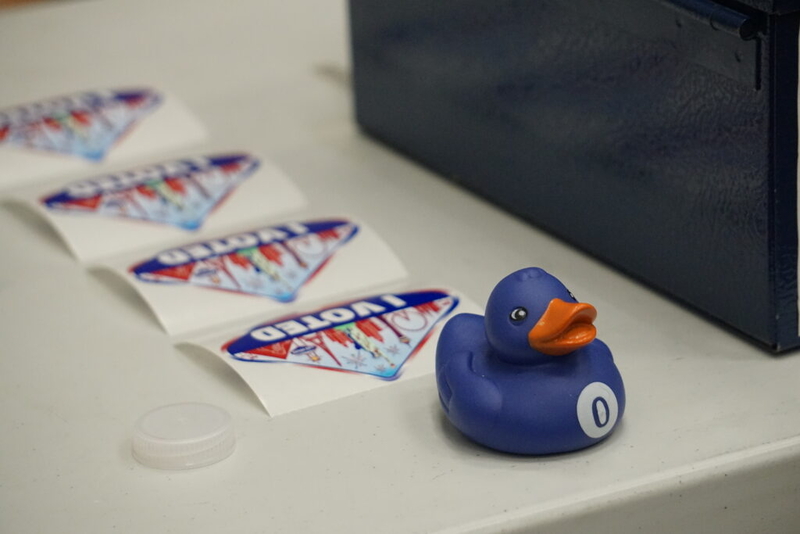
Lawsuits, signature gathering hurdles, or a mixture of both thwarted several initiatives from making it to the Nevada 2026 ballot. (Photo: Jeniffer Solis/Nevada Current)
Nevada’s general election ballot this November will only feature two statewide questions, both returning measures from 2024. Three political action committees attempted to qualify six new proposed constitutional amendments, but those efforts were thwarted by lawsuits, signature gathering hurdles, or a mixture of both.
Two is the lowest number of ballot questions since 2012, according to Ballotpedia. The average number of ballot questions to appear on a Nevada ballot is four. In 2024, there were seven questions.
This year’s two statewide ballot questions are Question 6, known as the Right to Abortion Initiative, and Question 7, known as the Require Voter Identification Initiative. Both are proposed constitutional amendments that were approved by voters in 2024 but need to be approved a second time to go into effect.
The ballot questions that could have been focused on trans children, experimental medical treatments, independent redistricting, and voting rights.
The Gov. Joe Lombardo-backed Protect Girls’ Sports PAC proposed amending the state constitution to ban trans girls from competing in sport divisions that reflect their gender identity. Their measure was challenged in court by the National Organization for Women (NOW).
A judge’s ruling, which was in the PAC’s favor, came down in mid-June, just days ahead of the state deadline for submitting signatures. Lombardo announced the question would not make it to the ballot, saying in a statement that “legal delays and uncertainty surrounding this case have made it impossible to complete the initiative process in time for the 2026 ballot.”
Freedom to Try Medical Innovations for Nevada proposed a constitutional amendment designed to establish the Silver State as a safe haven for medical treatments not approved by the U.S. Food and Drug Administration (FDA). The group did not submit signatures by the deadline, according to the Nevada Secretary of State website.
Organizers of both efforts could not be reached for comment but have continued their respective pushes outside the direct democracy process. Freedom to Try participated in the libertarian convention Freedom Fest, and Lombardo has called on the Legislature to take action when it meets early next year.
The other four failed proposals were all filed by Vote Nevada PAC, a group run by Sondra Cosgrove and Doug Goodman, two longtime advocates for statewide election reform.
The first proposed establishing an independent redistricting commission. The second proposed altering the state’s existing Voter Bill of Rights to include language intended to force the two major political parties to open their primaries.
The redistricting commission proposal was successfully challenged in court by lawyers affiliated with the Democratic party. A judge found that the proposal was invalid because it created a new government body without a mechanism of funding it.
Vote Nevada said they disagreed with the ruling but lacked the funds to challenge it. They instead responded by filing two additional proposals — one to add language about nonpartisan representation in redistricting into the Voters Bill of Rights and one intended to overturn the “unfunded mandate” issue that had tanked their first question.
Both issues registered with voters, particularly young nonpartisan ones, according to Cosgrove, but volunteers struggled to collect physical signatures.
“As soon as we pulled out the paper, it was, ‘I’m not putting my name and address down. What are you going to do with it?” she recalled. “One person said to me, ‘Are you going to fraudulently vote in my name?’”
Cosgrove believes the discourse on voter identification and signature verification are bleeding into the petition initiative process: “Everyone’s paranoid. I get it.”
Vote Nevada would also file an initiative petition to amend state law to allow voters to digitally sign petitions using the same secure online system used for online voter registration. They withdrew their petition after it was challenged in court by the Las Vegas Chamber-affiliated BizPAC, again citing a lack of funds for a legal defense.
“Because heaven forbid a citizen be able to run a ballot initiative,” Cosgrove quipped in an announcement of the withdrawal of their electronic signature proposal.
’The burden is too high’
To qualify a question for the ballot, PACs must file a notice with the Nevada Secretary of State’s Office. Opponents can then challenge the ballot measure in court, arguing that the wording of the proposed question is confusing or breaks the state’s laws regarding questions sticking to a single subject or creating an unfunded mandate.
If a ballot measure can survive its legal challenges, organizers must submit at least 148,788 signatures — evenly divided between the state’s four congressional districts. That’s equivalent to 10% of the last presidential election year turnout.
All of that costs money. A lot of it.
“Unless you have a large national organization with lots of money backing you, it’s almost impossible to be able to overcome the challenges that come along with filing a ballot initiative,” said Erin Phillips, whose nonprofit Power 2 Parent unsuccessfully attempted to qualify a pair of ballot initiatives four years ago.
Phillips’ proposed ballot questions sought to establish a school voucher program in the state. They were deemed unconstitutional by the Nevada Supreme Court. Phillips believes the Nevada Supreme Court decision was driven by political factors more than legal ones.
It was a disappointing journey for organizers who felt confident that voters, if given the chance, would signal support for a school voucher program.
“The polling was extraordinarily on our side,” she recalls. “Those numbers were high 70s, low 80% across political lines. This wasn’t a political topic for the majority of the people that were being polled in Nevada.”
But the issue is highly politicized in the Legislature.
Cosgrove feels the same about her proposed election reforms.
She adds that she has been talking to state lawmakers about sponsoring bills that mirror Vote Nevada’s independent redistricting and open primary proposals. While she is hopeful, she is also realistic about the hurdles that come with attempting to make it through the legislative process.
Individual lawmakers support the ideas but must consider their entire slate of bills and often fear retaliation if they pitch something they know leadership doesn’t approve. Democrats and Republicans have both fought changes to the state’s election systems, and the political industrial complex as a whole has incentive to keep direct democracy at bay.
Both Cosgrove and Phillips acknowledge that it is seen as easier to get a question onto Nevada’s ballot than in other states. But they think some improvements to the process need to be explored.
“The burden is too high,” said Phillips. “I think that people should be able to do direct democracy… I think we would really get a better view of what the people wanted.”
“When it comes to checks and balances the people are supposed to be a check,” Cosgrove said. “Not just through voting but through the ballot petition process. If the government is not being responsive to the will of the majority, we can test that out.”
’The antithesis of democracy’
Nevada’s proposed ballot measures tend to die in courtrooms or because organizers don’t have the money to hire professional signature-gathering firms. But Republican lawmakers in some red states are actively making it more difficult to pass state constitutional amendments.
Voters in North Dakota, South Dakota, and Utah are being asked to raise the threshold for approving state constitutional amendments to 60% rather than a simple majority.
Quentin Savwoir, the director of programs and strategy at the Ballot Initiative Strategy Center, which tracks direct democracy efforts nationwide, calls the moves a troubling trend and “the antithesis of democracy.”
He said it often starts as a pitch to hold off tax increases — much like in the mid-1990s when Nevada voters amended the state constitution to require a two-thirds supermajority for revenue bills. But they end up being “the test balloon” to see whether the people will accept broader restrictions that can easily escalate into additional requirements for a wider swath of statutes or constitutional changes.
In Missouri, lawmakers asked voters to approve requiring constitutional amendments to pass by a simple majority in each of the state’s congressional districts rather than a simple statewide majority. It was overwhelmingly rejected by voters — 80% voted against it.
Savwoir, who lives in Nevada, says the Silver State hasn’t seen that level of pushback, but cautions that voters should be aware.
“Healthy democracy doesn’t just happen,” he adds. “It doesn’t just show up. It requires you to be informed. Requires it beyond Election Day. It requires you to understand the mechanisms and stand up and defend those mechanisms.”
Las Vegas, NV