Tennessee Transportation finds no “red flags” in toll-lane bidder despite past problems
Aug 26, 2026 | 6:01 am ET

Description
Tennessee's facing a consistent transportation funding deficit because of a stagnant gas tax collections. (Photo: John Partipilo/Tennessee Lookout)
Tennessee Department of Transportation officials picked a road-building group to take on the state’s first toll project despite a series of bumps the consortium’s companies hit over the past decade-plus, ranging from bankruptcies to price-gouging accusations.
DriveTN’s winning bid included a $9.2 billion construction plan to build toll lanes in Nashville’s southeast interstate corridor, mainly along I-24 to Murfreesboro, with the promise to pay the state nearly $25 billion over the life of a 50-year contract.
No other bidder came close to DriveTN, which, along with its large long term payout, offered $1.5 billion up front.
Two other bidders offered about $7 billion in payment “concessions” to the state, and a fourth asked for a state subsidy to complete the project.
Transportation Commissioner Will Reid said the companies that make up DriveTN had to meet basic requirements to move on to a second phase of pre-qualifications entailing everything from financial information to the ability to deliver such a large project. In the process, the state turned up no major problems, he said.
“We would not have short-listed them had we found red flags,” Reid said.
Yet the group’s companies, which are based in Australia, Spain, France and the United States, ran into operating and financial problems over the last 10 to 20 years.
Tennessee taps road-building group for $9B toll lanes project
Tolls operated by Virginia Department of Transportation hit $40 on the second day of collections on Interstate 66 lanes from Virginia inside the Beltway of D.C. before dropping back to $24.75, then $5 before they ended that morning, according to a report on Patch. Ferrovial-Cintra, two of the companies involved with I-66 through Express Mobility Partners consortium, is part of the DriveTN group.
Reid said I-66 was one of the interstates he visited as Tennessee studied toll lanes and the concept of dynamic pricing, which is based on traffic and the need to keep motorists moving when they pay a fee.
Tennessee’s toll lanes will use the same type of pricing, based mainly on the number of vehicles paying to take express lanes.
In 2015, Virginia motorists filed a class-action lawsuit against Transurban claiming it wrongfully hit them with thousands of dollars in penalties, according to an ABC News report. One couple was charged $11,000 in accumulated fees after replacing a credit card and failing to notify E-Z Pass, which handles fees.
Ferrovial’s toll-road affiliate Cintra Holding also hit a bump in 2006 when the joint venture Cintra-Macquarie took over the Indiana Toll Road, doubled rates, then filed for Chapter 11 bankruptcy because of heavy debt, according to a U.S. Department of Transportation report. The venture, which had paid the state of Indiana $3.8 billion for 75 years of operating rights, raised questions about revenue projections and whether plans should be made for setbacks such as recessions.
North Carolina officials found themselves taking a fresh look at Spain-based Cintra after choosing it to build and run toll lanes on I-77 as one of its subsidiaries filed for bankruptcy in 2016, according to a report.
Another member of the consortium, AECOM Technical Services, paid $201 million in a court settlement because of “improper disclosure” to investors dealing with inaccurate traffic projections, another report shows.
Asked about these problems, Department of Transportation spokesperson Beth Emmons declined to address them, saying that even though Drive TN was selected as the “proposer” for the project, the department remains in an “active procurement process” and can’t give more details.
“This milestone reflects TDOT’s extensive planning, strong community engagement, and significant private sector interest. Our current focus is on verifying commitments, completing required reviews, and finalizing the agreement to ensure long-term benefits for Tennesseans,” Emmons said in a statement.
Speaking to reporters after the Tennessee Transportation Modernization Board approved the top proposal, Reid said DriveTN’s dollar figures draw the most attention because “they’re eye-popping.”
“But what is really critical about their proposal is it was also the best technically,” he said.
DriveTN’s “concession fee” is not related to the rates it will charge motorists to use the lanes but will be based on demand and the group’s 50-year revenue projections, Reid said.
Most of the toll lanes will be elevated, and DriveTN came up with ways to avoid areas such as the Pan-Asia Supermarket in the Bell Road area, Noble Place Townhomes, in addition to eliminating reconstruction of the Hickory Hollow Parkway bridge.
State officials did not give an estimate of how many homes could be affected. But the proposal gained points for reducing the impact on public rights of way.
The group also committed to incorporating park-and-ride facilities into the project and increasing connections to the toll lanes.
In addition to stretching to a point near Murfreesboro, the toll-lane project will run out I-40 East toward Nashville’s airport and along I-440.
Construction is expected to start in 2027 and take eight years to complete, though portions of the toll lanes will be ready for motorists sooner, state officials said.
Long-term, toll lanes could run through downtown Nashville, then along I-24 and I-65 toward Goodlettsville as well as farther out I-40 East toward Lebanon and through Murfreesboro.
Public hearings are set for Sept. 8 from 12:30 to 6 p.m. at Nashville Public Library Pruitt Branch and Sept. 9 from 12:30 to 6 p.m. at Smyrna Event Center.
- September 1, 202610:33 amThis story has been corrected to show Ferrovial-Cintra is involved with I-66 in Virginia through Express Mobility Partners consortium, not Transurban.
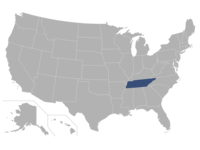
Nashville, TN