After lawsuit, Kentucky updates rule to match voter registration with out-of-state records
Aug 26, 2026 | 5:30 am ET
Description
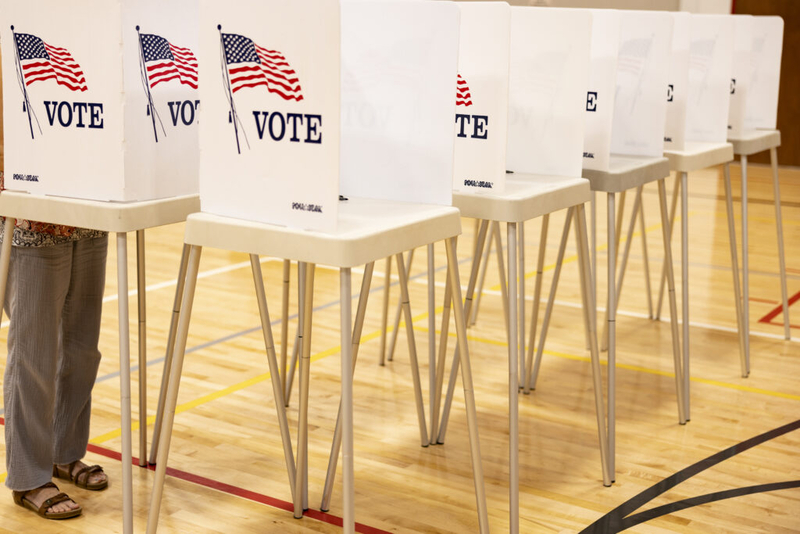
Voters should check the "write-in candidate" bubble and need not worry about remembering their chosen candidate's first name, says a spokesperson for the Kentucky secretary of state. (Austin Anthony for The Kentucky Lantern)
Kentucky election officials have created a new regulation to match Kentucky voter registration against out-of-state records following a lawsuit from Kentuckians For The Commonwealth.
KFTC withdrew the case in federal court Monday after the emergency regulation was issued. The group filed the lawsuit in 2024 against Republican Secretary of State Michael Adams and the State Board of Elections, which includes Republican and Democratic members. KFTC argued state election law, changed in response to the coronavirus pandemic and made permanent in 2021, violated the federal rules requiring registered voters who have moved to receive notice in writing to confirm their address and have time to respond before they are removed from voter rolls.
“Protecting the voting rights of Kentuckians is vital as we strive to build democracy,” Lynne Anderson, a KFTC leader from Shelby County, said in a statement. “This requirement to verify voting registrations accurately is a big win for all of us.”
A spokesperson for Adams told the Kentucky Lantern that while the regulation is new, the policy is not. The policy codifies how election officials verify ineligible voters before removing them from rolls.
“We are pleased this lawsuit was dismissed, but it never should have been brought in the first place,” Adams said. “On my watch, we require photo ID to vote and we keep our voter rolls clean.”
Taylor Brown, the general counsel for the State Board of Elections, also said the regulation reflects “the process the Board was already undertaking to comply with the existing state law.”
“The Board is pleased that Kentuckians for the Commonwealth saw the promulgation of these procedures as an efficient way to resolve their concerns,” Brown added.
KFTC was represented in the lawsuit by Jackson Cooper Law and the Fair Elections Center.
Jon Sherman, litigation director at Fair Elections Center, told the Lantern state officials “were not in compliance” with the National Voter Registration Act when it came to removing a voter to maintain voter rolls. The new regulation “will make it much much less likely that there be a false match” between Kentucky registration records and out-of-state records from when a voter has moved to another state.
Sherman said the emergency regulation, signed by Gov. Andy Beshear and State Board of Elections Executive Director Karen Sellers, immediately went into effect. Through an upcoming public comment period next month, a permanent rule mirroring this regulation would be established.
“We hope this serves as a template for resolving these issues in other states. We brought a challenge that said this law was not violating the National Voter Registration Act on its face, but as applied by Kentucky election officials,” Sherman said. “So, there are likely other states that are applying similar laws in a way that would violate the NVRA.”
Kansas recently passed a law designed to remove ineligible voters, Sherman noted. The Kansas Reflector, a sister outlet to the Lantern reported some advocates there warn could conflict with the NVRA.
“Hopefully Kansas election officials enforce it in a way that is compliant with the NVRA, but my suspicion is that they might need to be sued for the same reasons we brought suit in Kentucky,” he said.

Frankfort