Amazon changes course on water use for King George data center campus
Aug 26, 2026 | 5:25 am ET
Description
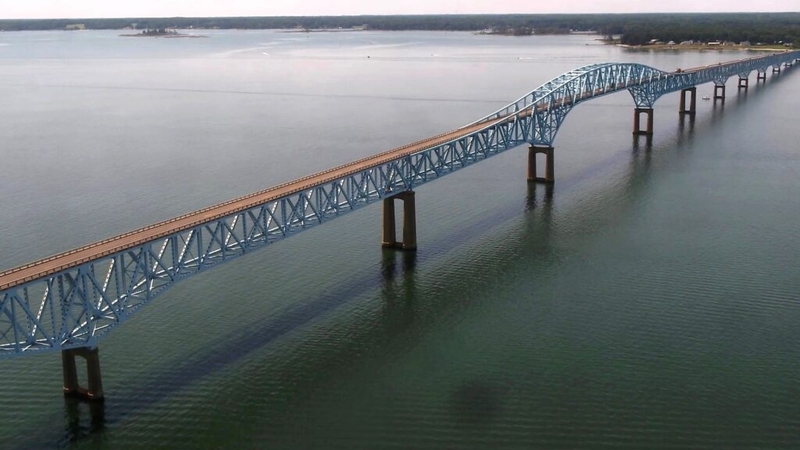
The Robert O. Norris Bridge is located over the Rappahannock River. (Courtesy of the Virginia Department of Transportation)
Amazon Web Services is changing course on how a King George data center project will get its water after an application to renew a groundwater permit allowing withdrawals of up to 6.4 million gallons annually from the Potomac aquifer raised concerns.
The tech giant is set to construct a major data center campus in the county at the Birchwood Drive tech campus that could host more than a dozen data centers across the 869-acre property.
While some of the project is currently tied up in court proceedings, an application to renew a water permit already in place for the tech campus led Sen. Richard Stuart, R-King George, to urge the Department of Environmental Quality to deny the application.
The permit would have allowed the facility to withdraw water from the aquifer that would not be used for cooling the data centers, but rather for employee use, grounds management and other purposes.
However, the application came on the heels of a DEQ report that laid out a stark warning that groundwater east of Interstate 95 is “declining (in) availability in the near future,” and that the aquifer would not be able to handle any major new permits for water withdrawals.
“They do not need to drill a well into the aquifer, particularly since we finally got my water study released, which shows us… that we’re in a critical stage with regard to the Potomac aquifer,” Stuart told The Mercury last week.
The report has led to policy discussions over how the commonwealth can preserve the Potomac aquifer, a critical water source for the eastern portion of the state.
Following the release of the eastern groundwater availability report, a group of lawmakers has called on Gov. Abigail Spanberger to convene a special session to pass legislation aimed at protecting the resource ahead of the General Assembly’s regular session in January. The governor has not publicly responded to this request.
Stuart wrote a scathing letter to DEQ noting that the department has directed the county to reduce its reliance on the aquifer and switch to surface water from the Rappahannock River as its primary source of drinking water. Stuart said allowing a massive company like Amazon to use the water instead of preserving it for human consumption should not be allowed.
“The (Virginia) Constitution guarantees the natural resources for the benefit and enjoyment of the citizens. We do not have any extra water,” Stuart said. “Why in the world would they allow Amazon to withdraw water from the aquifer and force a county of 29,000 people, a small rural county, to spend $70 to $100 million to get water from the river and require treatment?”
While 6.4 million gallons over the course of one year may seem like a lot, the permit would not have come close to cracking the top five industrial water users from the Potomac aquifer. The top two users, according to DEQ records, are the two paper mills: Global Cellulose Fibers in Franklin, which is permitted to withdraw 6.4 billion gallons annually, and WestRock CP LLC, which may use up to 6.3 billion gallons.
However, Stuart said that it did not matter that the Amazon permit would be dwarfed by other permits. He said the report shows that new withdrawals should not be considered in order to preserve drinking water for Virginians.
Amazon responded by saying it is looking at alternatives.
“We take concerns of the community seriously and plan to seek alternate water sources as advised by VDEQ and Virginia regulation,” a spokesperson for the tech giant told The Mercury. “We prioritize minimizing water use, and that’s why we invest in infrastructure to utilize reclaimed water across the commonwealth and continuously work to make our data centers more water efficient.”
Amazon is in the process of withdrawing its application for the groundwater withdrawal permit.
Richmond, VA