Nessel releases final report on Department of Attorney General’s Flint Water Crisis investigation
Aug 25, 2026 | 3:46 pm ET
Description
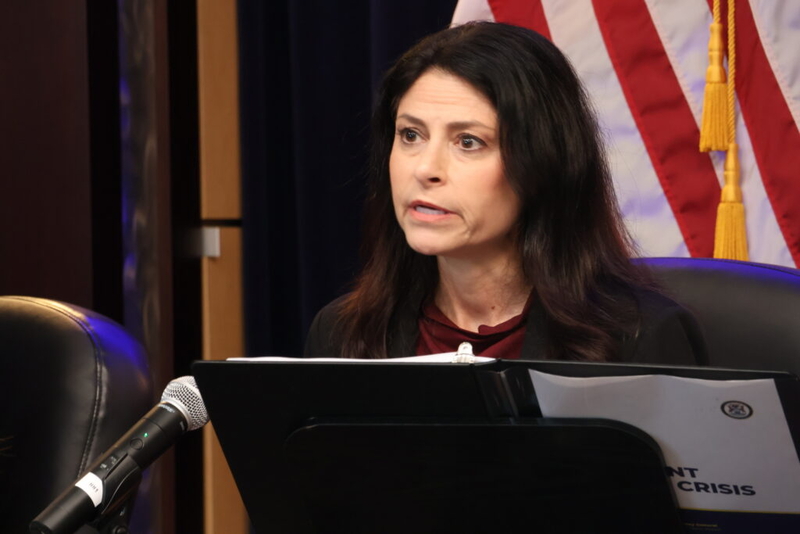
Michigan Attorney General Dana Nessel at a press conference in Lansing on Aug. 25, 2026. (Photo by Kyle Davidson/Michigan Advance)
Following up on a yearslong promise to release information on its investigation into the Flint Water Crisis, Michigan Attorney General Dana Nessel and the Department of Attorney General issued a report Tuesday detailing the department’s efforts to pursue justice for the individuals harmed.
However, Nessel acknowledged that goal was not realized, as the individuals charged as a result of the department’s investigation were not convicted and are presumed innocent.
“This document has been created for historical purposes, to explain the decisions that were made and the reasoning behind them,” the report states.
Roughly 140,000 Flint residents were exposed to lead and other contaminants following the decision to switch the city’s drinking water source to the Flint River, without taking the necessary steps to prevent corrosion in the city’s lead water lines.
The crisis disproportionately affected a city that remains predominantly Black and economically disadvantaged. According to 2025 U.S. Census Bureau data, 56.1% of Flint residents are Black, while 34.1% of residents lived below the poverty line from 2020 to 2024.
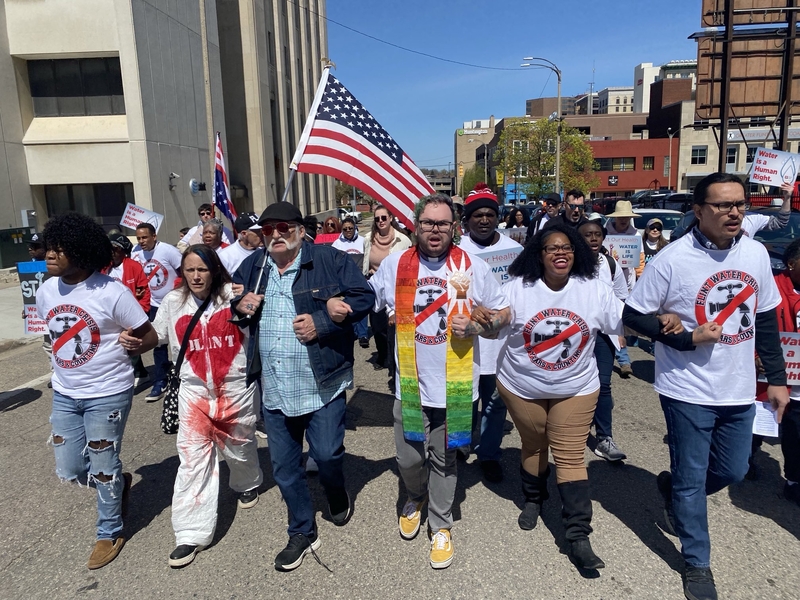
According to state data, 12 individuals died following two outbreaks of Legionnaires’ disease coinciding with the change in the water source. However, a 2019 investigation by PBS’s Frontline suggests the death toll was much higher.
While meeting with reporters Tuesday afternoon, Nessel said the department’s report was intended to be as thorough and complete as legally permissible in documenting decisions made by government officials uncovered through its investigation.
However, she noted there were some aspects they could not share, as state law bars individuals from disclosing material exhibited solely before the grand jury which issued criminal charges against nine individuals, including former Michigan Gov. Rick Snyder and members of his administration. The report includes redactions of some material as a result.
“I harbor a deep regret that the information included in this report exists solely here upon its pages, and was not exhibited in a public courtroom as it should have been,” Nessel said. “The right way for the people of Flint, the state, and the courts to have learned these truths would have been in an open-court criminal trial, which was never to be.”
Former Attorney General Bill Schuette launched an investigation into the Flint Water Crisis in 2016, appointing attorney Todd Flood to head the Office of Special Counsel, which was tasked with the criminal investigation and prosecution of officials accused of wrongdoing. Meanwhile, the attorney general’s office was responsible for the civil defense of Snyder and any state departments that might have become involved in civil litigation.
Nessel took office in 2019, and appointed then-Solicitor General Fadwa Hammoud and Wayne County Prosecutor Kym Worthy to lead the criminal investigation and prosecution team, later meeting with Flood to discuss the criminal cases.
Hammoud and Worthy’s Flint Water Team assumed complete control of the investigation on April 14, 2019, citing concerns with how the Office of Special Counsel had handled the criminal cases. Schuette and other legal experts have criticized the department’s decision to scuttle the Office of Special Counsel’s investigation.
On the civil side of the case, Nessel announced a $626 million settlement to resolve civil litigation against the State of Michigan, the City of Flint, McLaren Regional Medical Center and Rowe Professional Services Co.
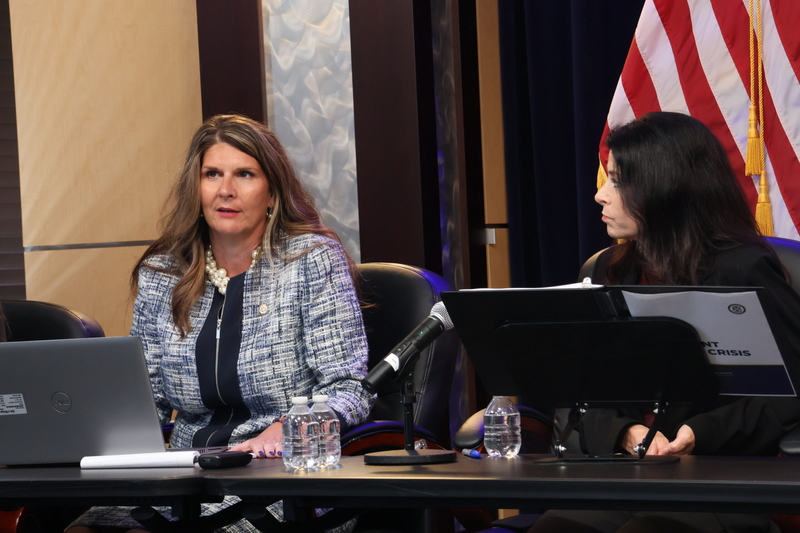
Hammoud and Worthy’s investigation used a one-person grand jury proceeding to obtain indictments against the nine officials. However, the Michigan Supreme Court later ruled that the judge who issued the indictments did not have the authority to do so, and the cases were later dismissed.
The report stated that the decision to use the one-person grand jury process was based on a variety of factors, most notably the statute of limitations, “which loomed over the early weeks and months of the Flint Water Team’s existence like a ticking clock.”
After the Supreme Court declined to hear the Flint Water Prosecution Team’s appeals against the lower court’s decision to dismiss the charges, the report says the team determined that there was no realistic path forward.
“When I put myself into the shoes of the prosecutors entrusted with this case, even in hindsight, I could never have imagined a scenario where there would be an issue in using the one person grand jury, or one in which the Supreme Court would remove this tool from prosecutors’ toolboxes,” Nessel said, later telling reporters she would have done the exact same thing if she were placed in Worthy and Hammoud’s shoes.
Daniel Hagaman-Clark, the department’s criminal justice bureau chief, said that she was not a member of the team who made the decision to move forward with a one-person grand jury, but noted that it’s significantly easier to schedule witnesses with one person than it would be with a citizen’s grand jury.
“When you’re talking about that one person being a skilled attorney, a judge who understands the rule of law, who can evaluate the evidence because that’s what they’ve done for their entire career, it becomes a much smoother process,” Hagaman-Clark said. “Now, obviously, if we knew what was going to happen, we would have gone a different direction.”
Lansing, MI