SC estate with ties to slavery, circus and governors could next become a state preserve
Aug 24, 2026 | 8:00 am ET
Description
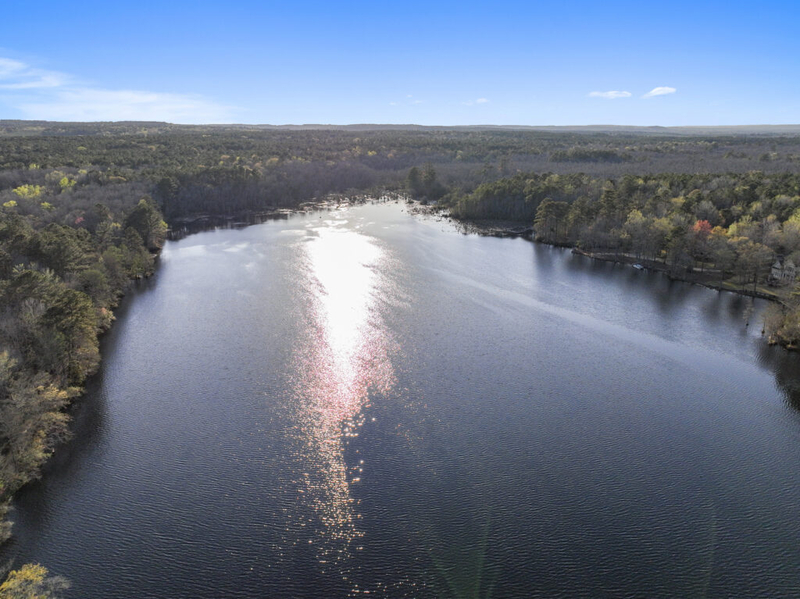
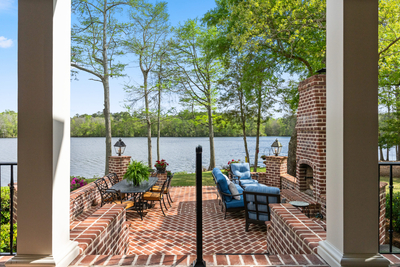
Goodwill Plantation includes a 35-acre lake, which attracts many migrating birds, according to The Conservation Fund. (Photo courtesy of Premier Sotheby’s International Realty)
EASTOVER — In its past lifetimes, the Goodwill Plantation was a vast farm worked by slaves, a winter home for circus animals and a family hunting retreat.
In its next life, the estate located just south of Columbia could become a state preserve.
The Conservation Fund closed a deal on the property for $13.8 million earlier this month, primarily using a state-funded grant. The nonprofit plans to donate the land back to the state Department of Natural Resources to expand the nearby Wateree River Heritage Preserve.
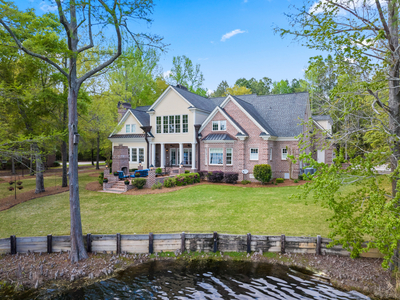
The 736 acres include more than a dozen historic buildings dating to 1857, which the owners restored over the years. Fish swim in a 35-acre lake, and birds nest in a large rookery. Deer and turkey roam through hardwood forests, and water drains into the nearby Wateree River.
Saving a piece of land with so much historical significance along with ecological importance is rare, said Jason Johnson, director of South Carolina projects for the nonprofit.
“It’s not often that I work on a property that has that combination of, we’re conserving habitat and conserving history,” he said.
The property is also a donut hole of sorts, Johnson said. Thousands of acres surrounding it, including a previous portion of the plantation, are already protected. Any sort of major development on the land could disrupt the surrounding natural beauty, he said.
“It was important to fill in this last piece, because this is a very attractive property from a development standpoint,” Johnson said.
The owners, Larry and Jerry Faulkenberry, sold close to 4,500 acres over a decade ago to a company looking to offset the impacts of a gold mine. That land became the state-owned Wateree River Heritage Preserve.
What’s left is “the historical core, really,” Larry Faulkenberry said.
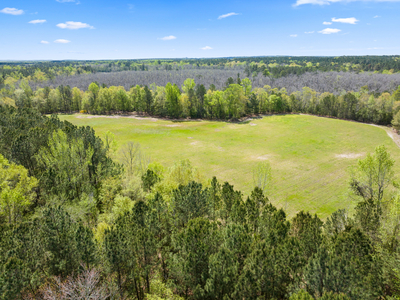
The couple put the estate on the market in 2024, including the home they built. The land already had approval for up to 22 separate lots, which realtors advertised as perfect for a prospective subdivision.
Looking back on the land’s storied history, and with urging from community members and the local state senator, the Faulkenberrys instead decided to sell their beloved property to a nonprofit, with the hopes that one day the state will open it for anyone interested in stopping by.
“We wanted to make sure it stayed intact and people could enjoy it for generations to come,” Larry Faulkenberry said.
A plantation
In 1795, Daniel Huger, one of South Carolina’s first congressmen, established the Goodwill Plantation on 3,500 acres of land. A mill pond and canal system built on the property suggest Huger made one of the first attempts to farm on low-lying land in the state, according to the National Register of Historic Places. (The property’s been listed in the National Register since 1986.)
His son, Daniel Elliott Huger, took over the plantation after he died. While the state legislator, judge and U.S. senator lived most of his life in the Lowcountry, he more than doubled Goodwill’s acreage and improved the irrigation system to farm cotton and other crops. The “elaborate and successful irrigation system” brought a financial boon to the plantation, according to the application for national recognition.
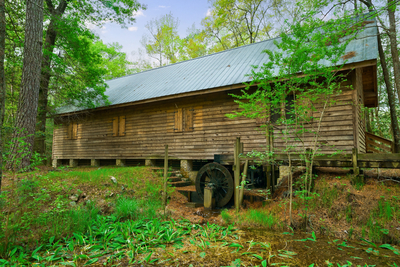
An overseer’s house built in 1857 remains on the property as a remnant of the Hugers’ ownership.
The property changed families for the first time in 1858, when Edward Barnwell “Barney” Heyward bought the land. Grandson of Nathaniel Heyward, South Carolina’s wealthiest rice planter, Barney Heyward may have continued to grow rice at his new plantation, along with other crops, according to the National Register.
Heyward’s son, Duncan Clinch Heyward, went on to be the state’s governor. Although records conflict on whether he was born on the property, records suggest he at least spent much of his childhood there, according to a compiled history of the property.
Although the Midlands region wasn’t as friendly for rice as the Lowcountry, the former governor recounted his father growing rice there, using a millpond on a hill to flood the fields and the Wateree River to drain them. Historians petitioning for a place on the National Register couldn’t find any evidence to back up his memory, but the estate’s owners believe it to be true.
After the Civil War broke out, Heyward and his family moved close to 900 slaves from their Lowcountry plantations to the Goodwill Plantation, where he had another 82 people enslaved, to “wait out the war.” After taking a train most of the way there, Heyward’s slaves had to walk the final 11 miles to the plantation, according to a compiled history.
After the war ended, Heyward employed at least some former slaves as day laborers, according to the National Register documentation, which doesn’t give specifics. Without slave labor, and facing the fallout of the war, Heyward sold the land to a New Yorker named George Wickes in 1869.
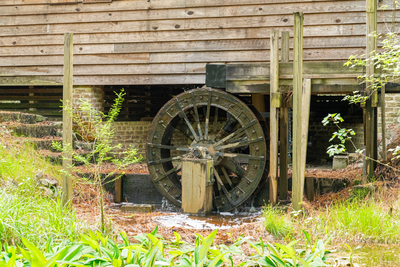
However, reminders of Heyward’s ownership remain as well. Two slave cabins from that time still stand, along with the mill building, which the Faulkenberrys restored using a water wheel from the Hugers’ time.
The Heywards’ house, believed to be built in 1858, is now a small museum, where the Faulkenberrys showcase some of the artifacts and antiques collected on the property, according to the realty company that sold it.
A circus owner’s family retreat
Wickes didn’t keep the land long, either. After running a grist mill and sawmill for five years, he sold the plantation. The land changed hands seven times over the following 15 years.
The next major owner was famed showman P.T. Barnum. Recently retired from running the Barnum and Bailey circus, he bought the property in 1888, at a cost of $100,000 — about $3.5 million today.
Barnum gifted the land to his granddaughter, Julia Clarke. Some accounts say he sent his circus animals there for the winters.
“‘Goodwill’ is one of the finest estates in the South, containing upward of 7,000 acres, including a magnificent water power,” The New York Times wrote of Barnum’s purchase.
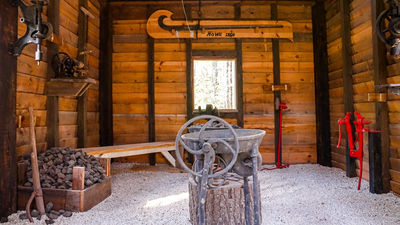
Clarke used prison labor to fix up the property, and a filled-in well still stands where historians believe Clarke housed convicts, according to the National Register documents.
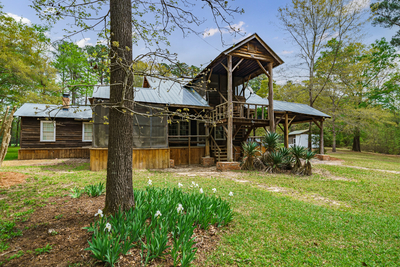
The Clarkes built several still-standing structures, including the main house.
In 1910, Samuel McMaster, a distant relative of Gov. Henry McMaster, bought the land. The governor believes the buyer was a cousin of his grandfather. But he doesn’t recall spending any time on the land, his office told the SC Daily Gazette.
The McMasters opened the grist mill and hunting lodge that remain on the property. Some farming continued until the 1950s, according to National Register documents.
A family home
When Larry and Jerry Faulkenberry bought Goodwill Plantation in 1995, they didn’t plan to stay for long. The couple regularly bought and flipped massive properties, and the property had a lot of potential, Larry Faulkenberry said.
“The thing you don’t do in the land business is fall in love with a piece of land,” he said. “That’s what I did with Goodwill.”
Walking past the dikes, the ditches, the buildings and the millpond built in the 1800s, Faulkenberry didn’t want to leave. He learned the place’s history and realized he and his wife had something special, he said.
“When I first started bringing Goodwill back to life 25 years ago, it dawned on me that Goodwill was much, much, much larger than one person — me,” Faulkenberry said.
So, the couple started to fix up the land.
The Faulkenberrys poured years of work and more than $1 million into the property, though Faulkenberry added he didn’t know precisely how much. (His wife keeps the books.)
They replaced roofs and restored buildings left to decay over more than a century and those damaged by Hurricane Hugo in 1989.
Faced with the option of living in the hunting lodge or the historic house the Heywards built, both far offset from the road, the Faulkenberrys opted to build their own home. Spanning 8,400 square feet, the house included four bedrooms, five bathrooms and a porch overlooking the 35-acre lake.
Although by far the most modern, that home has historical roots, too. The Faulkenberrys wanted their house to match the spirit of the rest of the property, so they had it designed in old Charleston style, including antique light fixtures and furniture.
Even the color of the walls is based in history, Faulkenberry said. The tan and pastel-colored paint are true to what might have existed in houses built in the 1800s, he said.
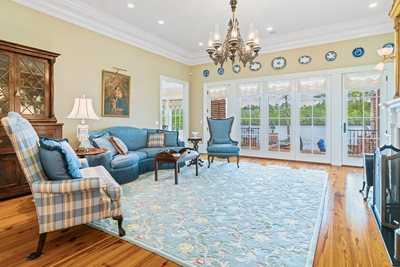
In 2010, the couple moved in.
“We’ve loved it ever since,” Faulkenberry said.
But the Faulkenberrys are in their 70s, and they have other land to tend, he said. Keeping more than 700 acres in good shape, along with multiple properties dating back decades, requires a lot of time and effort.
The couple wants to build a new home, which Faulkenberry called a “sister house,” next to one for their daughter in Columbia. They decided it was time to sell the land they loved.
Originally listed at $17.5 million, the former plantation could have attracted high-dollar developers. A brochure extolling the area’s virtues highlighted the benefits of building a subdivision in the secluded area just half an hour from the state capital.
The Faulkenberrys have long flirted with the idea of protecting their property. In 2005, Faulkenberry told a reporter he wanted most of the property to become a nature preserve, with 30 lots shaved off for high-end homes.
The couple had already sold most of the land — nearly 4,500 acres — to Haile Gold Mine in 2015. The company was looking to save wetlands to offset the impacts of the mining operation in Kershaw.
Thinking back on the history of the place, Faulkenberry couldn’t bear the idea of splitting off pieces of land.
“It survived all of them,” he said of the former owners. “It sure could survive me.”
The Faulkenberrys plan to donate an undisclosed portion of the money they receive from selling the land to Connie Maxwell Children’s Ministries to help build a new “healing center” for children who have experienced trauma.
A state preserve
The state Department of Natural Resources received initial approval Aug. 18 to start evaluating the property to make sure it’s a good fit to join the nature preserve. It’s unclear how the agency would use the Faulkenberrys’ home. It has not yet answered questions from the Gazette about it.
Talks about saving the property started years ago.
Conservationists and state officials have had the property on their minds for a long time, said Johnson, with The Conservation Fund. But the real push began when the Faulkenberrys started to talk about selling.
“You can just feel the history here,” Johnson said. “And it’s just a gorgeous spot.”
Earlier this year, The Conservation Fund got approved for a $12.6 million grant through the state’s Conservation Bank. Richland County chipped in an additional $600,000.
And the U.S. military paid another $600,000 through a grant to conserve land around military bases, Johnson said. (Goodwill is near both Fort Jackson and McEntyre Joint National Guard Base.)
Recognizing the significance of their property, the Faulkenberrys host tours and meet-ups for people interested in seeing the old buildings and learning about the history. They’ve had hundreds of people over the years, of all ages, Faulkenberry said.
A lot of schools like to bring their fifth grade classes, because that’s when students are learning about the 19th century, when much of the plantation was built. Many have only a vague understanding of what people did to survive back then, Faulkenberry said.
Once, a visiting student told Faulkenberry she loved cornbread but didn’t realize it was actually made from corn. Plenty of students don’t know how their morning grits are made. Before they visit, they haven’t seen how a grist mill works to get that context, he said.
‘What people overcame’
Among the visitors was Sen. Darrell Jackson, who lives only a few miles down the road but had no clue the property existed until a friend called him a few years ago.

The Hopkins Democrat came out for a tour and left very impressed at what he saw. Since then, he’s brought back other groups, including the men’s ministry at Bible Way Church of Atlas Road, where he’s the pastor.
“The last thing that any of us would have wanted is to see this precious land fall into the hands of some private developer,” Jackson said.
The Faulkenberrys also make a point of bringing descendants of the people enslaved on the property to see it.
Families want to come see where their ancestors lived, said Titus Duren, a local history teacher who has helped organize events for descendants and researched genealogy.
Acknowledging the property’s difficult history is important, Jackson said. Seeing the slave cabins in person gives people a better idea of what the hundreds of enslaved people there went through than simply hearing about it, he said.
As the country celebrates its 250th birthday, the property stands as a reminder that the Declaration of Independence didn’t guarantee freedom to every American, Jackson said.
“I still believe a picture is worth a thousand words,” Jackson said. “Goodwill Plantation will be a wonderful picture of the goodness of people and the endurance of people.”
It’s a reminder “not just of the atrocities of slavery but what people overcame and how far the country has come,” he continued.
When Jackson walked through the property with his church’s men’s ministry a few months ago, he watched the way members’ faces lit up at seeing a piece of their history preserved. Though painful and difficult, slavery remains a piece of the African American story, he said.
“To preserve that, our history, and to share it with not only other South Carolinians but with the world would be such a gift and such a wonderful thing,” he said.
Faulkenberry has noticed the same sorts of reactions from his tour groups.
“When white elderly people come out, they like it,” Faulkenberry said of the property. “When Black elderly people come out, they love it, because they can relate to it.”
If the state takes over the land, officials plan to make few changes to the existing buildings or the land, according to DNR documents. Those involved with the property hope to see tours taking people through the buildings, with signs explaining their significance.
When Faulkenberry was first researching the property’s history, a historian told him he’d bought “the most historic tract of land” in at least Richland County, “and no one knows about it.”
“That’s what I want to change,” Faulkenberry said. “I want the public to get involved in it.”
Columbia