A new visa rule will hurt Kentucky’s universities — and America’s lead in science
Aug 24, 2026 | 5:30 am ET
Description
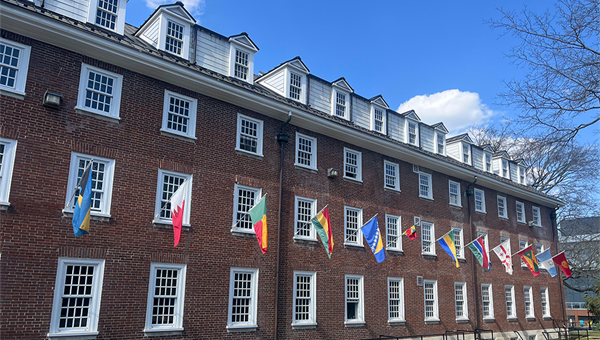
Flags of many nations fly at the University of Kentucky outside Bradley Home, home to offices for international students. (University of Kentucky photo)
When I led major research universities, I saw a simple truth up close: in the physical sciences, engineering, and computing, we could not have staffed our laboratories or taught our core courses without international graduate students. That is not sentiment; it is arithmetic. And a rule the Department of Homeland Security finalized in July now threatens that arithmetic — here in Kentucky as much as anywhere.
The rule ends what is called “duration of status.” For decades, a foreign student on an F-1 visa could stay as long as she was making normal progress toward a degree. Starting September 15, she will be admitted for a fixed term of no more than four years. If her program runs longer — and in most doctoral fields it does — she must file a paid extension application and await a bureaucratic ruling, with no guarantee of approval.
The problem is that four years is less time than a doctorate actually takes. According to the National Science Foundation’s Survey of Earned Doctorates, the median time enrolled in a doctoral program is 5.7 years, and it exceeds four years in every field measured — 5.3 years in engineering, 5.7 in the physical sciences. These are medians for students who finish; half take longer. The rule guarantees that ordinary, on-track doctoral students — the future scientists we admitted precisely because they were excellent — will hit a wall and have to petition Washington for permission to continue work they are succeeding at.
Homeland Security says it is targeting “forever students” who abuse the system. But its own rulemaking identifies only about 2,100 such people over a decade out of a population that runs well over a million a year — a rounding error of a few hundredths of one percent. And these students were never unmonitored: every term, an official at each university must certify in a federal database that the student is enrolled full time and progressing, on pain of the school losing its certification. The oversight the rule promises already exists, in a better form.
For Kentucky, this is not an abstraction. The University of Kentucky enrolls more than 1,000 international students from over 100 countries, concentrated exactly where it matters most — in the graduate programs of the Pigman College of Engineering, the sciences, and computing that anchor UK’s standing as an R1 research university. These students run the experiments, staff the labs, and support teaching undergraduate sections that Kentucky families pay for. Cut off that pipeline and you do not merely lose tuition; you weaken the research enterprise that draws federal grants, industry partnerships, and talent to the commonwealth.
And here is the part that should concern anyone thinking past this year. The international students who came, stayed, and joined our faculties are now a large share of the people who train the next generation of American scientists. Because the National Science Foundation’s Survey of Doctorate Recipients counts only scholars who earned their doctorate at a U.S. institution, it measures exactly this pipeline: among full-time faculty in these fields nationally, foreign-born, U.S.-trained scholars make up 52 percent in engineering and 54 percent in computer and information sciences. These are the professors, many of whom — like me (now retired)— arrived as international students, who now teach Kentucky’s own sons and daughters.
This is what it means to eat the seed corn. A university that loses its international doctoral students today is failing to grow the faculty who, a decade from now, would teach the following generation. In engineering and computer science, where foreign-born, U.S.-trained scholars already make up a majority of the professoriate, an extended interruption is a direct threat to our capacity to teach these subjects at all.
Students are already voting with their feet. New international enrollment nationally fell 17 percent last fall — the steepest non-pandemic drop in eleven years — as Britain, Ireland, Canada, and others actively recruit the students we discourage. A rule sold as protecting national security may end up handing our competitors the very people who would have strengthened us.
The genuine security concern — that a few bad actors exploit these programs — is real and is best met the way it already is: through targeted vetting and law enforcement. A blunt four-year cap does none of that. It cannot tell an intelligence operative from a future Nobel laureate; it simply deters both and loses the honest thousands far more than the dishonest few.
The United States did not come to lead the world in science by accident. It led because the most ambitious young people on earth wanted to come here, and we let them, and we kept the best of them. Kentucky has been a quiet beneficiary of that bargain. We should not be quiet while Washington throws it away.
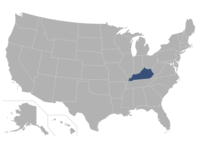
Frankfort