Immigration searches were conducted on Twin Falls Flock network. A month later, agreements changed.
Aug 11, 2026 | 6:15 am ET
Description
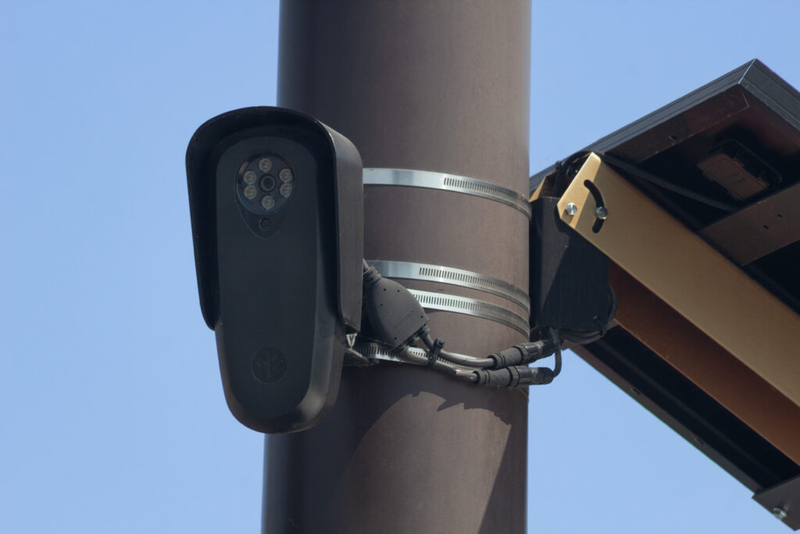
A Flock Automated License Plate Reader near the Lowe's on Overland Road in Boise, as captured on Aug. 5, 2026. (Photo by Valentin Termite/Idaho Capital Sun)
1:42 p.m., May 3; Indiana State Police entered a Flock automated license plate reader – known as ALPR – network lookup. The reason for the search: “Immigration (civil/administrative).”
Quickly, the nationwide system sprung into action; hundreds of ALPR systems searched for a suspect’s license plate. Among the cameras included in the search was Idaho’s Twin Falls Police Department ALPR network.
That’s according to public records obtained by activist group DeFlock Idaho. They show that the Twin Falls Police Department ALPR systems have been searched for immigration-related purposes at least 631 times across March, May and June of 2026.
Nationwide police agencies conducted the searches through Flock’s national network sharing, including lookups from Indiana State Police, Georgia’s Lawrenceville Police, Florida’s Bay County Sheriff’s Office and Florida’s Fish and Wildlife Commission, among others.
In doing so, the searches inadvertently evaded both Idaho Code 49-1432 and self-imposed restrictions by Twin Falls PD prohibiting the use of ALPR cameras for immigration purposes, as outlined in Flock’s Transparency Portal.
Nearly one month after those searches were conducted, however, the Twin Falls Police Department Administrative Services Division Lieutenant Steven Gassert told the Idaho Capital Sun it changed its national network sharing settings to no longer permit outside agencies from searching the system.
“We want to make sure that we are being respectful of our citizens’ views and opinions on this, while still seeing the importance of technology when it comes to modern policing in our community,” Gassert said in an interview.
With cross-jurisdictional data sharing appearing as a major incentive for police agencies entering into agreements with Flock, communities may need to navigate a complicated patchwork of local, national or agency-specific regulations.
Local Flock searches limited by Idaho legislation and local agreements
Flock automated license plate readers use AI technologies to automatically scan vehicle license plates for information.
When any vehicle drives past an ALPR camera, the system takes a snapshot of the back, registering its license plate, car make or model, colors and other apparent characteristics.
All eyes on Flock as Idaho navigates surveillance technology across the state
If an alert is tied to that vehicle, such as a wanted person report or car theft, then the system notifies police officers of the suspect traveling past the location.
Officers can also conduct specific searches of the system, accessing the entire network to locate given license plates, and that often includes a national lookup option whereby outside agencies can be searched.
Police departments can opt into the national lookup feature, but the system works by reciprocity: agencies can only access national data by sharing themselves. For some within law enforcement, data-sharing offers a major incentive:
“When (a suspect) leaves our area, we still have the opportunity to follow up and catch them when they end up in another area, so that is a benefit,” said Jessica Clements, Idaho Falls Police Department’s public information officer, said in an interview. “And on the reverse, when someone who has a warrant or who is a danger to the public enters our area, we get notification of that as well.”
Through sharing agreements, police agencies can more easily track suspects across jurisdictions, Clements said.
The web-like national system, however, may invalidate local restrictions for ALPR cameras, as agencies only answer to local or state guidelines for the technology. With the national lookup tool enabled, outside agencies can still conduct searches that local cities might not allow.
“If an officer in Arizona uses a nationwide lookup tool to search for license plate ABC123, all the system does is go out and ask the agencies involved: ‘Hey, do you have anything with license plate ABC123?’” Gassert said. “If our agency had license plate ABC123, then we would provide that information to them.”
The information sharing happens automatically, meaning data identifying suspects would be shared with the requesting agency regardless of manual local input, according to Gassert.
Network audits received by DeFlock Idaho show access information from Twin Falls ALPRs, with information detailing an organization’s name, the date and the reason for the search as listed by officers.
Idaho Code 49-1432 restricts ALPR searches, like those conducted by Flock cameras, to “the investigation of felony, misdemeanor crimes, traffic accidents or to search for missing or endangered persons.”
“I have to follow (these) laws because I am working in the jurisdiction of the state of Idaho,” Gassert said. “Now, if someone in California or Arizona was doing a search, they have to follow the laws of California, Arizona or whatever state they’re working in.”
Immigration searches, especially those labeled “administrative” or “civil,” would not apply.
In addition, the Twin Falls Police Department maintains local policies with the Flock company that should, theoretically, prohibit “immigration enforcement” queries, according to Flock’s Transparency Portal.
“We have a very strong 30-plus year policy outlining that we do not get involved in immigration investigations or immigration situations in our community,” Gassert said. “So we do not allow our officers to utilize that.”
Still, participation in the national system allowed multiple agencies to search Twin Falls data for “immigration,” “civil/administrative” or “I.C.E.”
Gassert said the immigration searches did not result in data pulls from the Twin Falls Police Department, but they occurred nonetheless. Had the ALPR cameras captured any of the suspect license plates, he said the system would have automatically forwarded the information to outside agencies.
Gassert also clarified that Twin Falls PD never granted complete access to the cameras to immigration enforcement agencies.
“We actually, on a weekly basis, receive requests from the FBI and immigration to have access to our Flock system, and we deny it every week,” he said.
The Idaho Attorney General’s Office could not be reached for comment on whether searches of Idaho networks by nationwide agencies could constitute a punishable violation of Idaho Code.
Policy changes
One month after immigration searches were identified by network audits, the Twin Falls Police Department cancelled its participation in Flock’s national lookup on July 22.
The change means no agency can access Twin Falls data through a national lookup anymore, according to Gassert.
When asked if the shift in department policy came following community concerns, also referenced in an email inquiry about immigration searches sent July 20 by the Idaho Capital Sun, Gassert replied: “Not these (searches) in particular that you’re bringing up. We’re constantly reevaluating this program, and based on some of the conversations and comments that we have about citizens, we go back and look at ways that we can improve.”
Boise, ID