Local governments in Colorado enact moratoriums on data center development
Aug 10, 2026 | 6:00 am ET
Description
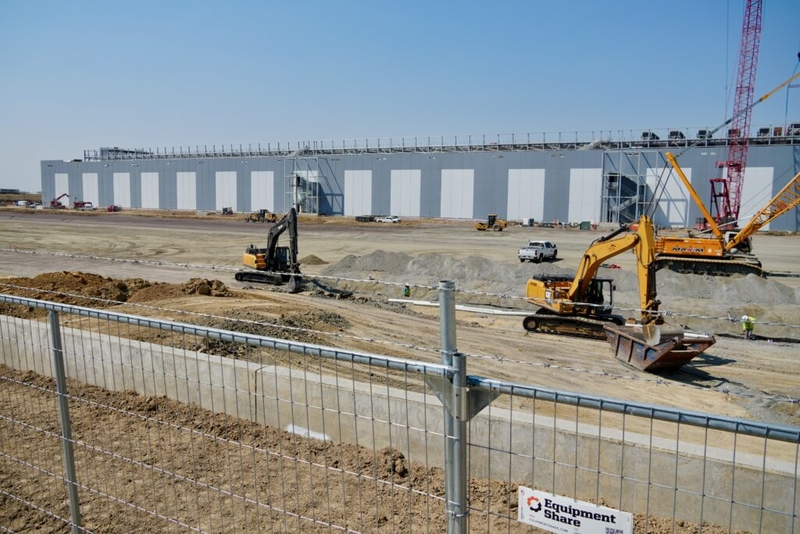
Construction on a data center expansion at the QTS site in Aurora, Colorado is pictured on Aug. 6, 2026. (Photo by Chase Woodruff/Colorado Newsline)
Amid a nationwide race to develop large data centers to drive the artificial intelligence boom, some local Colorado governments hit pause by enacting moratoriums to research what local regulations make sense.
Public criticism concerns the environmental and health effects of data centers, especially hyperscale sites that provide massive computing power for companies like Google and Amazon, and inaction from the state government.
“The pushback against data centers is only growing right now,” state Sen. Cathy Kipp, a Fort Collins Democrat who sponsored a data center regulatory bill this year, said.
“There is a place for data science in the world because we do so much online and we do so much with electronics and data,” she said. “But people are failing to recognize the environmental concerns and … how the whole massive expansion of the hyperscale (centers) seems to be being built in a financially unsustainable way. I don’t know if we can solve the problem before the bubble bursts.”
Data centers can range from a single room in a company’s office to millions of square feet. They house servers and data storage infrastructure and have been used for decades to keep websites online, process digital payments and enable streaming, among many other uses. Recently, data centers increasingly are built to train and run AI and cloud storage, a workload that requires a bigger footprint and significantly more energy and water. One federally-funded study found that data centers accounted for 4.4% of the country’s energy usage in 2023 and could triple by 2028. The seemingly-unchecked proliferation is causing concern across the country.
A recent Gallup poll found that about 70% of Americans oppose data center construction in their town. Respondents were concerned about centers’ energy and water use, which they fear could lead to higher utility bills. They also cited worries about diesel exhaust from generators and noise pollution, as the humming of cooling systems, generators and fans at some data centers can sometimes be heard for hundreds of feet.
Supporters and those in the data center industry contend that development creates short-term construction jobs and property tax revenue, and can set a city up as a technological hub.
The Colorado Legislature considered two bills during its regular session this year on data center regulations but did not pass either one. One would have required so-called large load data centers — with a peak electricity need greater than 30 megawatts — to seek renewable energy for its power consumption, as Colorado pursues its clean energy and environmental goals. A competing bill backed by industry would have offered sales tax exemptions for data centers, and also had a more permissive renewable energy component. Both bills died in the final days of session after negotiations for a compromise bill failed.
One hyperscale data center
New York is the only state to enact a broad data center moratorium. Tax incentives are much more common, with 38 states offering some kind of benefit to attract data center construction.
The sponsors of the Colorado bill that would have required renewable energy sources, Kipp and Democratic Rep. Kyle Brown, plan to bring data center legislation forward in 2027, but they aren’t yet sure what the provisions will be.
“I certainly respect each and every community to be able to determine what they think is best on this particular issue,” Brown said of Colorado cities enacting moratoriums. “I think what it also highlights is the need for some kind of floor from the state, right? Moratoriums only exist for a finite period of time, and then what do we do afterward?”
About a week after the legislative session wrapped up, Denver City Council voted unanimously, with strong community support, on a one-year moratorium on new data center development. Leaders said it was an opportunity to figure out what new regulations and zoning policies make sense for the city eventually to adopt.
“We aren’t the only council in the country that’s addressing this, but we are early among councils that are looking at what this means for communities across the country,” Council member Diana Romero Campbell said during a May 18 meeting. “I’m also grateful that we are not waiting for the state to decide what happens in Denver. We need to be able to decide how and what we want our community to look like.”
This moratorium will allow us to think of equitable regulations that put our communities first.
The ordinance created a working group to study variables like noise levels, air pollution, energy use and zoning. It did not stop any current data center operations or permitted construction, including the controversial new CoreSite multi-tenant project in the Globeville Elyria-Swansea neighborhood. About 50 data centers operate in Denver, Council member Serena Gonzales-Gutierrez said during the May 18 meeting. There are about 60 in the whole state.
“This moratorium will allow us to think of equitable regulations that put our communities first,” she said. “We are hopeful that our future regulations will preserve our water and energy resources, address climate concerns and protect our neighbors from any potential consequences that arise from the construction and use of data centers.”
A day later, Jefferson County extended its moratorium until March. County commissioners noted that “data center” does not have a clear definition in county zoning policy, and the closest definition is from almost 50 years ago. Like Denver, the county sees a moratorium as a way to allow time to develop and debate regulations.
“We know that there’s a lot of interest and demand right now, but I am glad we are taking the time to fully consider some of the significant impacts to both our public and private infrastructure, looking at what those demands would be on our electrical power, on our water supply, on our telecommunications networks and even on our transportation systems,” Commissioner Rachel Zenzinger said during that May 19 meeting.
Larimer County decided to extend its existing data center moratorium to February, and Boulder County enacted a six-month moratorium at the beginning of June. In July, Broomfield passed an 18-month moratorium on data centers that use 10 megawatts of power or more. Woodland Park and Monument, two cities in conservative counties, also voted for 18-month and six-month pauses, respectively.
“There’s a lot of information out there and there’s a lot of different definitions of data centers. We need to be thoughtful in how we do this so we don’t create an ordinance that limits businesses like the city or Walmart or Safeway from having a server room,” Woodland Park Council member Catharine Nakai said during a July 16 meeting.
In Longmont, the City Council specifically targeted hyperscale data centers, voting in June to cap data center energy usage at 5% of the region’s grid, or 100 megawatts. Hyperscale data centers are the enormous campuses typically used by tech giants to deliver AI and cloud services on a large scale. They have an enormous power draw. QTS, the largest data center operator in the world, has a hyperscale location in Aurora south of the Denver International Airport. It is the only hyperscale site in Colorado.
And in Lochbuie, a small town on the border of Adams and Weld counties near Brighton, leaders passed a moratorium that at five years is the longest in the state.
“Why not set a precedent across the state of Colorado that this is not something we’ll rush into, that we want to be thoughtful, that we want to give all of our residents time to let their voices be heard?” Mayor Jamie Jeffery said during a July 21 meeting.
Role in Colorado’s growing economy
Other areas of Colorado are allowing data centers, but with varying levels of regulation. In April, Weld County updated its zoning code to allow data centers with a power draw of less than 50 megawatts in industrial areas in unincorporated parts of the county. County commissioners a special review process that requires a public hearing. Windsor is also weighing code changes but the City Council has not voted on a proposal yet.
And in Colorado Springs, a data center for a California-based AI company is set for a final vote from the City Council after a tumultuous journey through preliminary approval and an appeal from opponents.
In a statement, Dan Diorio, the vice president of state policy for the Data Center Coalition, said the industry “plays a significant role in enabling Colorado’s growing 21st-century economy” by paying taxes and supporting “stable, high-paying careers.”
“Rather than enacting moratoriums which will discourage investment and send a signal to the industry that the locality is closed for business, the community and its local leaders should work with the industry and all stakeholders to establish reasonable regulatory frameworks that meet the needs of the area without deterring the industry and the benefits it can bring,” he said. “The data center industry will continue to work with Colorado residents, communities, and policymakers to support the responsible development of this critical infrastructure and ensure Colorado remains competitive in the modern economy.”
Denver, CO