Campaign to enshrine voting rights in Virginia Constitution kicks off in Norfolk
Aug 07, 2026 | 5:28 am ET

Description
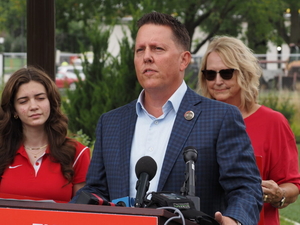
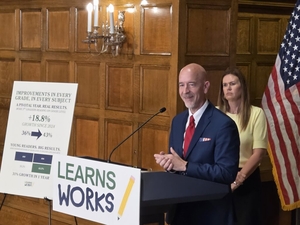
Jamel Ridgenal speaks in Norfolk on Aug. 6, 2026 about his support for a Virginia constitutional amendment to allow automatic restoration of voting rights to people with felony convictions who have completed their sentences. (Photo by Charlotte Rene Woods/Virginia Mercury)
Portsmouth school board member Quniana Futrell appeared somber behind the podium in Norfolk’s Slover event space as she spoke in support of a proposal to amend Virginia’s constitution to automatically restore voting rights for people who complete felony sentences.
She recalled her experience growing up with both of her parents incarcerated and said her mother died the day after her release from prison.
“Standing as an elected official, being the dream and hope of my ancestors, I never got my mother’s vote,” she said. “That one vote would have been the one that meant everything to me — but Question Three fixes that.”
Question Three is among a trio of pending constitutional amendments to protect reproductive rights, marriage equality and voting rights in Virginia’s constitution.
The measures would make the protections less subject to turnover in the state legislature and instill state-level protections should federal laws change.
The proposals have passed the state legislature two years in a row and will appear on ballots for voters statewide to approve or reject in November.
Amid passionate debate, civil rights resolutions clear Virginia legislature
“Vote yes,” Futrell implored the crowd, which responded with cheers.
Futrell was one of several local, state and federal lawmakers, activists and people whose lives include incarceration who laid out the reasons they support the amendment and encouraged others to, as well.
“Some of you understand this work here because you have experience behind bars and there are some of you in this room who have the luxury to not know this personally — so please take our word for it,” Del. Cia Price, D-Newport News, told the crowd.
As chair of the House’s Privileges and Elections committee, Price helped push the advancement of the amendment. She and other speakers encouraged attendees to not only plan to vote for the amendment, but to spread the word about it in their communities.
Virginia’s current constitution bans people with felony convictions from voting unless they successfully petition a governor or receive a pardon from them.
While three of Virginia’s four previous governors had streamlined the process to ensure people who have finished their sentences can once again vote, former Gov. Glenn Youngkin changed the process to a petition-based one, with little clarity on criteria. Approvals slowed during his tenure.
The proposed constitutional amendment seeks to allow people who have finished serving their time to become automatically eligible to vote again.
The event was held on the 61st anniversary of the federal Voting Rights Act of 1965, an observance several speakers tied to the amendment.
The federal policy prohibits racial discrimination in voting by eliminating various tactics that had been used to keep Black people from the polls. Though white women gained the right to vote in 1920, the VRA extended that right to Black women and others of color, as well.
Enshrining new voting rights into Virginia’s constitution is even more timely, U.S. Rep. Bobby Scott, D-Newport News, said, because the U.S. Supreme Court earlier this year “just about knocked (the VRA) out.”
A decision by the court weakened a section of the legislation that led to Louisiana eliminating one of its Black-majority congressional districts.
“We have to make voting a voting issue,” Scott said.
Various organizations including New Virginia Majority, League of Women Voters and Nolef Turns were present Thursday and shared information and resources with attendees.
Jamel Ridgenal and Sergio Hayes, two men whose past incarceration has shaped their present passion for civic engagement, spoke of the amendment from a personal perspective.
Ridgenal said formerly incarcerated people work and pay taxes and deserve to weigh in on how elected officials use public resources “just like everybody else.”
Hayes said depending on a governor to restore rights is “not restoration, that’s permission.”
“It depends on who that person is sitting in that office,” he said.
Gov. Abigail Spanberger has restored more than 60,000 people’s rights since taking office earlier this year, but Hayes said restorations have fluctuated governor by governor.
“We will make it no longer a favor from a governor, but a guarantee,” he said.
Richmond, VA