Environmental group claims DEP is falling behind reporting on underground mining damages in Pa.
Aug 03, 2026 | 11:52 am ET
Description
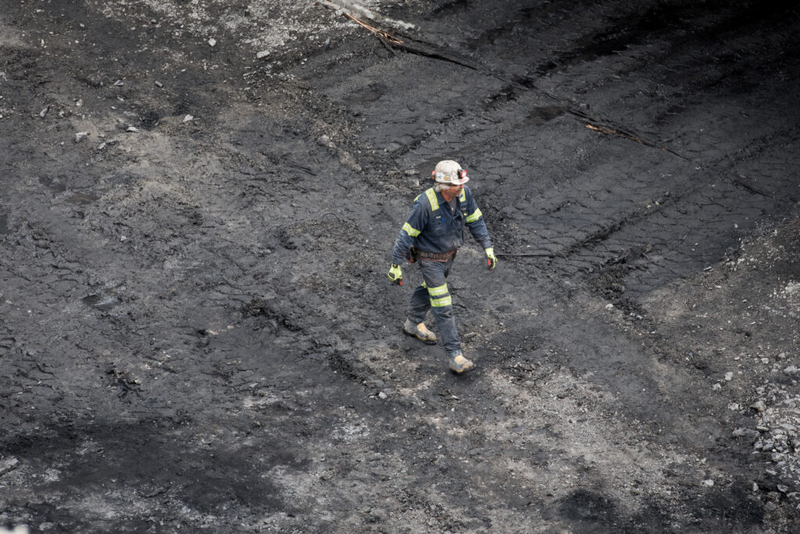
A coal miner works at Corsa Coal's Acosta Deep Mine on June 8, 2017 in Friedens, Somerset County. (Photo by Justin Merriman/Getty Images)
A set of reviews issued by the Citizens Coal Council claims that the Pennsylvania Department of Environmental Protection is failing to properly implement an oversight program intended to assess how underground coal mining is affecting streams and properties across Pennsylvania.
In 1994, what’s known as Act 54 established standards for coal companies, essentially requiring them to repair any damages to properties and water supplies caused by underground mining. The law also mandated DEP to publish a report every five years on how underground mining was affecting land, properties, streams, drinking supplies and more in Pennsylvania, along with how those issues were being resolved.
But a recently published analysis from the Washington County-based nonprofit claims that the latest DEP report illustrates the program’s shortcomings.
They say that the quality of information in DEP’s latest report, which examines data from 2018 to 2022, represents a backslide compared to previous ones, and lacks analysis explaining what trends it documents.
“The independent review — conducted by senior ecologists Stephen P. Kunz and Dr. James A. Schmid of Schmid & Company, Inc. — found that DEP’s most recent report to the Governor and Legislature is, in the reviewer’s words, ‘a haphazard compilation of selected raw [database] statistics,’ riddled with data errors and containing virtually no analysis of trends,” read a press release.
A spokesperson for the Department of Environmental Protection said the report relies on “a significant amount of data” collected and verified DEP staff, and a “robust analysis.”
”DEP is continuing to review the claims in the report from Citizens Coal Council,” the spokesperson said. “DEP has met with CCC on several occasions to discuss their concerns with the scope of the report and the purposes of the Act 54 report.”
“Major step backwards”
The Citizens Coal Council report highlighted numerous issues they found in the latest Act 54 report. Chief among them was who authored it.
DEP’s most recent Act 54 report was prepared in-house. The four previous reports, spanning 1998 to 2018, were authored by independent university researchers.
The group called this a “major step backwards.” It’s a complaint that was echoed by the Center for Coalfield Justice in a letter they sent to DEP last year.
It outlined how, following criticism of the first ever Act 54 report, which was authored internally at DEP, the department outsourced the next four to university researchers.
“Though imperfect, these reports were more conclusive and provided much deeper commentary on impacts with richer statistics,” the letter read. “However, this most recent Act 54 Report, the 6th report, was again done internally by the Department, retaining many, if not more, of the same criticisms of the 1st report.”
A DEP spokesperson did not respond directly to a question about why the latest report wasn’t authored by outside experts.
Another issue raised by the Citizens Coal Council highlights how changes in mining industry practices over the last several decades appears to have affected DEP’s ability to assess potential damage being caused by underground mining. And they accuse the department of not doing enough to keep up.
Over the three decades since Act 54 became law, non-disclosure agreements and private settlements have become increasingly common tools used when private landowners allege mining-related damages to their properties, streams or wells.
DEP’s report acknowledges that, “in most cases the Department does not receive any information on the private agreements and is not obligated to publicly disclose the details of an agreement if homeowners freely supply the information.”
According to Citizens Coal Council findings , that means the report lacks details on whether mining-related damages are ever repaired or whether property owners are treated fairly when issues arrive.
It recommends DEP at least send field inspectors to note whether visible repairs to property appear to exist.
A spokesperson for the DEP told the Capital-Star the department is not a party to settlements between operators and residents, and has no role in any non-disclosure agreements made between those parties.
The group’s review also accused the agency of failing to analyze what data it provided.
While the vast majority of documented underground mining damage was caused by what’s called longwall mining, the group noted how data in the DEP’s report shows the number of room and pillar mines, which are used to extract materials from a flat plane underground, declined by 38% in a five-year period. But the structure damage claims attributed to room and pillar mining nearly doubled in the same amount of time.
DEP’s report provides substantively no analysis of why this might be happening. The Citizens Coal Council report calls this “a striking and counterintuitive result the report does not explore, explain, or even appear to notice.”
“The cumulative effect”
The group is calling on the DEP to resume the use of independent experts for its next Act 54 report and ensure that it contains the kind of comprehensive analysis it says the law intended.
It is also highlighting the need for enforcement of a three-year deadline for stream restoration and to suspend mining permits if a deadline is missed.
Finally, it asks DEP to track and publicly report the status of all mining damage claims, even when private settlements or NDAs are used. And it’s calling on lawmakers to hold them accountable.
“Pennsylvania’s the only state that requires these reports every five years, and there’s about ten states that do longwall mining. So this not only shows Pennsylvania what’s happening, it also can be relevant to other states,” said Aimee Erickson, the executive director of the Citizens Coal Council. “We have streams being damaged and we don’t even know the cumulative effect of all this damage.”

Harrisburg, PA