New nuclear campus deal would require Idaho to accept, store spent nuclear fuel, radioactive waste
Aug 03, 2026 | 6:15 am ET
Description
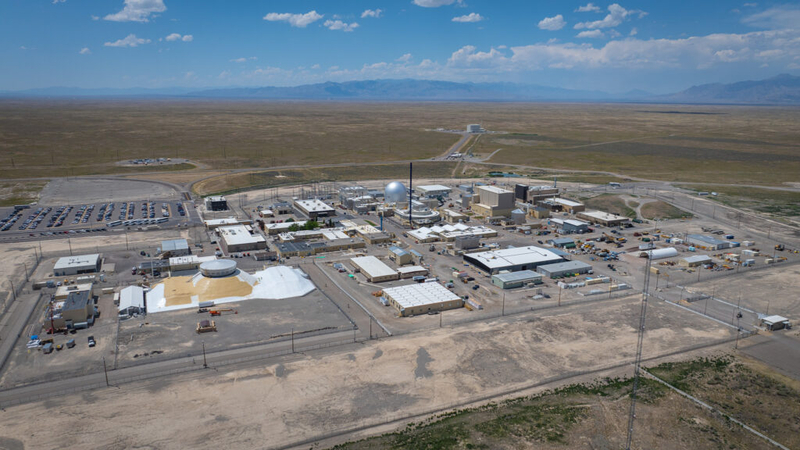
A 2023 aerial shot of the Materials and Fuel Complex at the Idaho National Laboratory's desert site. The complex contains several specialized labs where INL researches nuclear fuels. (Photo courtesy of the Idaho National Laboratory)
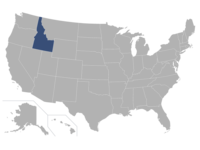
Idaho would be required to accept spent nuclear fuel and high-level radioactive waste if the state becomes one of the U.S. Department of Energy’s new Nuclear Lifecycle Innovation Campuses.
Idaho selected as potential host site for new DOE Nuclear Lifecycle Innovation Campus
On Tuesday, Department of Energy officials announced that Idaho was one of five states selected as a potential host-site for a new nuclear campus, joining Utah, Tennessee, Oklahoma and Louisiana.
Federal officials said the nuclear campuses will boost manufacturing, create jobs, promote American energy independence and attract financial investment.
But to move forward, the state of Idaho would need to enter into a host agreement with the federal government to accept spent nuclear fuel and waste from other states.
“The host agreement shall provide for the acceptance of out-of-state used nuclear fuel,
spent nuclear fuel, and high-level radioactive waste,” states a memorandum of understanding between the U.S. Department of Energy and the state of Idaho that Gov. Brad Little signed July 24.
On Wednesday, the Idaho Statesman reported that the three states selected for the nuclear campuses would each take one-third of the United States’ stockpile of spent nuclear fuel.
Idaho’s 1995 ‘Batt Agreement’ called for limiting spent nuclear fuel from coming into the state
Thirty years ago, the state of Idaho reached a 1995 settlement agreement with the federal government that was signed by the late former Gov. Phil Batt that was aimed at preventing Idaho from becoming a permanent dumping ground for the nation’s nuclear waste. The so-called Batt Agreement called for limiting shipments of spent nuclear fuel into Idaho and expediting the treatment and permanent removal of spent nuclear fuel and nuclear waste from Idaho, according to an explanation posted to the U.S. Department of Energy’s website.
The memorandum of understanding that Little signed July 24 requires Idaho and the U.S. Department of Energy to “address any issues related to the 1995 Idaho Settlement Agreement and related addenda and supplemental agreements, in a mutually agreeable manner, prior to the effectiveness of the Host Agreement.”
Idaho Lt. Gov. Scott said the state has modified the settlement agreement several times over the past 30 years, including a waiver in 2025 to allow research on shipments of spent nuclear fuel sent to Idaho.
Modifying the agreement again to align with the Nuclear Lifecycle Innovations Campus agreements wouldn’t be a problem, Bedke said.
“If we are going to continue to be a leader in the nuclear space, and our speciality (at Idaho National Laboratory) is recycling nuclear fuel, then it makes sense you are going to bring in other used fuel to recycle,” Bedke said Friday.
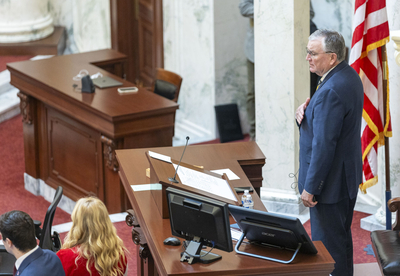
“Naturally the agreement has got to be modified to acknowledge what the world looks like in 2026, particularly with Idaho National Laboratory being one of the leaders in nuclear testing and innovation,” Bedke said.
Bedke said he supports taking the next step with the Nuclear Lifecycle Innovation Campus selection process.
“This is a good opportunity for Idaho, but none of this will shortcut the safety of Idaho’s environment, including our aquifer,” Bedke said. “We’re not going to be putting the Eastern Snake Plain Aquifer at risk.”
Over the 30 years since the 1995 settlement agreement, Bedke said many perspectives on nuclear energy have changed.
“This is not waste,” Bedke said. “We throw that term around, but this is fuel that can be recycled and used for good purposes.”
Efforts to reach the Idaho Attorney General’s Office and Idaho Gov. Brad Little’s office for comment were unsuccessful. Little did issue multiple statements supporting the partnership with the U.S. Department of Energy and the Nuclear Lifecycle Innovation Campuses.
Idaho’s ‘nuclear watchdog’ says deal is all about finding a place to store nuclear waste
Leigh Ford, executive director of the Snake River Alliance, said she is concerned the new nuclear campuses are driven by a desire to get states to agree to accept and store nuclear waste as President Donald Trump pushes for a nuclear energy renaissance.
Idaho is honored to be one of five contenders for a Nuclear Lifecycle Innovation Campus. Thank you to President @realDonaldTrump, @SecretaryWright, and @ENERGY for recognizing Idaho’s leadership in nuclear innovation.
Together, we’ll power America’s energy future. https://t.co/povZiyLOKE
— Brad Little (@GovernorLittle) July 28, 2026
“I think this is the fifth iteration of the Department of Energy trying to deal with nuclear waste,” Ford said Friday.
“They have to indicate they know what to do with the radioactive waste,” she added.
The Snake River Alliance is a Boise-based nonprofit organization that describes itself as “Idaho’s nuclear watchdog and clean energy champion.”
“It’s very concerning, not only for the transportation risk, but Idaho already has a huge radioactive burden,” Ford said. “We are a downwind state. I’ve been traveling the state getting people signed up for the Radioactive Exposure Compensation Act. It’s been devastating to see all families be affected (by exposure to radiation downwind from nuclear test sites). There will be more of a burden if this happens.”
Ford said Idahoans should voice opposition to the Nuclear Lifecycle Innovation Campuses to their local elected officials and ask questions about protecting water and land.
Boise, ID