Coal’s share of electricity-production in Wyoming at all time low despite peak demand
Aug 03, 2026 | 6:30 am ET
Description
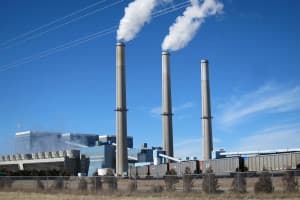
Photo courtesy of WyoFile
Amid a sweltering “heat dome” across much of the U.S. and Wyoming, electrical demand is spiking, prompting an all-hands-on-deck approach among utilities and an emergency order from the U.S. Department of Energy. The order, issued July 26, requires certain power producers in 17 states — including some in Wyoming — to keep available electrical generation facilities ready for backup.
It’s unclear to what degree the order applies to the coal-fired Laramie River Power Station near Wheatland, which serves both the western and eastern grids. However, Basin Electric Power Cooperative, which operates the plant, says Laramie River Station, as well as its other coal plants, are helping meet spiking demand.
“Recent hot temperatures and low wind conditions have put added emphasis on our coal generating stations like Laramie River Station, which is available for full production,” the company told WyoFile in a statement.
Heat waves and cold snaps are typically good news for Wyoming coal, which goes almost entirely to fueling U.S. power plants. In fact, about 18% of the U.S. electricity supply during the heat wave is coming from coal-fired power plants, according to the U.S. Energy Information Administration. That’s more than the 15% that coal has supported on average so far this year.

Yet the overall share of the nation’s energy mix shouldered by coal continues to shrink — even in Wyoming.
In fact, Wyoming, where coal has long dominated the in-state mix of electrical generation, is reporting the lowest percentage of coal-fueled power in decades. Among all power sources — including natural gas, hydroelectric and renewables — coal accounted for more than 94% of Wyoming’s electrical generation in 2008, according to the EIA. It had slipped to 60% by 2024 and continues to trend downward.
Coal now accounts for about 47% of power generation in the state, according to the University of Wyoming School of Energy Resources’ most recent Consolidated Review of Energy in Wyoming report. Federal sources suggest it might be lower. Meanwhile, renewables in Wyoming (solar and wind combined) are on the rise, accounting for about 39%, and natural gas continues to increase its share, now at about 16%, federal data shows.
Natural gas takeover
The primary factor for coal’s declining share of energy production in Wyoming has been the conversion of several coal-fired power generation units to natural gas in recent years.
The two remaining coal units at the Naughton power plant near Kemmerer were converted to natural gas this year. A third coal unit at the plant was switched in 2020. Two of four coal-burning units at the Jim Bridger power plant outside Rock Springs were switched to natural gas in 2024. A multiple-utility power outage last fall knocked out a coal-burning unit at Glenrock’s Dave Johnston Power Plant and it remains off line.

Rocky Mountain Power’s parent company PacifiCorp is the majority owner of all those power plants. The coal-to-gas conversions were necessary to provide “the least-cost, least-risk option for the company and its customers,” PacifiCorp has stated in documents filed with the state.
Politically driven swings in federal regulations have also resulted in shifting retirement dates for various coal units in Wyoming. Age is also an underlying factor. The Naughton, Jim Bridger and Dave Johnston power plants are all beyond 50 years old, approaching the end of their functional life. A University of Wyoming analysis suggests the average age of power plants served by Wyoming coal is 41 years.
Coal industry implications
Wyoming coal mines have recently seen a slight reprieve from a 20-year production decline. The industry notched a 10% increase in tonnage produced from 2024 to 2025, according to federal data. Still, the 211 million tons mined in 2025 were less than half what Wyoming scooped in 2008. The industry’s estimated 52.4 million tons for the first quarter of this year (the most recent data available) suggests it is maintaining the 2025 pace.
Many coal proponents — including Gov. Mark Gordon — attribute the uptick to the Trump administration’s multi-pronged effort to save the industry via federal subsidies and relaxed human health and environmental regulations.
Still, climate and extreme weather may temper what might otherwise be a heat-wave-boon for the mining industry here.
The mild 2025-2026 winter left a glut of coal and natural gas supplies, driving down market pricing for both commodities. When natural gas is cheap and plentiful, utilities tend to favor it and dial back burning coal to make electricity.
Although it may seem counterintuitive in the midst of drought and historically low snowpack, hydroelectric generation may also temporarily displace coal-powered generation.
Hydroelectric is up 20% so far this year, according to federal data. Part of the reason might be that federal water managers have increased releases from some reservoirs to meet water delivery demands downstream, a University of Wyoming energy industry watcher told WyoFile. Those extra releases flow through turbines to generate electricity.

Cheyenne, WY