Vermont Democrats turn to second home taxes as a matter of principle – and cash
Aug 03, 2026 | 5:05 am ET
Description
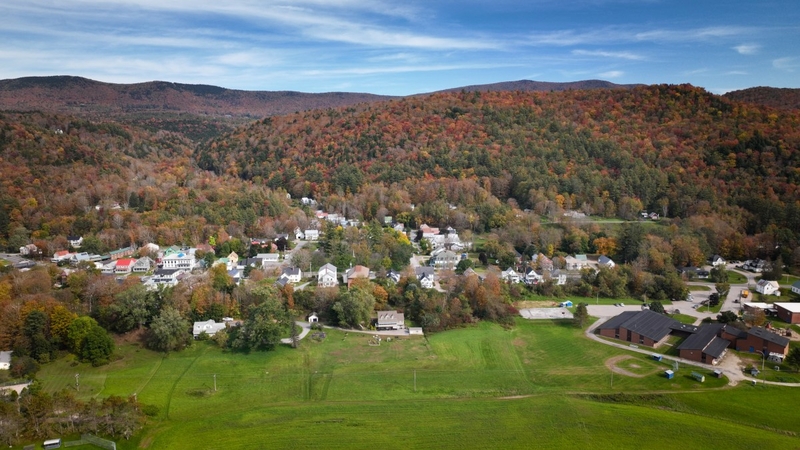
Homes and fall foliage in Rochester in October 2023.
Photo by Kyle Ambusk / Vermont Public
Carly Berlin covers housing and infrastructure for Vermont Public, in partnership with VTDigger.
All five candidates competing in Vermont’s Democratic primaries for governor and lieutenant governor have signaled their support for raising taxes on second homes.
“We must, must, must get control over the houses that we are losing to the secondary market,” said Aly Richards, one of two Democratic candidates for governor, during a Vermont Public debate last week.
The candidates generally argue that higher taxes on second homes could boost housing supply by encouraging owners to rent or sell to people who need year-round homes, raise revenue for everything from universal primary care to affordable housing, and lower tax bills for year-round residents.
Republican incumbents Gov. Phil Scott and Lt. Gov. John Rodgers both say they are wary of adding any new taxes, and point to the need to rein in education costs and grow Vermont’s tax base to bring down property taxes for primary homeowners.
The Democratic candidates see second home taxes as an appealing, and convenient, place to look for money. But their statements about second homes sometimes exaggerate what we know about their scale in Vermont and the potential revenue they could bring in.
How many second homes are there?
Defining what a second home is in Vermont is itself a matter of dispute.
At Vermont Public’s debate for lieutenant governor on July 21, candidate Molly Gray claimed that “we now know 40% of the homes in Vermont are second homes, and we’re not talking about hunting camps or worker housing.”
That count skews high, though estimates differ widely.
According to U.S. Census Bureau estimates, in 2024, Vermont had just under 50,000 “seasonal homes,” accounting for 14% of the state’s total housing stock. That category includes timeshares, homes used only in certain seasons, or homes whose occupants live there for less than two months of the year or have a residence elsewhere.
A separate analysis of municipal property tax data by the Vermont Housing Finance Agency found that Vermont had about 14,500 “seasonal” homes in 2025 that would generally not be fit for year-round habitation. Combined with the census data, that would suggest there are roughly 35,500 second homes that could be fit for year-round use.
The Vermont Department of Taxes is also trying to count second homes. In a preliminary analysis of properties that could be subject to a proposed second home tax – not including seasonal camps – the department flagged around 70,000 properties, according to Jake Feldman, a senior fiscal analyst. That data isn’t complete, though; the department is slated to gather more information from property owners in the coming years.
Do primary homeowners pay higher taxes than second homeowners?
Several Democratic candidates have claimed that year-round homeowners in Vermont pay more in taxes than second homeowners.
“People that own ski chalets in Stowe should never be paying a lower property tax rate than the family down the street that just wants to send their kid to a local school. It’s happening now, and we could change it tomorrow,” said Ryan McLaren, candidate for lieutenant governor, when describing his proposed “pied-à-terre tax” at Vermont Public’s debate.
Only in some towns are primary homeowners paying a higher tax rate than second homeowners.
Right now, in the eyes of Vermont’s education property tax, there are just two kinds of properties: homes that serve as a primary residence, and everything else.
The “homestead rate” paid by primary residents varies according to local school spending, while the “nonhomestead rate” – which applies to everything from farms to businesses, long term rentals, and vacation homes – is uniform statewide.
In a little over a quarter of towns, primary homeowners indeed pay a higher property tax rate than the non-homestead rate, according to a Vermont Public analysis of education property tax rates for the fiscal year that began on July 1. (Stowe is not one of them.)
Even in those towns, primary homeowners aren’t always paying more, since about half of homestead filers in the state get an income-based credit that lowers their tax bill, Feldman said.
How much revenue are we talking about?
Democratic candidates have pointed to a potential second home tax as a future funding source for a laundry list of progressive programs. Gray has said the revenue could help fund universal primary care for Vermonters; Esther Charlestin, another candidate for lieutenant governor, has said the money should go toward community healthcare clinics.
In a social media video, Democratic candidate for governor Amanda Janoo said the money should go toward lowering primary residents’ tax bills and funding housing construction. She claimed that raising taxes on second homes and vacation rentals could bring in $1 billion in annual revenue – a sum that would amount to 40% of the state’s education fund each year.
In a response to questions from Vermont Public, Janoo said the claim “was a rough estimate of the potential long-term revenue that could be generated through a comprehensive, progressive restructuring of property taxation, not a claim that Vermont currently has a completed fiscal analysis demonstrating that particular tax rates would immediately generate $1 billion annually.”
Some taxes on second homes already exist in Vermont. In 2024, lawmakers passed a new tax on second home sales, which has applied to roughly 7,300 purchases over the last two years and raked in about $28 million, according to preliminary data provided by Feldman – less than analysts had initially projected. That same year, the Legislature passed a new 3% surcharge on short-term rental stays, like Airbnbs, impacting the roughly 12,000 such properties in the state.
More recently, lawmakers have laid the groundwork to enact a new second home property tax – essentially, a third category beyond “homestead” and “nonhomestead” – as part of broader education reform efforts. That new tax rate wouldn’t be set until 2029, and it’s contingent on the rest of the reform package moving forward.
How much the state could raise through that tax will depend on the will of legislators, who are the ones with the power to set tax rates. According to Feldman, based on estimates for fiscal year 2025, each additional penny on the rate applied to a new “nonhomestead residential” category would raise $2.35 million.
A higher rate would make second homeownership in Vermont less attractive, potentially reducing the number of properties getting this extra tax over time, Feldman said.
Democratic Rep. Emilie Kornheiser, who chairs the tax-writing House Committee on Ways and Means, said she hopes whoever wins this fall’s elections will keep working with the Legislature to enact the new tax.
“(Vermont has) a remarkably high proportion of homes that are fit for year-round residency, comfortable to live in, that are left vacant for huge swaths of the year,” Kornheiser said. “There’s a lot of folks in Vermont who are owning properties that have a greater ability to pay property taxes on those properties.”
Vermont’s primary elections will be held on Aug. 11.
Read the story on VTDigger here: Vermont Democrats turn to second home taxes as a matter of principle – and cash.
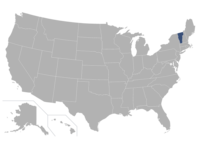
Montpelier, VT