Gov. Armstrong announces special session, emergency actions to ban kratom in North Dakota
Aug 03, 2026 | 11:44 am ET
Description
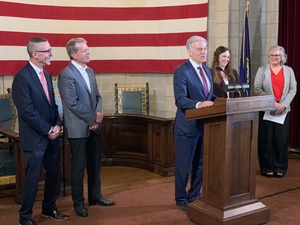
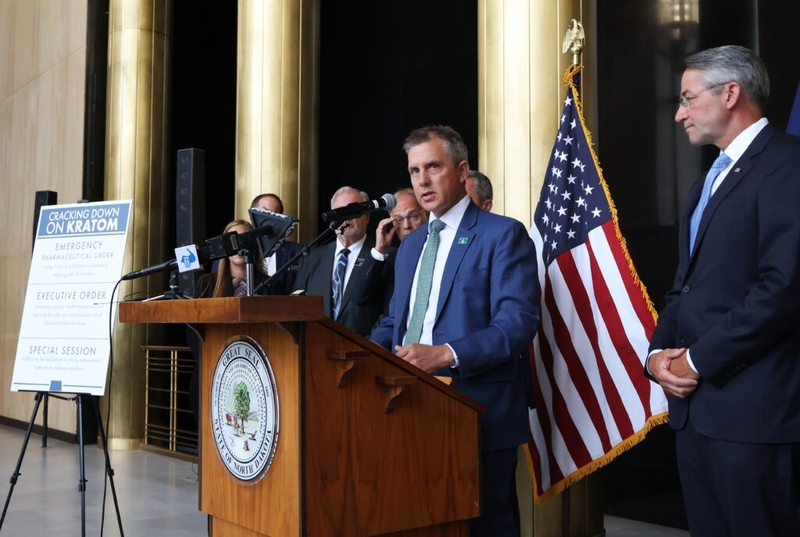
North Dakota Gov. Kelly Armstrong speaks during a press conference after announcing actions to restrict kratom in North Dakota on Aug. 3, 2026. (Photo by Michael Achterling/North Dakota Monitor)
North Dakota Gov. Kelly Armstrong on Monday declared a public health emergency banning all kratom products and called a special session of the Legislature for September to cement a prohibition into state law.
Kratom is a substance derived from a tropical tree in Southeast Asia that officials say can be synthesized into highly potent forms and put into products readily available at gas stations and smoke shops without regulations or age restriction. They have linked those products to overdoses and deaths.
“Doing nothing is not an option,” said Armstrong, flanked by Attorney General Drew Wrigley, top Republican lawmakers and others at a Capitol press conference.
Growing concerns prompt calls to address kratom substances in North Dakota
Kratom has been used as an energy booster, for pain management and to cope with withdrawals from drugs such as fentanyl and heroin. Two psychoactive ingredients known as mitragynine and 7-OH are found in kratom leaves. State officials point to rising calls to Poison Control and a “health crisis” of deaths resulting from the substances.
Armstrong’s public health emergency executive order takes effect Wednesday, lasting for 30 days. It bans the sale, use and possession of all kratom and related products. Violators face an infraction punishable up to a $1,000 fine.
The special session is set to begin Sept. 2, with a goal of lasting three days, or around the time Armstrong’s order expires. Armstrong said the issues can’t wait for the regular legislative session, which begins in January, because most new laws take effect Aug. 1, roughly a year from now.
“This is, quite frankly, too important to wait that long,” the Republican governor said.
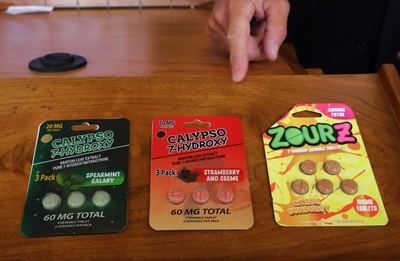
The GOP attorney general held up three packages of 7-OH tablets he acquired from a smoke shop, where he said he went after a meeting with officials on the issue. He described the products’ colorful packaging and names such as “spearmint galaxy” and “strawberry and creme.”
“It all sounds more like a child’s candy than anything else,” said Wrigley, who called kratom “so dangerous to the people of North Dakota and beyond.”
Senate Majority Leader David Hogue, R-Minot, agreed the issues surrounding kratom warranted a special session.
“I think the governor and the attorney general have made a compelling case that we cannot wait when it comes to kratom,” Hogue said.
Armstrong, a former criminal defense attorney, said he is open to differing penalties for kratom offenses, saying, “I’m not particularly interested in making an 18-year-old kid who’s addicted to a product that was legal a month ago a felon for the rest of his life without any options for moving up and down.”
Sen. Michelle Axtman, R-Bismarck, who has been drafting legislation to ban kratom, will take a lead in bringing proposals for the special session. Axtman and Rep. Pat Heinert, R-Bismarck, will lead a working group of lawmakers to prepare a draft bill that will be presented to Legislative Management, a powerful interim committee of lawmakers, before the special session gets underway.
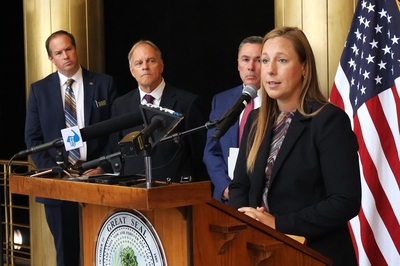
Axtman said in an interview Monday that she’s been looking into kratom for more than a year after a medical professional alerted her that the numbers of adults and youth experiencing withdrawal symptoms at medical clinics had been increasing.
She also compared the wide use of kratom products as the beginnings of another potential opioid crisis.
“People used (opioids) before we knew the dangers as well,” Axtman said. “I’m hoping we can get those people help.”
Sen. Jeff Magrum, R-Hazelton, said he takes capsules of natural-leaf kratom to help back pain. Magrum said he supports an age requirement of 18 and older on kratom but not an all-out ban, and wants to learn more about the circumstances around the deaths in North Dakota. He said he used kratom as recently as Monday.
“I’ve been moving some books and stuff, and I take three capsules, the recommended amount, and it seems to have helped. It just dulls the pain. It doesn’t take it away,” Magrum said.
From 2019 through June 2026, kratom and related substances were part of the primary cause of death for 23 people, according to the State Epidemiology Office.
That means “the medical examiner or certifying physician determined that (kratom’s) effects contributed to, whether alone or in combination, the fatal toxicity,” an office spokesperson said.
The substances were part of the contributing cause of death for one other person, and were present in the toxicology results of 26 other cases during the same time period, according to the office.
Kratom-related calls to Poison Control in North Dakota have risen in recent years, from seven in 2024 to 22 last year, according to a state epidemiologist report. That threefold spike suggests “a true increase in kratom-related exposures,” the report said. At least three-fourths of those 36 calls from 2021-2025 were for males. Nearly half of the calls were for people ages 20-39.
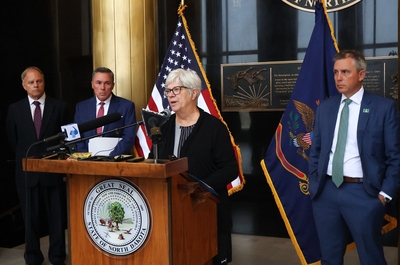
North Dakota State Health Officer Sherry Adams said kratom users and their families have resources available to them to help them with addiction. She said dialing 988 or 211 will put people in touch with the right resources for their situation.
“I think one of the other reasons that this is becoming escalated is that more data is coming out,” Adams said. “More people are using it and we’re seeing more and more lives lost.”
Last month, the U.S. Drug Enforcement Administration moved to temporarily classify 7-OH and three related compounds as controlled substances. The U.S. Food and Drug Administration has endorsed restricting certain 7-OH products.
Armstrong said the DEA’s actions are what led to his emergency orders for North Dakota.
The governor also said he has authorized an emergency rule by the North Dakota Board of Pharmacy to classify 7-OH as a Schedule I controlled substance, effective Wednesday and consistent with the DEA’s action.
Lawmakers might address other topics in the special session, such as a fundraising shortfall that paused construction of the Military Gallery on the state Capitol grounds.
Officials did not directly tie the Military Gallery funding to the special session focused on kratom, but Armstrong said he hoped a “temporary patch” would be available for the project.
“I think the least tenable solution is an empty hole in the Capitol grounds,” Armstrong said.
Reach reporter Jack Dura at [email protected].
Reach reporter Michael Achterling at [email protected].
- 1:18 pmThis story has been updated with additional reporting.
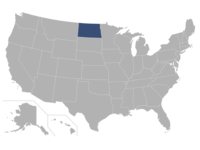
Bismarck, ND