Local property dispute lands tea farmer in hot water
Aug 02, 2026 | 8:51 am ET
Description
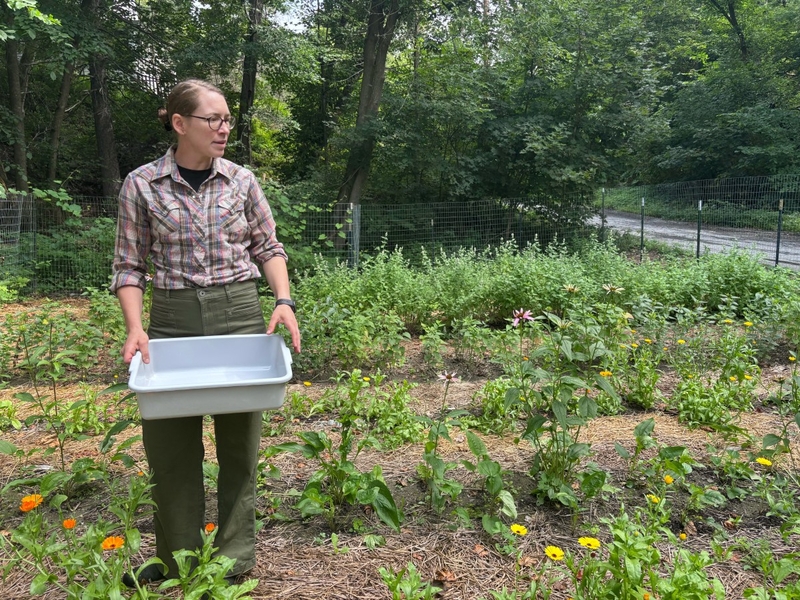
Amber Collett Terway, the owner of Tilia Tea, harvests calendula at her microfarm in Barre on July 31, 2026. Photo by Erin Petenko
BARRE — On a cool, damp morning in Barre, Amber Collett Terway harvested her resin calendula flowers with nothing but a plastic bin and her bare hands.
The sticky yellow flowers, valued for their medicinal properties, were destined for one of Terway’s “Quiet Mind” tea blends sold through her small-batch tea company, Tilia Tea.
The land she grows the flowers on came to her through an unusual arrangement: The property owner, who happens to be a member of the Barre City Council, allowed Terway to use the land for free in order to clean up the weeds and beautify the space.
But it’s another one of Terway’s tiny farms, located on a city property bought out after a 2011 flood, that has caused confusion and contention in Barre. Some neighbors of the property on Hilltop Avenue say they were not properly given a say in what happened with the space before Terway started planting.
Other neighborhood residents have defended Terway’s use of the property, saying that it elevates a former patch of grass into a chance to support local ecology and local business owners.
The dispute over one small tea plot may prove a preview of bigger questions facing Barre — and communities across Vermont — as they contend with a growing inventory of vacant land left behind by repeated flooding. Barre alone has approved more than 20 post-flood buyouts that leave city-owned lots empty indefinitely. As officials weigh how to handle these spaces, and the businesses and residents who want a say in their use, the fight over Terway’s microfarm offers an early test of how towns will balance economic opportunity, neighborhood input and a transparent process.
Barre Mayor Thom Lauzon said he was “surprised” that the 0.3-acre Hilltop Avenue lot had led to so much passion and drawn attendees to city council meetings. But he said the issue of how to use city properties left vacant due to post-flood buyouts is likely to come up again.
“If you were interviewing me after the 2023 flood, and you said, ‘Well, you know, Thom, how about if you create space that people can use for a tea company?’ I would have looked at you and said, ‘Why in the world would I do that?’” Lauzon said. “There’s a lot of uses, and again, that’s why you need the process.”
Herbs, holistic health and a hobby that grew
Terway said she has a “natural connection to farming” from her upbringing in Iowa, where her grandparents owned a farm. But she arrived at Tilia Tea Company through a rather winding route.
As a community organizer in Minneapolis, she began sharing herbs with her friends to help ease the stress of working in activism. That led her to earn a master’s degree in holistic health, followed by a master’s in environmental science, where she studied urban re-greening efforts in Baltimore.
So when she moved to Vermont, she expanded her garden as a way to connect with her young daughter — and gave some of her crop to her neighbors, who told her to try turning it into a business.
Soon, she outgrew the available space on her property. That’s when Amanda Gustin, a Barre city councilor, mentioned that she had an overgrown patch of land Terway was welcome to use — and a new business opportunity was born.
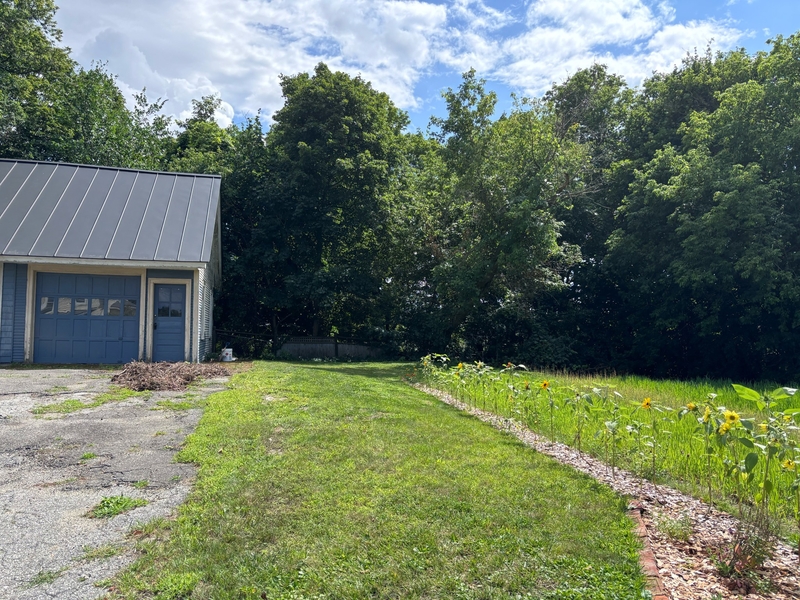
Terway now farms on four different plots in Barre, including the Hilltop Avenue lot under contention. She said via email that the total amount of land, combined, was probably less than one acre.
“There are large tea and herb farms in Vermont that have 13 acres of herbs out there, and are doing a lot of bulk sales. But tea also works really well in small plots,” she said.
Along with herbal tea plants, she grows edible flowers, catnip and some plants meant to absorb rainwater, help pollinators or make the plot more attractive for neighbors. She said she’s committed to making these plots, which she calls “microfarms,” a part of the community.
“One thing that I do at the end of every harvest season, when we put in a new microfarm, is I host a neighborhood tea party,” she said. “So then all the neighbors can come and actually have a cup of tea on the land, and the tea has been grown right there.”
A tea tizzy
Terway lives in the neighborhood around Hilltop Avenue and had been passing the vacant city lot on her daily runs. The property suffered from a landslide from flooding in 2011, forcing the city to condemn an existing house and leave the lot vacant.
She decided to reach out to then-city manager Nick Storellicastro this winter to see if the city would allow her to use it.
“This seemed like a wonderful idea to both beautify a neighborhood and help a woman-owned business in Barre thrive,” Storellicastro said in a June 16 city council meeting.
Storellicastro ran the decision past Vermont Emergency Management and approved her use of the property. Crucially, Terway told city councilors at a meeting Tuesday, Storellicastro emailed his confirmation but never signed a land-use agreement — something she normally does with landowners who let her use their property.
She said she made sure to keep the neighbors informed about what she was planning. But Merrill Creagh, who owns the home directly to the left of the property, said she wasn’t aware of what was happening until she saw plastic tarp laid out all over it.
“One of the neighbors came to me and said, ‘What’s with the plastic?’ And I was like, ‘I don’t know,’” Creagh told city councillors in June.
Terway later reached out with a letter explaining her intentions and a batch of tea left in each neighbor’s mailbox. But Creagh said she still feels frustrated by the perception that the property had been “underutilized.”
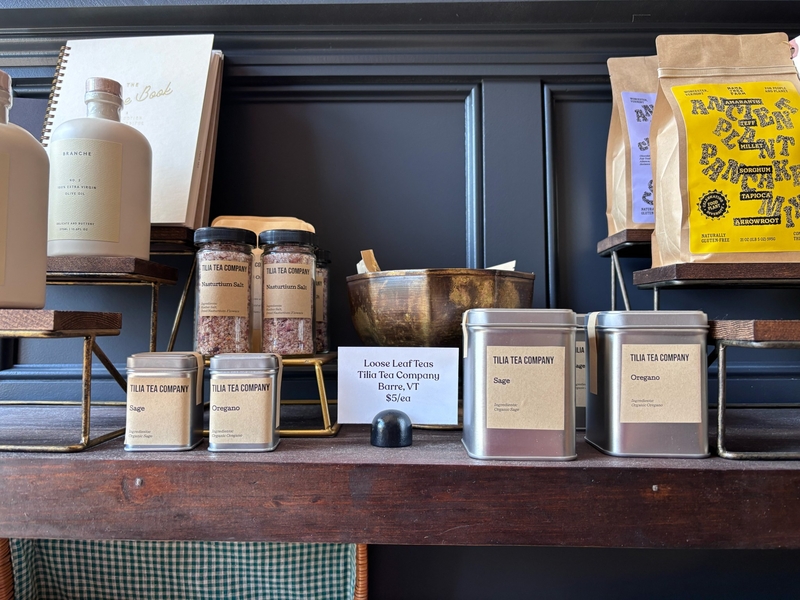
“Dog walkers, we all talk and (go) there, and so we didn’t feel it was underutilized,” she said. “So it’s an interpretation where a business wants to come in and grow their product, compared to the people who live there, and their historical knowledge.”
Creagh also said the city had asked local residents what they wanted for the property after the buyout in 2014, and the general agreement was that it would stay as it was, a greenspace covered in turf grass.
The debate has left the city in a strange position. At Tuesday’s city council meeting, councilors and Lauzon generally agreed that the process Terway used was not transparent or official enough.
“Even Nicholas (Storellicastro) didn’t deny that, in retrospect, he wished that it had come to the council,” Lauzon said.
Yet as several councilors pointed out, Terway followed the process as it had been laid out for her at the time. And she’s already committed money and effort into the lot. She planted a cover crop of oats, peas and clover in order to restore the pH levels and introduce nitrogen into the soil.
“The toothpaste is already out of the tube,” councilor Sonya Spaulding said.
“Don’t just leave it an ugly dirt lot”
Barre City was one of the hardest-hit communities in the 2023 flooding, particularly in the North End and other residential areas. That has left Barre in a difficult position: It has approved more than 20 buyouts, meaning that those properties, by federal rule, must remain vacant “forever,” Lauzon said.
“I’m not a big fan of the buyout program because I don’t like the word ‘forever,’” Lauzon said.
In addition to the hit to its property taxes, Barre must now decide how to prioritize its tight budget to maintain these new city properties. While the top priority is creating floodwater storage, that doesn’t mean they can’t become greenspaces, Lauzon said.
“What I’d like to see happen is obviously maximize the flood mitigation value of the property, and then secondly, don’t just leave it an ugly dirt lot,” Lauzon said. “If it happens to be in an area where there’s not a lot of recreational opportunities, I think it would be great if we could create a little playground there or a little park where people can gather and use that property.”
He’s also preparing for the possibility that other businesses might show interest in buyout spaces. On Tuesday, the city council approved the formation of a committee to create a process for private use of public areas.
Lauzon gave the example of a dog training business that might want to use city property to host obedience classes. It could be a great opportunity for the city to get free mowing and encourage new economic growth — but the dog trainer should have to answer questions from the neighbors about noise levels and controlling unruly dogs.
“Now, maybe I buy into your opposition, and maybe I don’t. But you’re sure going to have the opportunity to voice it,” Lauzon said.
Meanwhile, there’s been some benefits to the drama for Terway. It’s drawn new interest and new offers from local landowners.
“Folks have been like, ‘Wow, this looks really terrible for you. I am so sorry that you are experiencing this. I don’t want you to feel discouraged. Can you come farm on my land?’” she said.
Most of those invitations haven’t panned out since she has specific requirements for the type of land she can farm on. But she’s still bolstered by the neighborhood support and the interest in her product, which has been selling out on her website.
“I am barely keeping up with demand at this point, which is also I think a really lovely problem to have,” she said.
Read the story on VTDigger here: Local property dispute lands tea farmer in hot water.
Montpelier, VT