Environmental groups sue Iowa DNR over Ottumwa coal plant discharge permits
Jul 31, 2026 | 3:29 pm ET
Description
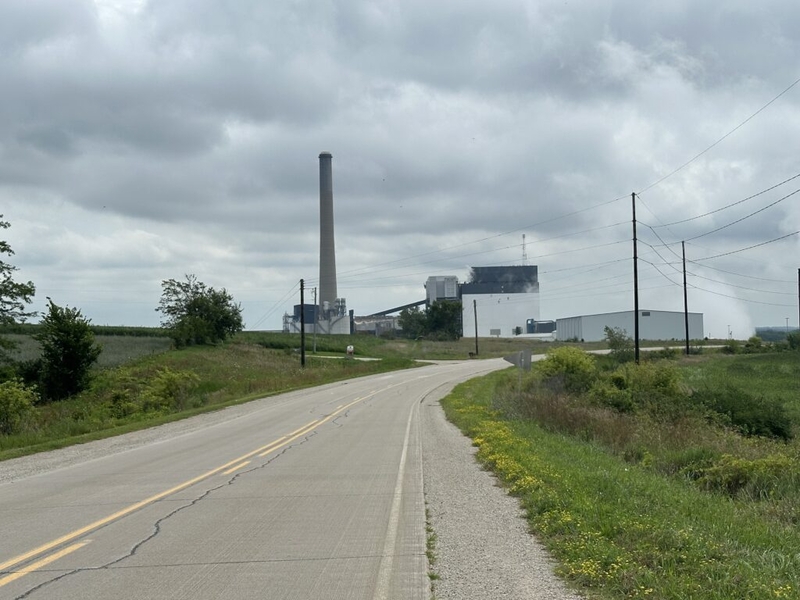
The Ottumwa Generating Station from Power Plant Road on July 22, 2025. (Photo by Cami Koons/Iowa Capital Dispatch)
A group of environmental organizations allege in a lawsuit that the Iowa Department of Natural Resources granted illegal discharge permits to a coal plant and its landfill in Ottumwa.
The lawsuit, filed by Environmental Law & Policy Center, Iowa Environmental Council and Sierra Club, follows several years of actions between the environmental groups, DNR and the coal plant operator, Alliant Energy’s Interstate Power and Light Company.
While the environmental groups allege the permits allow for the discharge of leachate – wastewater that has mixed with the byproducts of burning coal – into the Des Moines River, DNR and Alliant Energy hold that the wastewater streams do not contain leachate.
The groups argue the DNR permits need to ensure the coal plant and its landfill have a plan to come into compliance with more stringent federal discharge requirements for coal-ash leachate that were finalized in 2024.
Groups allege both permits should have applied more stringent limitations
In 2023. DNR told the Ottumwa Midland Landfill that its stormwater discharge permit did not allow the plant to discharge “underdrain,” which is groundwater collected from below a coal-ash landfill’s bottom liner to keep the groundwater table separate from the landfill.
The environmental groups issued a notice of intent to sue Interstate Power and Light in 2025 for continuing to discharge the underdrain into a wetland connected to a tributary of the Des Moines River. Alliant said the company had been in talks with DNR about obtaining a permit.
Following the notice of intent to sue, the landfill announced it would temporarily truck the water to the water treatment facility in Ottumwa and stop discharging to the wetland.
In June 2025, DNR issued a draft permit to update a “technical issue” in the wastewater permit for the Ottumwa Generating Station. The environmental groups intervened via public comments to say DNR needed to apply updated effluent limitation guidelines — finalized by the U.S. Environmental Protection Agency in 2024 to strengthen the wastewater discharge standards for coal-fired power plants — to the Ottumwa Generating Station permit.
DNR said the Ottumwa Generating Station does not produce leachate and therefore was not subject to the effluent limitation guidelines. DNR finalized the wastewater discharge permit for the generating station in October 2025.
In December 2025, DNR released a draft for a National Pollutant Discharge Elimination System, or NPDES, permit to allow the Ottumwa Midland Landfill, which processes the waste products from the Ottumwa Generating Station, to discharge its underdrain water with a filtration system into the nearby wetland.
The environmental groups opposed the draft permit for the underdrain, which they said is “unmanaged combustion residual leachate” due to the heavy metals present in the underdrain discharge as shown by monitoring data published by Interstate Power and Light.
DNR said in the permit rationale that the underdrain “consists solely of background groundwater that does not contact any landfilled waste or any other industrial process at the facility.” Groundwater uphill of the landfill is sampled and compared with underdrain to determine if the landfill is impacting the water.
“To date, the groundwater underdrains have not shown they are impacted by the landfill,” DNR wrote in the rationale. “Instead, they exhibit characteristics similar to the upgradient groundwater … Therefore, there is no discharge of unmanaged combustion residual leachate.”
The environmental groups opposed the permit via public comments in January, and DNR issued the final permit in April. The permit is valid through March 2031.
Effluent limitation guidelines
Michael Schmidt, general counsel for Iowa Environmental Council, said the environmental groups had hoped DNR would put the effluent guideline limitations on the wastewater permit from the landfill, which is why the groups waited to file a lawsuit against the Ottumwa Generating Station permit.
“But then DNR didn’t put a limit in (the landfill permit) either,” Schmidt said. “So right now there’s just no permit with the effluent limitation guideline requirements.”
DNR has not filed a response in the lawsuit and declined comment on the lawsuit.
A spokesperson for Alliant Energy said the landfill and generating station are in “full compliance” with the discharge permits issued by DNR.
“Consistent with our mission and core values, we remain committed to environmental compliance and to meeting all required groundwater monitoring, sampling and reporting obligations at the state and federal level,” the spokesperson said in a statement.
EPA’s final rule states that companies should come into compliance with the effluent limitation guidelines, “as soon as possible” but in January, the agency extended the deadline when companies must be in compliance with the rules.
The petition against the permits said the extension of the deadline “does not excuse DNR from addressing IPL’s leachate discharges.”
Schmidt said the updated permits presented the opportunity for DNR to integrate the new guidelines into the permits, but the department did not do so. Per the permits, DNR said the discharge covered by the permits did not contain leachate and was not subject to the ELGs.
Alternatives analysis was not sufficient
The lawsuit also argues DNR did not “consider relevant and important matters” before it granted the permit, including the petitioners’ comments that an antidegradation alternatives analysis submitted by Alliant “failed to analyze key pollutants, fully evaluate treatment alternatives, or justify degradation of water quality.”
The antidegradation alternatives analysis provided several options for the discharge of the underdrain at the landfill, including the option to filter the underdrain from the land with bag filters to remove iron, before it is discharged at the wetland, which eventually flows into the Des Moines River.
This option, with an estimated 20-year cost of $1.85 million, was significantly cheaper than other options. Alternatives included continuing to truck the underdrain water to the city treatment facility, estimated to cost more than $25 million over the next two decades; treating the underdrain with an installed reverse osmosis filtration system estimated to cost more than $16 million, or piping the underdrain directly to the Des Moines River with a cost of $6.6 million over 20 years.
The analysis determined the iron removal filtration system was the best option, balancing cost and water quality.
The environmental groups, however, argued this option allowed for the “unnecessary degradation of water quality” and that the analysis didn’t consider the downstream cost for Ottumwa residents treating source water with additional contaminants.
The petition asks the court to reverse DNR’s approval of the NPDES permits for both the generating station and the landfill, and require DNR to issue new permits that include a compliance schedule with the 2024 effluent limitation guidelines.
Des Moines, IA