Kansas lawsuit challenges Wichita law enforcement’s reliance on license plate reader cameras
Jul 31, 2026 | 12:11 pm ET
Description
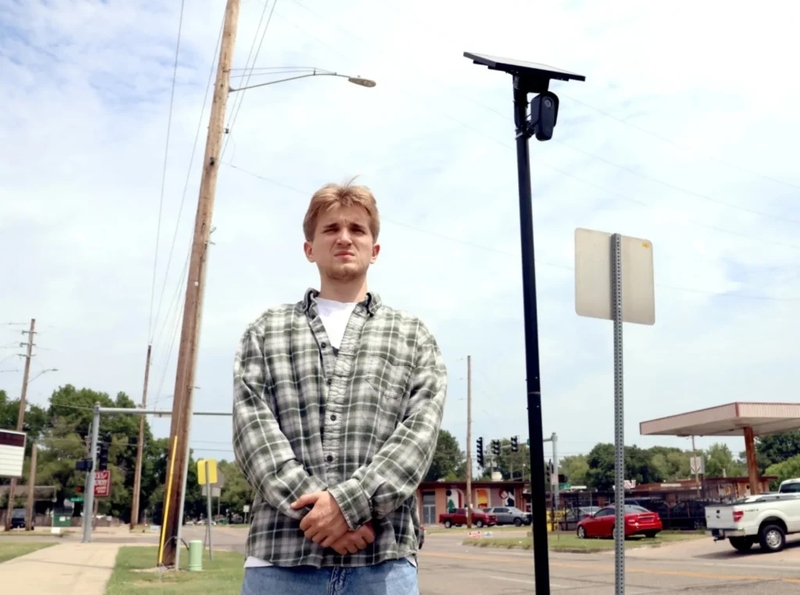
Mason Grimmett of Wichita is the plaintiff in a constitutional challenge of the city of Wichita's use of a camera network to photograph 900,000 motorists monthly for use by law enforcement agencies. (Submitted)
TOPEKA — Machinist Mason Grimmett criticized the Wichita Police Department’s reliance on high-speed equipment that reads, logs and converts into searchable files the license plate of everyone driving in range of nearly 200 specialized cameras in the city.
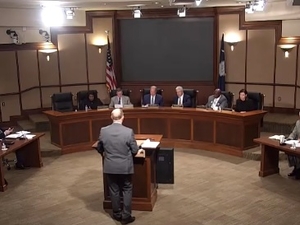
Last month, Grimmett used his five-minute public comment slot at a June meeting of the Wichita City Council to express apprehension about local law enforcement’s deployment of cameras capable of capturing images of plates on moving vehicles day or night. The city’s warrantless effort to document routine movement of street traffic placed images in a database that could be retrieved and shared with other law enforcement agencies.
“The Wichita Police Department, and others, can reconstruct where you sleep, work, worship, seek medical treatment, protest, who you associate with — currently without a warrant,” he said.
On Wednesday, Grimmett amplified his position by becoming the plaintiff in a lawsuit filed in Sedgwick County District Court asserting the city’s “dragnet surveillance program” violated the Kansas Constitution.
The city of Wichita’s policy is not to comment on pending litigation.
Kansas Justice Institute litigation director Sam MacRoberts, who is representing Grimmett, said the suit was based on a belief the state constitution didn’t authorize the government to place every citizen under persistent, AI-powered surveillance just because it might lead to the capture of alleged criminals.
He said Wichita police should secure a warrant before making use of a camera network powered by artificial intelligence to photograph every vehicle, matched to a time and location, for storage in the cloud.
“Mason is a law-abiding citizen trapped in Wichita’s warrantless ALPR dragnet surveillance program,” MacRoberts said. “He’s done absolutely nothing wrong, but he’s still being tracked, monitored and databased. That’s unconstitutional.”
Flock Safety units can be seen mounted on utility or light poles near intersections or neighborhood entrances. They are typically small, black oval devices with single cameras aimed toward traffic. The cameras can be paired with solar panels used to generate power.
The city of Wichita began deploying Flock Safety cameras in 2020, the Kansas Justice Institute said. Photographs sent to Flock’s servers undergo AI analysis based on the plate, make and model of the vehicle, bumper stickers, bike racks and dents or scratches to create something akin to a fingerprint. The database allows law enforcement to reconstruct maps of a vehicle’s movement.
Kansas Justice Institute says Wichita’s program pulls in 900,000 vehicle photographs every month. The treasure-trove of personal data gathered by more than 190 cameras in Wichita could be shared with law enforcement agencies for purposes beyond concerns of Wichita police, the institute says.
During last month’s Wichita City Council meeting, Grimmett requested release of the city’s Flock records showing who accessed data from January 2024 to June 2026. He didn’t ask for law enforcement investigative reports or license plate images under the Kansas Open Records Act.
After consuming his allotted five minutes at the meeting, Grimmett stepped away from the microphone as Wichita Mayor Lily Wu recommended Grimmett visit the Wichita Police Department’s website to review the “Flock Safety transparency portal.” The website asserted the department relied on Flock technology to “capture objective evidence without compromising individual privacy.” The stored images were relied upon to solve crimes, the police agency said, including the capture of alleged criminals tied to a vehicle “hotlist.”
At least two law enforcement officers have abused their access to Flock in Sedgwick County. Former Kechi Police Lt. Victor Heiar used Flock to track his estranged wife. He was found guilty in Sedgwick County District Court of unlawful use of computers and was sentenced to 18 months on probation.
Similarly, former Sedgwick Police Chief Lee Nygaard resigned after reportedly using Flock to track an ex-girlfriend and the woman’s boyfriend.
“We must set the boundaries of how and when the police and private corporations can use this tech in their favor,” said Grimmett, a member of the Sunflower Privacy Alliance.
Kansas Justice Institute, which is owned by Kansas Policy Institute, has been involved in legal action challenging the state’s surprise search of licensed dog trainers and warrantless searches and seizures in asset forfeiture cases.

Topeka, KS