An Idaho law penalizes people sleeping in public spaces. Advocates say it harms more than it helps.
Jul 31, 2026 | 6:15 am ET
Description
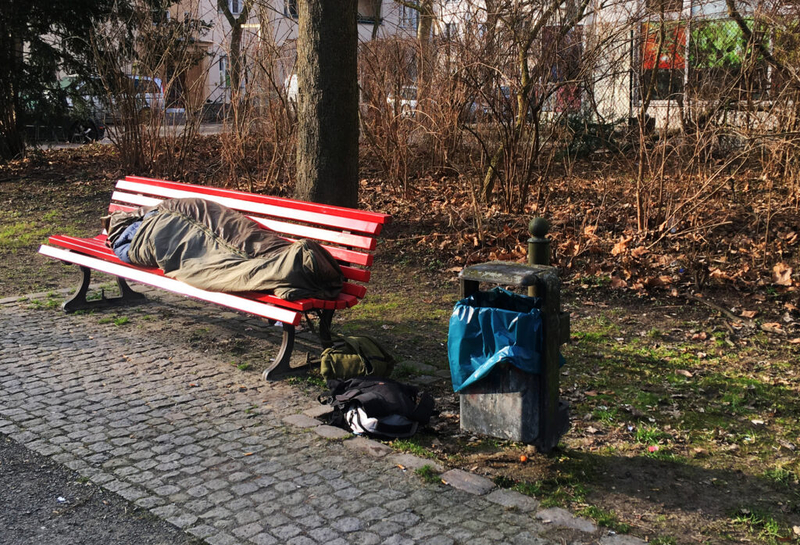
Public camping became illegal in Boise last summer after Gov. Brad Little signed Senate Bill 1141, which forces cities with populations over 100,000 people to police the issue or face financial penalties. (Photo by Getty Images)
On the afternoon of June 22, Neil “Lee” Spring was sitting in Rhodes Skate Park with a friend when officers from the Boise Police Department approached him.
“We’re going to give you a ticket for sitting here everyday,” Spring said officers told him. He was issued a $10 citation for camping on public property — a violation of Boise’s city ordinances.
Public camping became illegal in Boise last summer after Gov. Brad Little signed Senate Bill 1141, which forces cities with populations over 100,000 people to police the issue or face financial penalties.
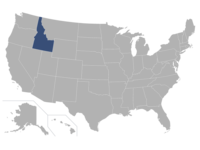
The law applies to just three of Idaho’s cities: Boise, Nampa and Meridian. Sponsored by Sen. Codi Galloway, R-Boise, Sen. Kelly Anthon, R-Rupert, and Rep. Bruce Skaug, R-Nampa, the “Galloway law,” so named after its main sponsor, was promoted as a remedy to what many saw as a growing homelessness issue in Idaho.
A year after its implementation, critics say the law makes it harder to serve homeless populations and targets the unhoused.
The legislation received renewed interest this month when House Speaker Mike Moyle, R-Star, and Skaug tied a July homicide on the Greenbelt to a lack of enforcement of the Galloway law. The suspect was “unlawfully camping regularly in the area where the attack occurred,” according to a press release from Skaug and Moyle.
2 years after Grants Pass, 14 states, 350 cities have tougher laws on street homelessness
“Idahoans who use the Boise greenbelt, float the Boise River or visit a downtown restaurant should not have to fear for their safety because Boise Mayor Lauren McLean won’t follow the law,” Moyle said. “It is sad and infuriating to see a possibly preventable crime occur because Boise won’t enforce the law.”
Public records show that the Boise Police Department has issued more than 100 tickets under the public camping statute since it was adopted into the city code a little over a year ago. More than 45 of those citations were issued either on the Greenbelt or one of its neighboring parks.
The effectiveness of the law also remains unclear as records also show that almost 50% of tickets were issued to repeat offenders — often in the same location on different days. One offender accrued six tickets between November and May, all of which were issued on the Greenbelt.
Boise Mayor Lauren McLean pushed back on the state representatives’ characterization of the city’s enforcement.
“We adopted the state’s criminal camping ban once it became law and enforced it on day one,” she wrote in a statement.
The mayor also pointed to city efforts aiming to help residents who are unhoused.
“We’ve reduced unsheltered homelessness 25 percent this year compared to last,” she said. ”We’re building 250 homes for folks exiting homelessness and raised $15 million to provide the wrap around services they need to stay housed.”
What has enforcement of Idaho’s public camping law looked like in Meridian, Nampa and Boise?
When Spring arrived at court to handle his $10 citation, he found that he was out more than 5 times that original amount once he had paid the court’s processing fees for a total of $66.50. For those already struggling financially, the cost can be crippling.
But Spring’s citation could have been a different story had he been in Nampa or Meridian — the two other cities compelled to follow the public camping ban.
Estimates of homeless populations in the three cities are opaque. The Point-In-Time count is a once yearly survey of people who are sheltered and unsheltered across the country. The survey takes place on a single day in January, meaning it can miss those who are seeking shelter from the cold, and it struggles to account for those staying with friends or in other kinds of temporary shelter.
Additionally, the count is done by region. Because Meridian and Boise are both in Ada County, their tally of close to 687 homeless individuals in January 2026 does not give insight into how they are spread across the two cities. Nampa’s survey is combined with the residents of Adams, Washington, Payette, Canyon, Elmore, Gem, Owyhee, Valley, and Boise counties for a total of 754.
Residents who are unsheltered in the region that includes Nampa outnumber those counted in Ada by more than 7 to 1, with 686 unsheltered residents tallied in the nine counties compared to 95 in Ada. The relationship, however, flips for sheltered unhoused residents with Ada counting 592 compared to 68 across the nine counties.
The variation reflects different access to resources across the state.
“You don’t have overnight shelters in Meridian, so all the resources are mostly down in the Boise area,” said Jess Abbott, executive director at Boise homeless shelter Corpus Commons. “It’s just something that hasn’t affected Meridian and Nampa as much.”
While over 100 citations have been given out for public camping in Boise, Meridian and Nampa have seen far less documented policing.
Since July 2025, the Meridian Police Department has only issued three warnings for public camping. Two of the three warnings appear to be issued to individuals residing in vehicles, and all three were issued in April of this year. The total charge for a public camping ticket in Meridian is $156.50.
In Nampa, a public records request found no citations or tickets issued for public camping either by the Nampa Police Department or the Parks and Recreation Department. The police department’s deputy chief, Curt Shankel, said the law had caused greater attention to areas where camping is common but it had no large impact on enforcement.
“We haven’t really changed how we’ve enforced our ordinances,” said Shankel. “We’re just going out and watching these areas more than we ever did prior to this law.”
Advocates say law pushes people facing homelessness to the fringes
In Boise, however, residents who are unhoused say the law’s enforcement makes them feel vulnerable as they have to scatter apart to remain hidden from police.
“The Galloway law makes us hide, and we shouldn’t have to hide,” said Marquita Burgess, who has been unhoused for three years. “We should be able to sleep in a group, so that we’re safer.”
Scattering has also made it more difficult to connect the homeless population with resources, according to Jodi Peterson-Stigers, who runs the Interfaith Sanctuary shelter.
“Our most vulnerable unhoused are moving further and further away from resources, so that they’re not able to be seen or ticketed,” Peterson said. “It’s harder to find people who are on our waitlists.”
Guests at Corpus Commons also say police have told them to disperse as they wait outside for the shelter to open.
“There’s people that call on file and complain if you have a backpack on,” said Spring. “A cop wants to talk to you like ‘What are you up to? What are you doing?’ — It’s like I’m just walking down the street.”
Still, some business owners believe that the city is not doing enough to combat crime and enforce the ordinances.
“As a building owner we’ve had buildings broken into, automobiles stolen, telephone lines cut, and we’ve had public nudity during the day time,” said Bill Ilett who owns multiple properties in Boise. While Ilett could not definitively tie offenses to unhoused populations, he said the instances were examples of how police had allowed those acting in “bad faith” to remain a threat.
For Spring, the policing is a new, frustrating experience for a person who otherwise adheres to the law.
“I’ve never been in trouble with the cops before I became homeless,” he said.
Boise, ID