Feds turn over Alaska hazardous waste management to state
Jul 30, 2026 | 8:00 pm ET
Description
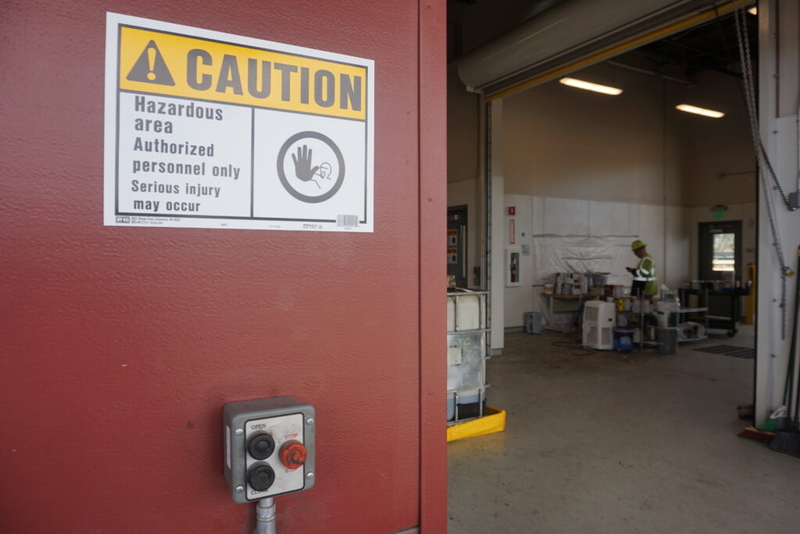
The hazardous waste collection site at Anchorage's Solid Waste Services Central Transfer Station is seen on July 29, 2026. In the background, a worker documents materials that have been collected. The Midtown Anchorage facility is a site where residents can drop off hazardous materials like old paint, solvents and lithium batteries. Alaska is now the 49th state to be granted prime responsibility from the federal government for hazardous waste regulation and management. (Photo by Yereth Rosen/Alaska Beacon)
Alaska is now in charge of hazardous waste regulation in the state, a task that can be made more challenging by geographic remoteness.
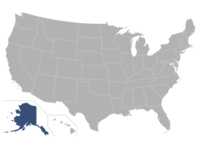
The U.S. Environmental Protection Agency on Wednesday officially transferred authority for hazardous waste regulation to the Alaska Department of Environmental Conservation. That makes Alaska the 49th state to be granted hazardous waste primacy — the term for primary responsibility for management and enforcement — over the Resource Conservation and Recovery Act, or RCRA.
The applicable federal law is the Resource Conservation and Recovery Act, or RCRA.
Before Wednesday, the last state to be granted RCRA primacy was Hawaii in 2001, according to EPA records. Now the only state without RCRA primacy is Iowa, according to the EPA.
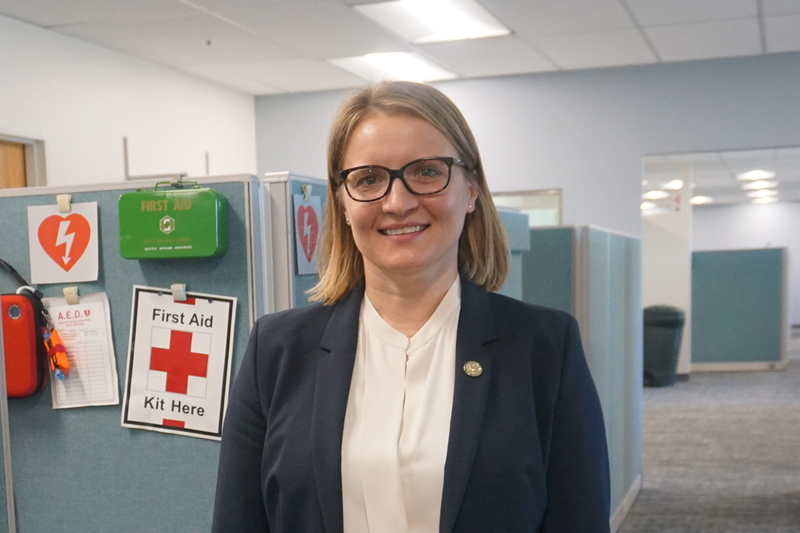
The transfer of authority, completed with a signature ceremony, was several years in the making, said Emma Pokon, EPA’s Pacific Northwest regional administrator and a former DEC commissioner.
DEC has assembled a hazardous waste program and team and has created state regulations that became effective a year ago. The Alaska Legislature has made regular appropriations in budgets for the hazardous waste program, which is part of DEC’s Division of Environmental Health.
“The good news is that the state has been implementing the program hand-in-hand with the EPA for the last several years,” Pokon said in a brief interview. “This moment isn’t a new imposition of costs. . . They are up and running. They’re staffed up. They’re trained up.”
Lori Aldrich, the DEC staffer managing the program, is “a gem of a public servant,” Pokon added.
Alaska in 2023 reported 2,729 tons of RCRA-classified hazardous waste, a total that ranked 48th among states, according to the EPA. The top sources that year, which is the most recent year with data available publicly, were the Petro Star Valdez Refinery, Eielson Air Force Base and a Palmer-based environmental services company that manages such wastes as part of its operations, according to the EPA.
For Alaska, distance poses a major challenge to hazardous waste management, Pokon said.
There are no hazardous-waste disposal facilities in the state, so almost all of the collected materials have to be shipped out for proper disposal, she said. And the shipping has to be timely, she said.
“There are limitations on holding times because of the risks presented by those materials,” she said. “The logistics involved with — once you get something into the community — getting it out, pose specific special challenges.”
Challenges are exacerbated when communities are especially remote or when there are natural disasters, she said. For that reason, hazardous waste management is part of preparation for and response to events like the Mendenhall Glacier outburst floods that now affect Juneau on a nearly annual basis or the Western Alaska floods from ex-Typhoons Halong and Merbok.
The newly formed program at DEC has already been addressing those emergency response tasks, Pokon said.
“One of the great things about DEC having the program is that really it’s been their teams that have been closer to the on-the-ground issues,” she said.
Juneau