Georgia state agencies told to freeze spending and draft contingency plans
Jul 30, 2026 | 5:50 pm ET
Description
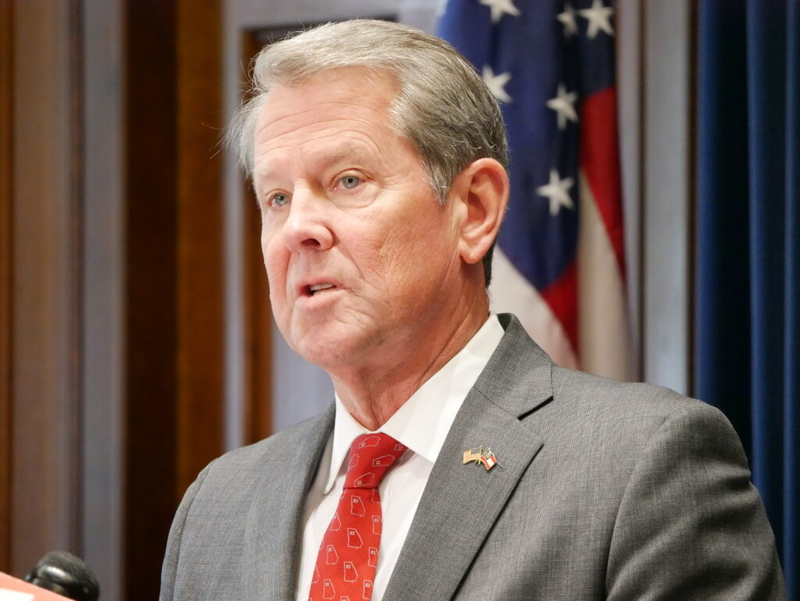
Gov. Brian Kemp announces $300 million in budget cuts on May 12, 2026. Jill Nolin/Georgia Recorder
Gov. Brian Kemp’s office has instructed Georgia state agencies to keep spending level as they prepare budget proposals ahead of next year’s legislative session.
Kemp is term-limited and signed his final budget earlier this year, cutting more than $300 million in new spending at the time to help pay for an income tax cut package that lawmakers passed earlier this year.
The next budget will be signed by Georgia’s new governor, who could be healthcare executive Rick Jackson, a Republican, or former Atlanta mayor Keisha Lance Bottoms, a Democrat, but state agencies must submit their budget request by Sept. 1, giving Kemp some control over the process in his final months in office.
Office of Planning and Budget director Richard Dunn wrote in a memo sent to agency heads earlier this month that the budget for the next fiscal year has to maintain the current fiscal year’s level. Requests for funding increases must be approved by Dunn’s office and will be limited to an “urgent, unavoidable need that cannot be addressed through internal redirection without negatively affecting essential service delivery,” according to the memo.
Dunn touted the Kemp administration’s accomplishments but hinted at the uncertain economic conditions that await. As state agencies prepare their new spending plans, Georgia is also still bracing for the financial impacts of the federal tax and spending bill that passed last year.
“To sustain these achievements while implementing historic tax relief for our citizens, responsible fiscal management principles require that we continue to live within our means,” Dunn wrote in the memo.
The guidance instructed agencies to plan to redirect their current funds for non-mandatory spending and new projects and to draft contingencies plans that identify “potential efficiencies and savings.”
“While current revenue projections are expected to be sufficient to meet the state’s mandatory growth obligations, these plans help ensure the state can respond effectively to changing economic conditions or new budget priorities that require the reallocation of existing resources,” Dunn wrote.
The move drew criticism from the left-leaning Georgia Budget and Policy Institute. According to GBPI, inflation over the past eight years means the state is currently spending less per resident despite budget growth. Organization chief Staci Fox criticized Kemp’s administration for prioritizing tax cuts that will decrease funding to the state’s future budgets instead of spending on healthcare and education.
“While Gov. Kemp has already unilaterally issued budget cuts that will harm the most vulnerable Georgians, the budget instructions issued for the 2027 legislative session make clear that our state cannot afford to continue prioritizing corporations and the wealthy at the expense of everyone else,” Fox said in a statement.
The guidance comes after an income tax cut bill Kemp signed into law earlier this year. The tax cut lowered the rate from 5.19% to 4.99% and exempted some overtime and tips from being taxed and caused a $1.3 billion revenue shortfall for next year’s budget.
That led to the governor cutting $300 million in new spending to address the deficit, which included $9.3 million for services for people with disabilities and $30.7 million for transportation funding for schools. He said then that not cutting some of those new services would have left the next governor with a “mess.”
Atlanta, GA