Ten selected for ‘Gallery of Outstanding Montanans’
Jul 30, 2026 | 7:07 pm ET
Description
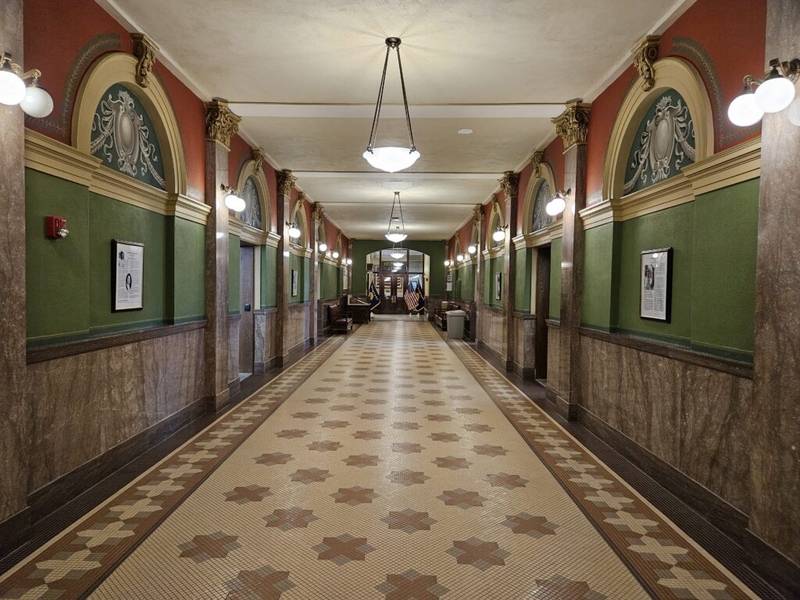
The Gallery of Outstanding Montanans is pictured. (Montana Historical Society photo)
Ten candidates have been selected for inclusion into the “Gallery of Outstanding Montanans,” which honors citizens who have made significant contributions to the state or nation.
The Montana Historical Society manages the program, which will honor the 10 Montanans – two at a time– during the next decade. The honorees will have an eight-year display at the Montana State Capitol.
“Each of these 10 individuals contributed to Montana, and in some cases, changed the nation,” Martha Kohl, a program manager with the Montana Historical Society, said in a press release. “Their stories span a remarkable range of lives, fields, and eras, and together they reflect the full breadth of what it means to be an Outstanding Montanan.”
The program was established in 1979, and the historical society puts out a call every 10 years for honorees — the next round will take place in 2036.
Candidates for induction into the Gallery are:
Charles Bovey (1907–1978) and Sue Bovey (1907–1988)
The Boveys were historic preservationists who were key in preserving Virginia City and Nevada City. Both of those towns are deeply important to the state’s early gold-rush history.
Frances Senska (1914–2009)
Senska was a potter and longtime Montana State University professor who helped found the Archie Bray Foundation for the Ceramic Arts. Colloquially known as “The Bray,” it’s a large ceramic facility outside Helena that’s helped contribute to a strong tradition of pottery in parts of the state.
Carmen Louise Cross (1919–2014)
Cross was one of 19 women elected to the 1972 Montana Constitutional Convention and was the only woman to lead a committee. She was critical in helping enshrine the state citizens’ right to a clean and healthful environment, the release says. She also helped found Glendive’s Frontier Gateway Museum and was a longtime curator there.
Dr. Huie Pock (1849–1927)
Dr. Pock was a Butte doctor, herbalist, acupuncturist and merchant who practiced medicine in the Mining City from around 1895 until his death. He notably treated patients from all backgrounds and helped defend the rights of Chinese Montanans “during a period of intense anti-Chinese discrimination” with the release saying he built a distinguished professional life in the face of racial prejudice.
Elouise Pepion Cobell (1945–2011)
Cobell helped found the nation’s first tribally owned bank during her time as treasurer for the Blackfeet Nation. She was also the lead plaintiff in a lawsuit — Cobell v. Salazar — over mismanagement of federal funds that impacted nearly a half million American Indians. That case resulted in a $3.4 billion settlement. She was also honored with warrior status by the Blackfeet Nation in 2000.
Cornelius Hedges (1831–1907)
Hedges was critical in helping establish Yellowstone National Park and also founded the Masonic Order in Montana. He additionally was the territory’s first Superintendent of Public Instruction.
George Horse Capture (1937–2013)
George Paul Horse Capture was one of the first Native Americans to be a museum curator and was a Gros Ventre scholar, curator and activist. He was also critical in creating the National Museum of the American Indian in Washington, D.C. The release quoted him as saying that such a museum should be “for Native peoples, not just about them.”
Emma Ingalls (1860–1940)
Ingalls was one of the first two women elected to the Montana Legislature and introduced the 19th Amendment in the Montana House for ratification. She also introduced legislation creating the Mountain View Vocational School for Girls and was a newspaper publisher.
Harriette Cushman (1890–1978)
Cushman is credited with helping to drastically expand Montana’s poultry industry and worked for the Montana Extension Service from 1922 to 1954. She was one of the few women of her time to pursue agricultural science, the release said, adding that she was instrumental in making the state’s turkey industry the most profitable in the nation during the Great Depression.
Benjamin Steele (1917–2016)
Steele was an artist and survivor of the Bataan Death March during World War II, helping document the march through art. He spent decades at Eastern Montana College in Billings as an educator, continuing his art while teaching.
Helena, MT