WV Treasurer Pack says it’s ‘unacceptable’ clothing voucher closed amid $370M surplus
Jul 30, 2026 | 3:26 pm ET
Description
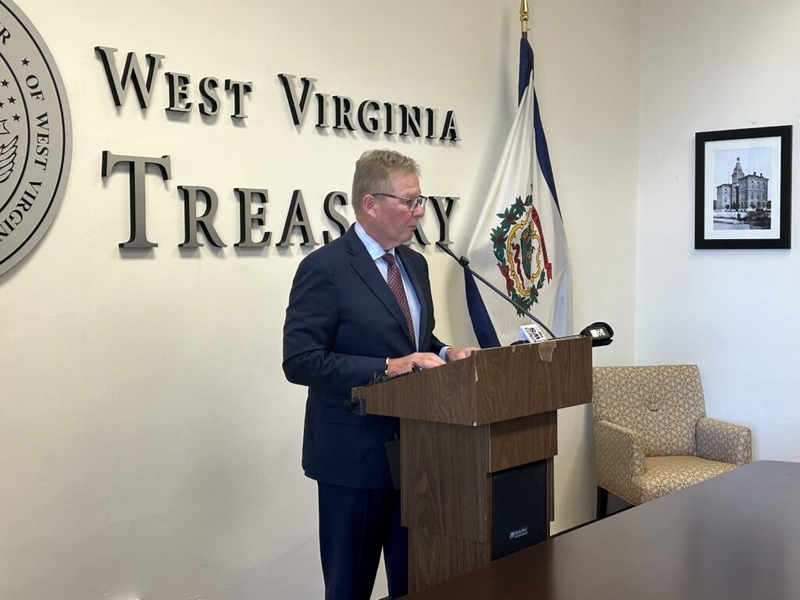
West Virginia State Treasurer Larry Pack addresses reporters about his 2026 legislative priorities during a news conference Nov. 17, 2025, in Charleston, West Virginia. (Photo by Lori Kersey/West Virginia Watch)
State Treasurer Larry Pack says it’s “unconscionable” that West Virginia’s school clothing assistance program for low-income children has already stopped taking applications due to a funding shortfall.
“I think it is unacceptable that a state where we celebrate millions of dollars of surpluses, and we announced a program and a week later stop a program that is designed to help low-income school children have new clothes to start school in just two weeks,” Pack told West Virginia Watch on Thursday.
“It is just really hard to understand the priorities are of this administration. It does appear that children are not part of it,” he added.
Applications for the school clothing assistance program were open for seven days before funds ran out Monday.
According to Gov. Patrick Morrisey’s office, 52,000 children in West Virginia applied for the school clothing assistance program in that window.
“This year, demand for the benefit was extraordinarily high, and the available funding was exhausted before the application period ended,” Lars Dalseide, the governor’s communications director, said earlier this week.
Eligible families receive $200 through the program to shop for shirts, pants, shoes, coats and more at retail stores before school starts.
West Virginia pays for the program through the federal Temporary Assistance for Needy Family, or TANF, program.
Earlier this year, lawmakers authorized $177 million in TANF funding for DoHS to spend this current fiscal year on programs that help low-income children and families.
In May, Morrisey told reporters that his administration discovered a projected $43 million TANF deficit, prompting a review of the state’s use of those federal dollars. The review caused a delay in launching the school clothing assistance program. In the past, the program typically began accepting applications July 1.
The governor’s office hasn’t publicly released documents showing the TANF deficit.
Pack called on the Morrisey administration to have “full disclosure” on the use of TANF funds and noted the state is only in month one of the current fiscal year yet dealing with funding questions.
“It needs to be a document that people can look at and peruse and ask questions about,” Pack said. “And then, if in fact there’s not enough money, I am quite sure the Legislature would love to give suggestions on where we can find a million dollars in a budget that has all these tremendous surpluses.”
Last year, West Virginia’s school clothing assistance program served more than 57,000 children, according to the governor’s office. In the past, the program has served more than 80,000 kids.
There are ongoing concerns about how other programs funded by TANF, including family support centers and child care assistance programs, could be impacted by Morrisey’s review of the federal anti-poverry funds.
DoHS announced on July 16 that the department was nearing completion of the review of TANF dollars.
“Today, West Virginia receives approximately $98.8 million in federal dollars each year to support TANF-funded state activities but spends approximately $137 million annually on TANF programs,” DoHS said in a news release. “The difference has been covered using TANF reserve funds – essentially savings accumulated over previous years. At the current expenditure rate, those reserve funds will be exhausted in about 13 months.”
Pack said TANF funding concerns are “not going away.”
“I think there will absolutely be more transparency, more clarity. It’s the question whether we’re going to get it really soon, or the Legislature will mandate over time,” he said. “When you think about the safety net population, you know we have a duty to do the right thing. I don’t think the state of West Virginia is doing the right thing with this population.”
Charleston, WV