Stevens dismisses PAC focus as ‘campaign finance zoomies’
Jul 30, 2026 | 2:56 pm ET
Description
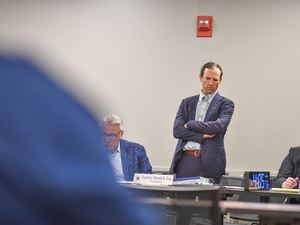
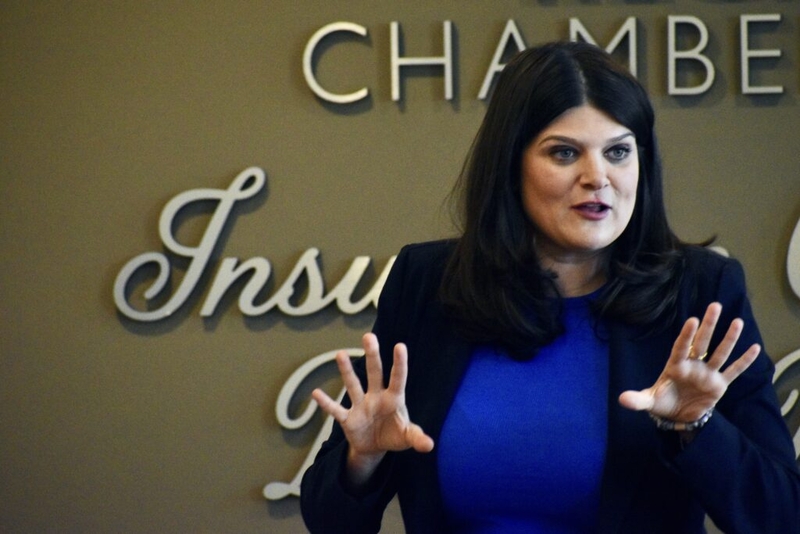
U.S. Rep. Haley Stevens (D-Birmingham), a Democratic candidate for the U.S. Senate, speaks during a candidate meet and greet with the Lansing Regional Chamber in downtown Lansing, Mich. July 29, 2026 | Photo By Ben Solis/Michigan Advance
As U.S. Rep. Haley Stevens (D-Birmingham) makes her closing arguments to August primary voters across the state, the congresswoman, who is seeking the Democratic nomination for the U.S. Senate, met with business leaders in Lansing on Wednesday for a question-and-answer session.
Questions regarding campaign finance and the amount of outside money being raised and spent on her behalf continue to follow her across campaign events and in key debates. It has been a major focus for the campaign rhetoric of her opponent, Abdul El-Sayed, but also as a concern among undecided voters who might see Stevens’ connections to corporate and advocacy PACs, such as the American Israel Public Affairs Committee, as a liability.
That issue surfaced again during her appearance before the Lansing Regional Chamber this week, as the first question posed by a business leader at the event centered squarely on campaign finance.
Stevens was asked about the tens of millions of dollars she’s received from corporations and other super PACs, which El-Sayed has repeatedly criticized. The ire, one business leader said, was an especially important issue for Democratic primary voters who are shifting more toward progressives.
When asked for her take on that, Stevens invoked former U.S. Sen. Debbie Stabenow and retiring U.S. Sen. Gary Peters, who have both endorsed her.
“I’m fundraising in the exact way that they always did,” Stevens said. “There’s deep frustrations that I think we all share. We’re that swing state now. With all the money that’s coming in from campaign committees and party committees, and things along those lines.”
Although Stevens did not directly answer the question, she used it as a springboard to pivot toward attacking El-Sayed.
“It’s important to recognize my record. I’m not lip service. I want to overhaul our system. I’m the only person in this race with an A grading from End Citizens United. I have a record of taking on this dark money,” Stevens said. “But my only focus is people here in Michigan. … That’s how I do my work. My opponent in this race also has a Super PAC that is funded by his father in law. I am proud of my record and I’m proud of what I am standing for, and I’m proud of why I’m running for this seat.”
She also accused El-Sayed of accepting dark money and asserted that he was doing some of the exact same things he was accusing Stevens of.
Later, another business leader asked Stevens for specifics on how she would attack the campaign finance problem facing U.S. elections, noting she didn’t answer the previous question on the matter. A bill by U.S. Sen. Bernie Sanders (I-Vermont) was also referenced, which would abolish super PACs, and Stevens was asked if she would support it.
Stevens responded by saying that something like that should start in the Senate, and that the upper chamber of Congress should “put big ideas down.” She also said she would entertain a constitutional amendment to curb corporate influence on campaign finance.
“We are running stagnant as a nation. Michigan has been losing proportional representation for the last 50 years,” Stevens said. “It’s not in the Constitution. … I’ve got a stronger legislative record for Michigan. Senator Sanders, with all due respect, he’s got a campaign platform. He’s in the independent party. I haven’t talked to him about it. I’m not trying to do any division.”
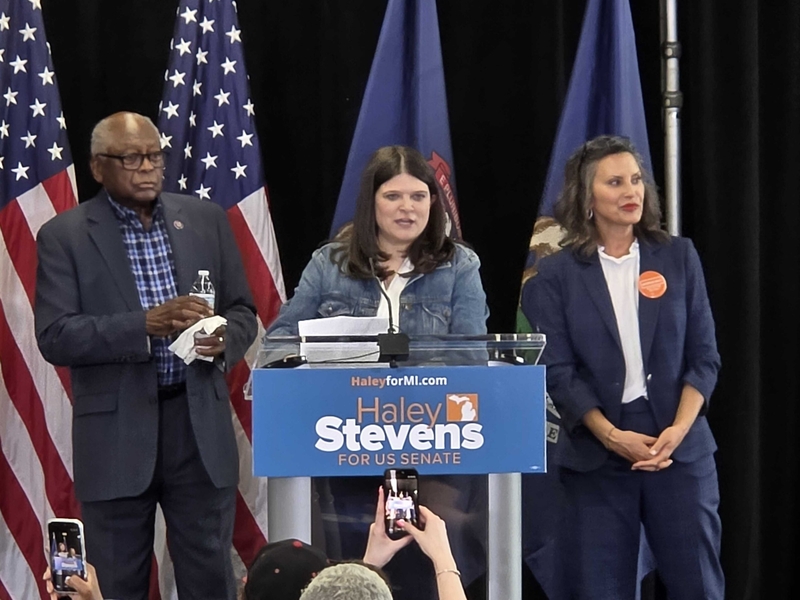
Stevens, who again did not address the question directly, quickly pivoted to her work on the auto industry rescue during the Obama administration and raised concerns about El-Sayed’s financial disclosures. She eventually landed back to the question at hand.
“Maybe something is breaking. I have the pledge. I have the commitment. I have the voting record,” Stevens said. “I would love a constitutional amendment to get rid of money in politics and maybe make our elections shorter. … I’ve even talked to the colleagues on the other side of the aisle. We need them to know that we’re in a moment of reckoning.”
As Stevens grapples with questions on super PACs and questions about her own connections to dark money in the race, some of her endorsers have come out in support of PAC spending and outside money as having a positive impact in elections.
Astead Herndon of the “America, Actually” podcast, produced by Vox, recently hosted Democratic U.S. Rep. Jim Clyburn of South Carolina, who has endorsed Stevens. He told Clyburn that some 80% of Americans oppose dark money and support getting it out of elections.
Clyburn was asked if he did not think the Congressional Black Caucus was on the wrong side of history due its members’ stances on using PACs and advocacy dollars to help boost their political operations. The dynamic of dark money and PACs giving Black candidates a leg up in key races was also the subject of a recent report in Politico.
Clyburn said “no.” He framed the use of dark money in elections as a civil rights issue.
“You know, as well as I do, that no white person in this country came out of slavery,” Clyburn said. “I’m not that far removed from it. I know how my parents grew up. They didn’t grow up with wealth. They couldn’t pass that wealth onto their children because they never had it. I served with people here who are multimillionaires. If they decide that, ‘I’m not going to take any kind of corporate PAC money, because my mommy and daddy are writing the checks.’ So are we just supposed to stay out of politics because we don’t have the family wealth to support it? Or do we sit down and find common ground?”
Clyburn challenged Herndon to “find one vote that I have ever cast that pharma supported and my constituents didn’t.”
Michigan Advance asked Stevens where she really stands on campaign finance reforms given Clyburn’s comments, and how his comments squared away with her saying that she supports a constitutional amendment to get money out of politics.
Stevens said she wants to be bold, but also said that she thinks some voters have “the campaign finance zoomies.”
“The first vote I took was for campaign finance reform. It stalled in the Senate. It was deeply frustrating. I remember we were planning strategies around that in Mitch McConnell’s Senate with regard to changing that,” Stevens said. “But here’s the other thing I’ll tell you: it seems like we got the campaign finance zoomies. We’ve got to be really honest here. Who’s benefiting from this level of infighting? It’s the Republicans who already have all their dark money all lined up ready to go.”
Stevens then said that she’s more focused on kitchen table issues, like affordability, because of what she’s hearing from voters on the ground.
“This is what my campaign is about. My opponent has done a great job talking about campaign finance. It’s an educated issue,” Stevens said. “I even had someone who’s got a law degree asking me about some of the campaign finance stuff today. That’s totally fine, but you know what else? These families on paid leave? They need affordable daycare. They need good public schools to go.”
Lansing, MI