Virginia launches new unit targeting illegal vapes and intoxicants
Jul 30, 2026 | 10:55 am ET
Description
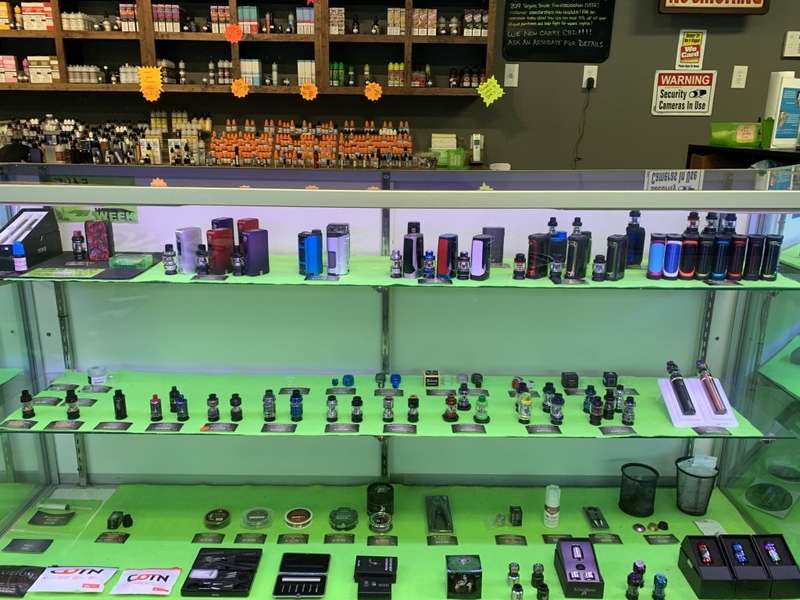
A vape shop in Chester. A new enforcement unit within the attorney general’s office will oversee compliance with state laws governing vaping products, hemp-derived intoxicants, THC and kratom. (Photo by Mechelle Hankerson/Virginia Mercury)
Virginia is creating an enforcement unit to oversee the rapidly expanding market for vaping products, hemp-derived intoxicants, THC and kratom, consolidating several regulatory responsibilities within the attorney general’s office.
Attorney General Jay Jones announced the Regulated Products Enforcement Unit on Thursday, saying it will handle civil enforcement, retail compliance, product directories and public education as new intoxicating products continue to enter the market.
Inspectors assigned to the unit will monitor retailers, conduct compliance checks and coordinate enforcement with the Virginia Alcoholic Beverage Control Authority and other state agencies. The office will also be able to pursue civil penalties and other legal action against manufacturers, distributors and retailers accused of violating state law.
“New intoxicating products and substances enter the market every single day, many of which include dangerous or illegal ingredients and are deceptively packaged, labeled, and marketed to consumers,” Jones said in a statement. “Many of these products even target children, causing irreparable harm to their lives and their futures.”
Thursday’s announcement follows several years of legislative efforts to tighten oversight of products commonly sold in vape shops, convenience stores and other retailers.
Virginia’s vapor product law generally prohibits the sale of liquid nicotine and nicotine vapor products unless they appear in a directory maintained by the attorney general’s office. Manufacturers must submit certifications and other documentation demonstrating their products comply with state and federal requirements.
Responsibility for reviewing those applications will now fall to the new enforcement unit, which will determine whether products will qualify for sale, monitor changes in their federal regulatory status and work with retailers to explain the rules while removing unauthorized products from the market.
Lawmakers expanded that framework this year through the Vape Enforcement Act, sponsored by Del. Patrick Hope, D-Arlington, and Sens. Adam Ebbin, D-Alexandria, and Schuyler VanValkenburg, D-Henrico.
The measure gave Virginia additional authority and resources to inspect retailers and crack down on unauthorized products and sales to people younger than 21.
“For far too long, too many vape shops have been ignoring the law, selling illegal and dangerous products to Virginians, and taking advantage of gaps in the law to sell vapes to kids. That ends now,” VanValkenburg said in a statement. “The General Assembly took action to pass the Vape Enforcement Act, and the AG’s new unit is ready to move against businesses that repeatedly disregard the law.”
Another law approved this year imposed new restrictions on kratom, a supplement that is sold as an energy booster, mood lifter, pain reliever and remedy for opioid withdrawal. It prohibits sales to anyone younger than 21, requires ingredient labeling and mandates that products be stored behind a counter or in a locked display case.
It also bans synthetic and semisynthetic kratom compounds, products intended for vaping or injection and packaging or marketing deemed attractive to children. In addition, the law limits the amount of 7-hydroxymitragynine, commonly known as 7-OH, that kratom products may contain.
Derived from a tree native to Southeast Asia, kratom can produce stimulant-like effects at lower doses and opioid-like effects at higher doses. Concentrated or synthetically produced 7-OH products have drawn increasing scrutiny from state and federal regulators.
Jones said most businesses want to comply with the law but argued that the growing number of intoxicating products on the market requires a more focused enforcement effort.
“We know that most businesses, retailers, manufacturers, and distributors want to follow the rules, and Virginians want to know what they are consuming,” Jones said. “This new unit will educate Virginians and ensure strong accountability for bad actors who violate the law and put our communities at risk.”
The attorney general’s office has not yet announced staffing levels or a separate operating budget for the new unit.
Virginia has struggled at times to enforce existing restrictions on hemp-derived products. In 2024, the Virginia Department of Agriculture and Consumer Services found violations at 82% of the retailers it inspected. Some THC-infused drinks and other products exceeding Virginia’s potency limits also remained available online and in some stores.
Other states have also expanded enforcement in recent years as regulators try to keep up with products that often fall between traditional tobacco, cannabis and controlled-substance laws.
Pennsylvania established an electronic nicotine delivery system directory under a 2025 law that is administered by the state’s attorney general’s office. Products not included in the directory may be seized beginning in October.
California has combined education, inspections and enforcement in campaigns targeting illegal hemp and kratom products. State officials there said investigators visited more than 4,500 businesses during one kratom enforcement effort and identified 61 violations. An earlier crackdown on hemp products produced a compliance rate of more than 99% of businesses licensed by the state’s alcohol regulators.
Alabama took a more aggressive approach in June, executing 83 search warrants and seizing nearly 123,000 doses of kratom products during a statewide operation led by the attorney general and state law enforcement officials.
Several states have also coordinated enforcement against unauthorized vaping products.
Last year, a coalition of 25 attorneys general urged the online marketplace Shopify to stop providing services to websites selling illegal vaping products. Virginia, under then-Attorney General Jason Miyares, did not join the effort. At the time, federal regulators had authorized only 39 e-cigarette products even as unauthorized disposable services continued to dominate much of the market.
Beyond enforcement, Virginia’s new unit will also work with advocates, medical professionals and public health organizations to identify emerging products and develop prevention strategies.
“The Regulated Products Enforcement Unit is a critical component of Attorney General Jones’ commitment to keeping Virginians safe,” said Helen Hardiman, deputy attorney general of public advocacy.
“Through investigation, enforcement, and programmatic work, this unit will ensure that consumers are well informed and protected from harmful products and that bad actors will be held accountable.”
Richmond, VA