Judicial selection amendment could ravage rural Kansas communities. School funding is at stake.
Jul 30, 2026 | 4:33 am ET
Description
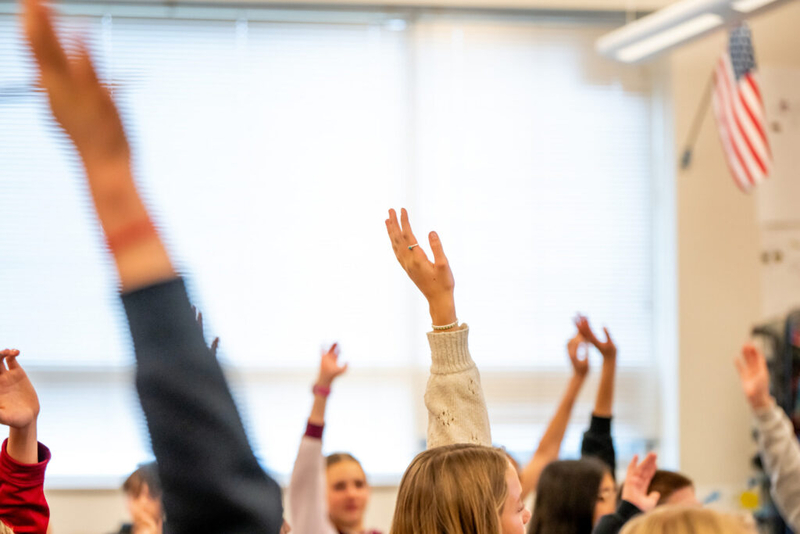
The Kansas Supreme Court is the last bulwark defending our state's constitutional requirement that all kids receive an adequate and equitable education, write our columnists. (Photo by Spenser Heaps for Utah News Dispatch)
As former elected officials with 16 years of experience in the Kansas Legislature and more than 50 years working with parents and children in our public schools — from Belle Plaine to Stafford and from Haviland to Garden City — we want to highlight how Kansas school children and rural communities could be affected by the constitutional amendment on the ballot Aug. 4.
This amendment would establish direct elections of Kansas Supreme Court justices, without any limits on campaign funding, conflicts of interest, or political activity by the justices.
Discussions about changing judicial selection in Kansas started about 15 to 20 years ago because of court decisions requiring the Legislature to adopt constitutional funding for schools. The debate heated up again recently because the current school finance formula is set to expire next year.
Debate about the court’s makeup did not begin due to some lofty goal of promoting democracy, but because the Kansas Supreme Court is the last bulwark defending our state’s constitutional requirement that all Kansas kids receive an adequate and equitable education, regardless of where they grow up.
Over the years, legislators from both parties resisted overthrowing the state Supreme Court. Last year, legislative leaders twisted enough arms to put an amendment on the ballot. Instead of providing voters with a compromise such as adding more members to the vetting panel or Senate confirmation, Legislative leaders took the most extreme path — direct judicial elections with no limits other than what will be “provided by law” in the future, when the public no longer has a say.
The amendment explainer doesn’t mention it, but if you look closely, near the end of the struck-out language, the proposed amendment specifically removes prohibitions that prevented judges from wielding their position and influence to engage in political campaigns and partisan activities.
Kansas public school children could suffer if the next time a school finance case is decided, justices are more concerned about soliciting $1 million campaign checks from out-of-state special interests than protecting every kid’s right to an education.
When both of us were in the Legislature, the Supreme Court forced legislators from across the state and political spectrum to work together to achieve a school funding formula that provided every student a suitably funded education regardless of their ZIP code.
This was not an easy task. Legislators first had to fix our state’s budget after the disastrous tax experiment, which left schools reeling and considering major reductions in services. That could have meant cuts to school transportation funding and cuts to schools with lower enrollment, both of which would have devastated rural communities.
The current, merit-based selection method preserves the fairly good chance that lawyers who grow up and have experience working in rural communities are selected for Supreme Court seats. Right now, the primary qualifications for Supreme Court justices are lawyers’ reputation, their legal career and their judicial service record. Under these conditions, a lawyer with a rural Kansas background can compete with anybody.
And they have.
Since Kansas adopted merit-based selection in 1958, more than 30% of justices appointed under this system have had roots in Kansas towns with a population of less than 10,000 people, and more than 60% of justices have had roots in communities with a population of fewer than 50,000 people.
A recent opinion piece by a law professor criticized a decision the Kansas Supreme Court made in 2013, saying the court was “urban-dominated.” For most of the court’s history during the school finance cases — and for the past 20 years — the court has actually been “rural-dominated.” In 2013, the hometowns of five of the seven justices were Caldwell, Tipton, Goodland, El Dorado and Salina.
Salina and El Dorado may be getting pretty cosmopolitan, but the law professor may want to get out a little more before claiming Goodland, Tipton, or Caldwell are “urban-dominated.”
If the amendment becomes law, the No. 1 qualification for any candidate will not be their legal career or service, but rather how many “friends” can write $1 million checks for a statewide campaign. That will include a few big donors in Wichita and Kansas City, but mostly, that type of donor lives in New York City, California and wherever Elon Musk or George Soros call home for tax purposes.
In addition to rural justices’ service record, geographic representation is built into the current system. Every congressional district in the state is guaranteed two out of the nine seats on the vetting panel — one lawyer and one non-lawyer.
Regardless of the selection panel’s membership, Kansas governors have always made the ultimate selection under the current system, and governors of both parties have routinely spread out their appointments geographically because they know this will widen their appeal to voters.
The state lost two rural justices over the past 18 months due to unexpected health issues (Chief Justice Marla Luckert from Goodland and Justice Evelyn Wilson from Smith Center), but we retain K.J. Wall from Scott County, and the next governor will immediately have the opportunity to select two new justices because of the current system’s mandatory retirement provision.
The Legislature is going to be renegotiating our school finance formula next year. Over time, the current system has ensured we have rural Kansas voices on the court, and it has protected rural Kansas kids from severe funding cuts that would forever harm our rural communities.
John Doll served in the Kansas Senate from 2017 to 2025 and the Kansas House from 2013 to 2017. Before that, he taught government for 20 years at Garden City public schools. Mary Jo Taylor served in the Kansas Legislature from 2017 to 2021 and served as a teacher, principal and superintendent in Kansas public schools for 34 years. Through its opinion section, Kansas Reflector works to amplify the voices of people who are affected by public policies or excluded from public debate. Find information, including how to submit your own commentary, here.
Topeka, KS