Making daylight saving time permanent is a bad idea
Oct 16, 2026 | 11:16 am ET
Description
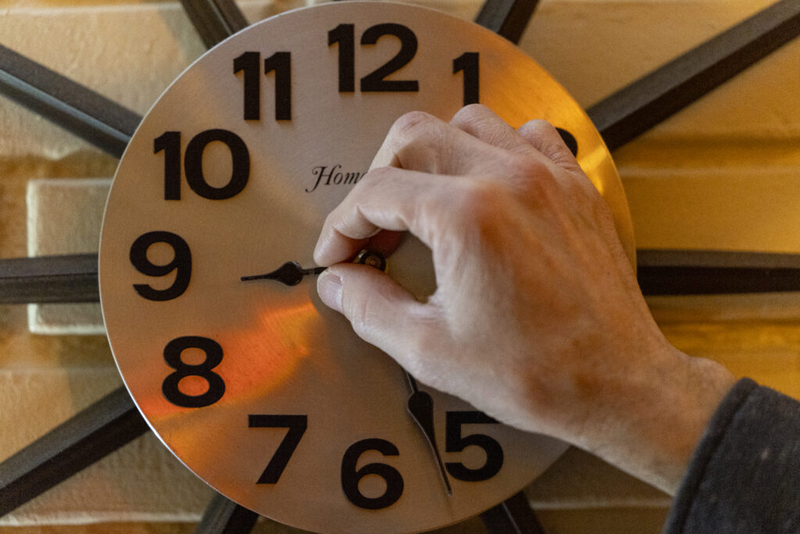
A bill to make daylight saving time permanent in New Jersey is another example of Trenton lawmakers wasting time on bad ideas. (Photo by Anne-Marie Caruso/New Jersey Monitor)
A measure state lawmakers advanced on Thursday is an example of what I’m calling the Trenton Trifecta.
It’s dumb. It’s bad. And it’s pointless.
We very often get bills that are one of those, but it’s rare for them to qualify for all three.
I’m talking about the bill to make daylight saving time permanent if Congress authorizes states to do so.
Look, I get it. Changing clocks twice a year can be annoying. But there are more annoying chores I have to do far more often; it would not occur to me to seek a change in state law so I can avoid doing them.
Dark afternoons are also a bummer. But we would not gain any sunlight by making daylight saving time permanent, because we cannot command the sun to give us more daylight. Yes, our afternoons would stay brighter longer but our mornings would stay darker later. Winter sunrises would largely happen after 8 a.m., and in some places in the U.S. the sun would rise closer to 9 a.m. All the grumbling about commuting home in the dark would be replaced by grumbling about commuting to work in the dark.
So that’s why this is dumb. Here’s why it’s bad: We’ve already tried this and we hated it so much Congress reversed course within a year.
In December 1973, Richard Nixon signed a bill, approved overwhelmingly by Congress, that made daylight saving time permanent, part of a push to save energy. Not only was it unclear that goal was achieved — the U.S. Department of Transportation did a study and indicated energy savings of 0.4% to 1.5% — but the shift created panic among parents when they realized they had to send their kids to school in predawn darkness for months at a time. From December 1973 to February 1974, public approval of year-round daylight saving time plummeted from 79% to 42%.
“I think we have to recognize that we may have made a mistake,” Iowa Sen. Dick Clark said in February 1974, two months after voting yes to make daylight saving time year-round.
This was such a bone-headed move, it took just two months for a U.S. senator to admit he erred by supporting it. In September 1974, Congress voted to bring back standard time for four months out of the year.
Now for the pointlessness of all this. The only bill in Congress with enough support to make it to a vote — this is the one that led daylight saving time fan President Donald Trump to publicly release Arkansas Sen. Tom Cotton’s phone number to get Cotton to end his opposition — would make daylight saving time permanent in New Jersey. There’s no reason for our lawmakers to waste any time considering this bill; if Congress acts, we have to make the shift.
The Legislature has countless bills on deck that would be wiser uses of their time. Let’s focus on those.

Trenton, NJ