Wastewater in Alaska’s largest city signals warning about measles
Jul 29, 2026 | 7:25 pm ET
Description
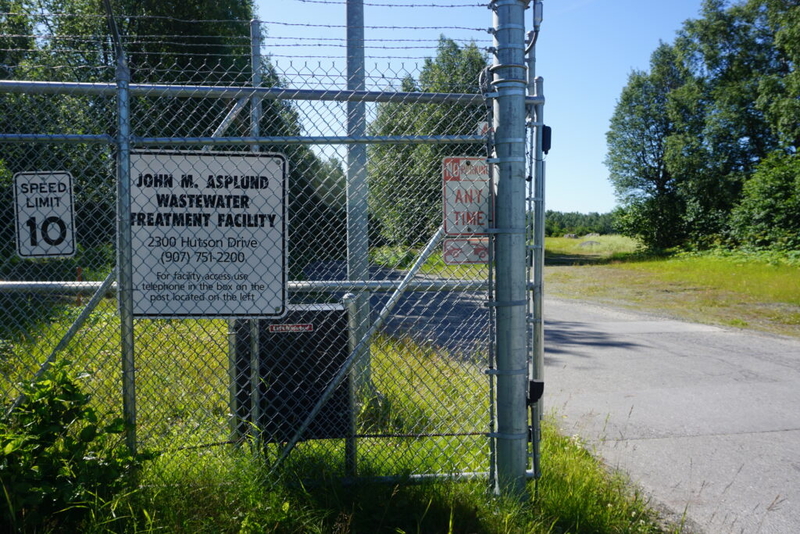
The gate to the John M. Asplund Wastewater Treatment Facility is seen on July 29, 2026. The plant serves most o the residents of Alaska's largest city. Wastewater samples taken in early and mid-July revealed genetic material from measles. (Photo by Yereth Rosen/Alaska Beacon)
At least one person in Anchorage had measles in early and mid-July, creating a risk that the highly infectious disease could spread through the state’s largest city, state health officials are warning.
The proof is in the sewage.
Samples taken from Anchorage’s John M. Asplund Wastewater Treatment Facility revealed genetic material from the strain of measles that has caused outbreaks in the Lower 48.
It means someone carrying the virus was in the part of Anchorage served by the state’s biggest wastewater treatment plant, said Dr. Joe McLaughlin, Alaska’s state epidemiologist.
“It doesn’t tell us where exactly they were in the sewershed, and it also doesn’t tell us if there was any human-to-human transmission that’s occurring,” he said.
But it does provide an early warning to health providers and the general public, McLaughlin said.
“It’s important for people to take a look and see if they’ve been vaccinated, or if their children have been vaccinated,” he said. If children have not been vaccinated, “go ahead and get them vaccinated, because we know that this virus has been present in the community. And it may still be present.”
The presence of measles RNA, the virus’ single-strand genetic material, was detected in samples taken on July 7, 8, 9 and 14, health officials said. State and municipal health officials are still waiting for results from more recent wastewater testing, McLaughlin said.
Samples from the Asplund plant are usually taken every Tuesday, Wednesday and Thursday, said Clayton Weingartner, the Division of Public Health’s wastewater surveillance coordinator.
Performing the scan that detects measles genetic material is a complex process, he said. “it’s an expensive test, and it takes longer to get the results,” he said. That is why state officials are still waiting for results from last week’s sampling, he said.
For now, public health officials say, Anchorage residents and other Alaskans should be on the lookout for signs of measles.

As of Tuesday, there were no new reports of any patients with measles in Anchorage. The last Anchorage case was in October, affecting an adult who tested positive after traveling to the city from the Lower 48, according to municipal officials. There was also a child in Anchorage who was diagnosed with measles in May of 2025.
Elsewhere in the state, there were four measles cases diagnosed last year, according to health officials.
McLaughlin said there are reasons for Alaskans to be vigilant.
There are more measles cases in the United States now than at any time in the past 35 yeas, he said.
“And we’re at peak tourist season right now, so there are people coming into Alaska from the Lower 48 and from many different countries, and they’re bringing with them, some of them, different pathogens,” he said. “And one of them can be measles. And we know that measles is the most contagious virus that we’re aware of on the planet.”
Additionally, Alaskans are at elevated risk because the rate of measles vaccination is low compared to the rest of the nation.
Medical providers should be notified if there are suspected measles infections, McLaughlin said. Patients should not be in clinic waiting rooms because the virus is so contagious, he said.
Whenever a case is identified, health officials have to trace the places where that patient may have exposed others to the virus, such as daycare centers, stores and recreational sites. “All that kind of stuff takes a lot of work, and that’s just for one case,” he said.
Wastewater sampling in Alaska screens for a variety of infectious diseases, including COVID-19, different varieties of influenza and Respiratory Syncytial Virus, or RSV, as well as measles.
Numerous sites participate in the National Wastewater Surveillance System, or NWSS, that was set up by the CDC in 2020 as part of the national response to the COVID-19 pandemic. But the Asplund plant, which serves most of Anchorage’s residents, is the only one in Alaska that participates in the most advanced testing program, a privately operated system called WastewaterSCAN, Weingartner said.
“The WastewaterSCAN program has very limited testing slots,” he said.
The Alaska Department of Environmental Conservation, the University of Alaska Anchorage and the Yukon Kuskokwim Health Corp. are also testing wastewater for disease pathogens, he said. Samples are regularly collected from wastewater in Eagle River, Juneau and Bethel.
Juneau