Campaign spending accelerates as Missouri primary election draws near
Jul 29, 2026 | 10:00 am ET
Description
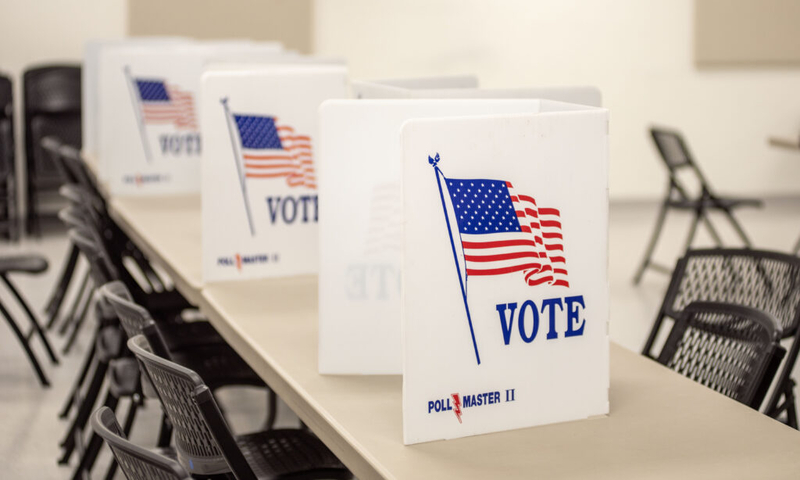
Missouri voters have major ballot measures on income tax and initiative petitions to decide, as well as primaries for congress, state Senate and Missouri House districts on Tuesday (Annelise Hanshaw/Missouri Independent).
Ballot measure campaigns raised almost $40 million through the third week of July as they paid for ads and direct mail appeals bombarding Missourians ahead of Tuesday’s primary election.
Early voting is underway and the primary election is Aug. 4. The final full financial disclosure statements for state campaigns were due Monday to the Missouri Ethics Commission.
Missourians will nominate candidates for state auditor, decide four ballot measures and select candidates in 17 state Senate districts and 163 House districts. Not all legislative districts have primary contests, but in those that do, candidates, associated political action committees and outside groups are vying for attention with millions of dollars in broadcast ads, direct mail and other appeals.
Ballot measure committees have spent $26.7 million, with 65% being spent since the start of July.
In the state Senate races, 91 candidates, their associated PACs and outside groups have raised $18 million and spent $13.6 million. The Senate campaigns also held most spending for the final month. More than half of the money spent by candidates and their associated PACs has been reported since July 1.
There are 444 Missouri House candidates and associated PACs, and The Independent has been unable to track fundraising and spending in every race.
In contrast, the only statewide race on the ballot, state auditor, has been almost invisible.
Total pre-primary spending by all candidates in the auditor’s race is only $211,411 and most of that — $147,862 — has come from incumbent Republican State Auditor Scott Fitzpatrick and the political action committee that supports him, Missourians for a Responsible Budget.
Quentin Wilson, former state revenue director, has spent $58,357 seeking the Democratic nomination.
Ballot measure spending
Missouri Promise PAC, a political action committee that has not reported any contributions from individual donors, has raised $17.2 million to persuade voters to pass Amendment 5, which would give lawmakers the power to replace the state income tax with expanded or increased sales taxes.
Through Friday, Missouri Promise had purchased $6.4 million in broadcast ads for Amendment 5, according to The Independent’s tracking of Federal Communications Commission records. That is almost four times the broadcast ad spending by two opposition PACs, Missourians for Fair Taxation and No Everything Tax.
Missourians for Fair Taxation, funded entirely by the Missouri Association of Realtors, has raised $2.8 million, and No Everything Tax has raised $1.8 million, with $1.5 million coming from the National Education Association, a teachers union, and its Missouri chapter.
Opponents are far outspending backers of Amendment 4, which would change the way majorities are counted on constitutional amendments proposed by initiative petition.
Missourians for Fair Governance, another PAC funded mainly by the Realtors, has raised $8.8 million, while Protect Majority Rule Missouri has raised $7 million. Of those amounts, $4.5 million consists of spending swaps between the two opposition committees that were reported as in-kind donations from one committee to the other.
Protect Majority Rule has received major cash donations from national groups including the National Education Association, The Fairness Project and the American Civil Liberties Union as well as Missouri groups that include Missouri Jobs with Justice, the Mid-American Carpenters Regional Council for Missouri and Kansas and the Health Forward Foundation of Kansas City.
Missourians for Fair Governance has spent $2.6 million on broadcast ads and Protect Majority Rule Missouri has spent $536,775, The Independent’s tracking shows.
Protect Election Integrity, the PAC backing Amendment 4, has raised $132,100 and spent $28,653 through July 23. It has been outspent by an independent expenditure committee supporting Amendment 4, Freedom Principle Missouri/Missouri First PAC, which reported spending $45,551 in support of the measure.
Freedom Principle Missouri has sponsored the only broadcast ads for Amendment 4, on radio stations in scattered parts of the state.
Very little has been spent, comparatively, on the other two ballot measures, Amendments 1 and 2.
Amendment 1 would extend the current one-tenth of 1% sales tax that supports state parks and soil and water conservation efforts. Citizens for State Parks, Soil and Water has raised $287,878 and spent $117,455.
No organized effort has been mounted for or against Amendment 2, which would require all county assessors to be elected.
State Senate races
There are six state Senate primaries where spending has exceeded $1 million and three more where at least $750,000 has been spent as candidates pursue their party’s nominations.
Of the $13.6 million spent in the 17 state Senate districts, only $1.8 million has been for broadcast ads, with a large portion spent on radio in largely rural districts.
About $2.8 million of the $13.6 million spent since the start of 2025 has paid for direct messaging supporting or opposing candidates by political action committees associated with those candidates. Under state law, candidates can help the PACs raise money with no limits on the size of donations but cannot have any role in shaping the messages or how they are distributed.
The most expensive race so far is in the 20th District in southwest Missouri, where $2.4 million has been spent. Incumbent state Sen. Curtis Trent of Springfield, who wants to be Senate majority leader, is locked in a bitter fight with attorney Lori Rook of Springfield for the Republican nomination.
Trent has spent $422,000 from his campaign fund and Rook, who loaned her campaign $300,000, had spent $198,000 by July 23.
The 417 PAC, aligned with Trent, has spent $838,000, using $503,000 for attacks on Rook and just under $200,000 to promote Trent. Firebrand PAC, aligned with Rook, has spent $10,000 opposing Trent and $83,548 supporting Rook.
The 20th District also has the largest broadcast ad purchases, with Rook spending $121,000 so far on radio and television ads and Trent countering with $151,000 in ads purchased by his campaign, plus another $200,000 in ads paid for by 417 PAC.
An outside group, AFC Victory Fund, which supports private school tuition vouchers, has spent $36,000 opposing Rook.
AFC Victory Fund is trying to influence several races. It has spent almost $90,000 to unseat incumbent state Sen. Jill Carter in the Republican primary in the 32nd District and almost $150,000 opposing state Rep. Bill Hardwick in the Republican primary in the 16th District.
Show Me Promise PAC, renamed in July from Taxpayers in Support of Public Education and funded mainly by the PACs associated with the Missouri National Education Association, has countered AFC Victory Fund in some races. It spent $102,130 supporting Mike Deering in the 10th District Republican primary and smaller amounts supporting and opposing candidates in other races.
A PAC funded by Missouri Promise is targeting two Republican lawmakers who opposed Amendment 5. The Republican Accountability Project PAC spent $46,076 opposing state Rep. Rudy Veit in the 6th District Republican primary and $91,263 opposing state Rep. Greg Sharpe in the 18th District.
Both Veit and Sharpe voted against the legislation that is on the ballot as Amendment 5.
The 6th District is the second costliest primary so far, with $1.9 million spent, while the 18th District is close behind with $1.6 million spent.
The Republican Accountability Project is backing Jake Vogel in the 6th District and state Rep. Ed Lewis of Moberly in the 18th District.
We The People Priorities PAC, funded mainly with a $300,000 contribution from Republican megadonor Rex Sinquefield, is also targeting Amendment 5 opponents. Sinquefield has contributed $2.9 million to Republican candidates and PACs since the start of 2025.
The PAC opposes Veit and Ike Skelton and backs Vogel in the 6th District, and is spending to influence the outcome of a dozen Missouri House Republican primaries.
Jefferson City, MO