Transparency becomes biggest issue in final Michigan Democratic U.S. Senate debate
Jul 28, 2026 | 5:02 am ET
Description
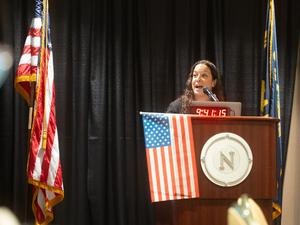
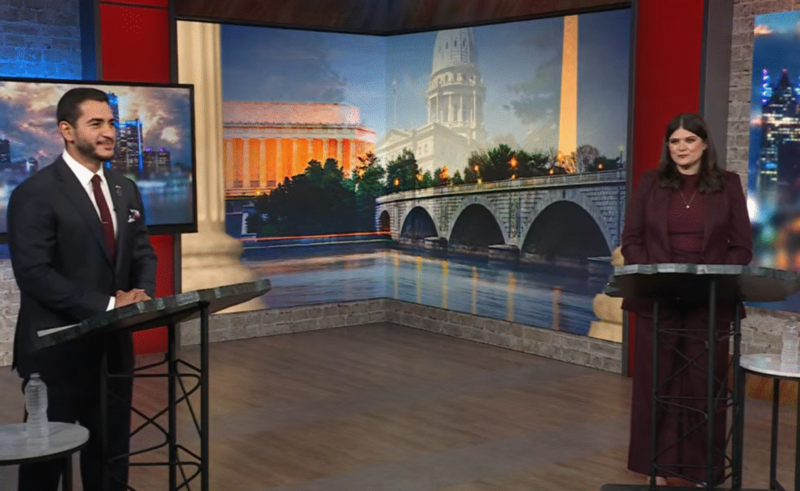
Abdul El-Sayed and U.S. Rep. Haley Stevens face off in their final debate on Fox 2 WJBK. July 27, 2026 | Screenshot
A house in Dubai, hundreds of thousands of dollars in uncategorized income, tens of millions in outside spending, celebrity podcasting and campaign donations from DTE Energy Co. dominated the final Michigan Democratic U.S. Senate debate Monday as Abdul El-Sayed and U.S. Rep. Haley Stevens clashed over transparency.
Early in-person voting has started and absentee ballots have been out for weeks. Michigan’s official election day on Aug. 4 is just one week away. That’s pushed both El-Sayed and Stevens to fight even harder to win over undecided voters as the race for their party’s nomination comes down to the wire.
While many questions in the race remain — Who might get the winning share of voters from former candidate Mallory McMorrow? And how much will Gov. Gretchen Whitmer’s endorsement for Stevens matter? — lingering transparency issues have come to the fore.
Both candidates have much to answer for in that regard, and Monday’s debate, hosted by Fox 2 Detroit WJBK-TV’s Roop Raj as a special edition of the stations’ The Pulse political news magazine, sought to bring clarity to those issues.
At the top of that list is El-Sayed’s personal financial disclosures, documents that all candidates for the U.S. Senate must file during the cycle.
El-Sayed sought an extension to file his disclosure after the primary on Aug. 13. Stevens has hammered El-Sayed to release them since it became a two-person race after McMorrow dropped out in early July. El-Sayed indicated that he would not wait until after the primary and would release them soon, but that promise spanned many weeks. After continued pushing by Stevens’ campaign, he vowed to release them by Monday, and did so just before Monday’s debate.
The filings revealed that his net worth was as much as $2.1 million. It was no secret, via past financial disclosures, that El-Sayed was in fact a millionaire, but Stevens has used it as a cudgel against him. Stevens argued the disclosure undercut El-Sayed’s campaign message of fighting for working people.
According to the disclosure, the increase in his income was driven in part by a property El-Sayed’s wife owns in Dubai, United Arab Emirates, and consulting contracts that netted him $157,000. His tax returns also showed that he had $260,000 in capital gains earnings and close to $300,000 in “other income.”
Stevens didn’t immediately raise the disclosures, instead waiting until late into the debate, while also accusing El-Sayed of seeking to be a celebrity politician and focusing on his past podcasting.
“You have not released your full tax returns,” Stevens said about 42 minutes into the debate. “$300,000 in other income, while you sat in the podcast chair and hawked healthcare cures that RFK Jr. would thumbs up. You talk about getting money out of politics and putting money in people’s pockets, but still no one knows who’s putting the money in your pocket.”
El-Sayed said he did what Stevens asked — he released his disclosures before the primary was over. He also said it was a distraction from the issues at hand in the race.
“I’d love to talk to you about transparency,” El-Sayed said in response. “I really would, because I want you to ask yourself: There is this thing called the Center for Democratic Priorities. They didn’t exist until they popped up and started running ads for my opponent. And then, there’s this group called Center Forward, that paid for a flight for the congresswoman and her mother to go to Portugal. They just released their donors, and it’s a whole bunch of 501c4 organizations.”
El-Sayed previously jabbed Stevens about the trip in the WOOD-TV debate that happened earlier this month. She told Michigan Advance that it was an approved congressional trip to deepen diplomatic ties. When asked if it was normal for a political organization that backed her to pay for such trips, Stevens said it was normal. She was asked as a follow-up from another reporter if it should be, but Stevens did not have a response.
The influence of AIPAC in the race has become a sort of broken record, as El-Sayed has tried to hang Stevens on the organization’s hook for allowing so much money to flow from AIPAC front PACs to her campaign or to spend big money on advertising boosting her position in the race.
El-Sayed, Stevens sharpen contrasts in first one-on-one Senate debate
That line of attack continued as Stevens tried to corner El-Sayed about his financial disclosures and tax returns.
“Here’s the thing about it: None of it actually makes your life better,” El-Sayed said in a plea to viewers at home. “Think about the $60 million that got spent in this race,” he said, referring to combined campaign and outside spending “What could $60 million do for a community in Detroit? What could $60 million mean for erasing medical debt? … But they want to spend it to get the congresswoman elected. Why? Because at the end of the day, they know that they’re going to have a safe seat doing their bidding instead of yours.”
It was at that point that El-Sayed raised the issue of Stevens taking money from DTE Energy Company, which along with Consumers Energy, has become a target for Michiganders dealing with high energy rates that seem to be climbing year to year.
Stevens initially said that she had not taken money from DTE in the debate, but Federal Election Commission records plainly show that Stevens accepted $2,500 from the DTE Energy Company PAC in March 2025.
DTE has specifically taken heat for large-scale outages after storms or heavy weather events, leaving people without power for days. DTE has said that it needs the various rate increases sought from the state to fortify its grid and trim trees — the company’s answer to preventing outages — yet issues persist and its customers have languished.
“Every single dollar that DTE is spending is a down payment on knowing they can raise your rates,” El-Sayed said. “Every single dollar that Blue Cross Blue Shield spends in this race is a down payment on raising your premium.”
The exchanges underscored how the race has shifted in its final days from competing visions on healthcare and economic policy to questions over money, financial disclosures and outside influence as Democrats get set to choose their nominee on Aug. 4.
- 11:07 amThis story was updated to indicate that the rental property in Dubai that is listed on El-Sayed's disclosure is owned by his wife.
Lansing, MI