WV third graders behind in reading, math required to be retained this school year due to 2023 law
Jul 27, 2026 | 6:00 am ET
Description
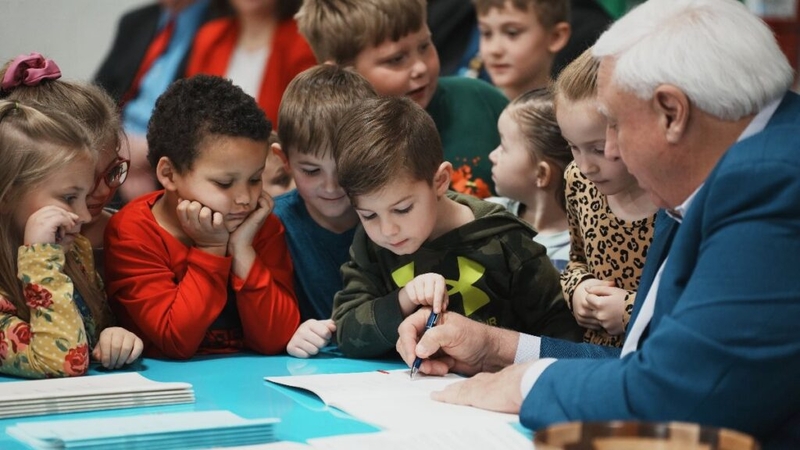
Gov. Jim Justice ceremoniously signs the Third Grade Success Act, lawmakers’ 2023 landmark education bill, into law on March 21, 2023, at Leon Elementary School in Leon, West Virginia. (Photo courtesy of the West Virginia Office of Gov. Jim Justice)
A major and final piece of West Virginia lawmakers’ 2023 hallmark education legislation goes into effect this school year when schools are required to retain third graders whose reading and math abilities aren’t at grade level.
Lawmakers carved out some exceptions for students with disabilities and other young learners.
The robust education bill, known as the Third Grade Success Act, required aides in kindergarten, first, second and third grade classrooms specifically focused on helping students improve poor reading skills. Those years are a critical point for intervention if a student falls behind.
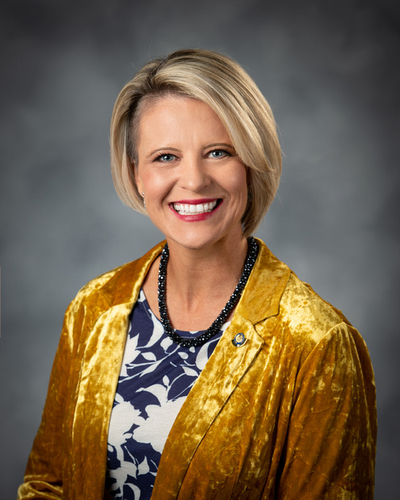
“To put an aide in every classroom and train those aides to be able to instruct using the science of reading has been a game changer,” said Senate Education Chair Amy Grady, R-Mason, who championed the bill. “We’re reaching kids at an earlier level, which is what we want to do. Instead of waiting until third grade, which is why we call it the Third Grade Success Act.”
The measure also implemented special training for teachers in those grades; educators are required to include the science of numeracy and literacy in education. There are now benchmark assessments and screenings for student issues like dyslexia.

“What’s been exciting is to watch year by year how our support for our West Virginia schools are increasing … I think we’ve had a lot of success,” said Erika Klose, director of the Office of PK-12 Academic Support at the West Virginia Department of Education.
West Virginia recorded its lowest-ever scores in those subjects in 2022, which state education leaders attributed in part to the COVID-19 pandemic’s education disruptions.
The Third Grade Success Act has contributed to a turn around, and West Virginia is now in the top 10 states for reading growth. Students ranked eighth nationally in reading growth in 2025 and and sixth for improvement in math, according to the Education Recovery Scorecard.
“We’re seeing a tremendous amount of growth, and growth leads to proficiency,” said Grady, who is an elementary school teacher.
Third grade retention policy includes exemptions
The third grade retention piece of the legislation goes into effect for the 2026-27 school year.
Public school third-grade students who demonstrate a minimal understanding of grade-level English language arts or mathematics as indicated on the state’s General Summary Assessment testing “shall upon the recommendation of the teacher and the Student Assistance Team be retained in third grade for the next school year,” according to a guidance from the WVDE.
There are exemptions in the retention policy for students with disabilities, English Language Learns and students previously retained in a grade level and more.
Last year, officials with the state Department of Education estimated that 2,000 to 3,000 students statewide could be impacted.
“I think people are starting to think we’re going to be keeping third graders behind or retaining a lot of third graders. If we’ve been doing it successfully, actually the opposite is true,” Grady said.
“If all of those interventions are not working … and they get to third grade and they’re still showing signs of struggling and not progressing, then retaining them in third grade is really important,” she continued. “Because, there is something going on that we have provided these interventions for three years, and that child still is struggling … We don’t want them to move on to where they can’t be successful.”
The recommendation for retention will be made by the classroom teacher and the Student Assistance Team team based on the student’s score on the WVGSA, proficiency with the subject matter and preparedness for the next grade level.
Klose stressed that the biggest advice she’d give to parents — especially third grade parents — is to ensure their child is reading and practicing math at home. She also said parents and guardians need to stay in touch with their child’s teacher.
“I would say that this is the year that they ensure that they have tremendous communication with their child’s teacher, that they are aware of how their children are doing on their benchmarks, those regular assessments that they take throughout the year,” Klose said.
The WVDE has been providing information to county superintendents ahead of the retention requirement implementation, Klose said.
“We’ve been doing a lot of work with our office of assessment in terms of how to best message this third-grade assessment in a way that doesn’t stress out third graders,” she said.
Eighteen states currently have retention policies. West Virginia lawmakers modeled the Third Grade Success Act after Mississippi’s reading reform efforts, where a 2013 law helped Mississippi climb from 49th to 21st in national education progress scores.
The Third Grade Success Act was requested by Gov. Jim Justice and sponsored by House Speaker Roger Hanshaw, R-Clay, and former Minority Leader Doug Skaff, D-Kanawha.
Charleston, WV