State officials detail how they were forced to rush Ellsworth’s contracts
Jul 17, 2026 | 9:05 pm ET

Description
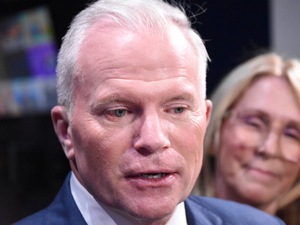
Montana Department of Administration Director Misty Ann Giles writes on a whiteboard during trial proceedings in Lewis Clark District Court on Friday, July 17, 2026. (Jordan Hansen / Daily Montanan)
HELENA — How the State of Montana purchases items and services has loomed large in the trial of former Montana Senate President Jason Ellsworth, as state attorneys outlined how he allegedly circumvented the normal procedure to steer business to one of his close associates.
That continued on Friday as Department of Administration director Misty Ann Giles and Ryan Osmundson, the Governor’s Director of Budget and Program Planning took the stand in the criminal trial. Giles spoke about the contracts at the center of the case, which called for a company to track judiciary-related bills during the 2025 Legislative session. Those contracts were later cancelled after the Legislature began investigating.
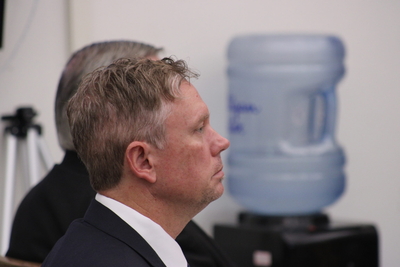
Ellsworth, a Bitterroot Republican legislator, stands accused of abusing his power while in office and giving a no-bid contract to a friend. If found guilty of the charge of official misconduct, a misdemeanor, he could face as much as a $500 fine and six months in prison.
State lawyers focused on how the contract with Agile Analytics was initially met with skepticism from employees in both the Legislative Services finance department and the Department of Administration. The contract started off as two — one for about $88,000 and another for $80,000 — before the DOA combined them to make them compliant with standard state procedures.
Giles told the court the contracts were like “putting lipstick on a pig.” She also outlined how sole-source contracts (agreements where the state has few options for specific goods or services) work in Montana government.
Giles said she initially learned about the contracts during a phone conversation with Ellsworth while out of state. Ellsworth told her that the Senate Select Committee on Judicial Oversight and Reform had approved hiring “outside consulting firms to direct their work,” which Sen. Tom McGillvary, who was a part of that committee, denied.
“I asked (Ellsworth) to get a sole-source form submitted and all the documentation and anything else he has, so my staff could review it and take that under advisement and figure out what was the best path,” Giles said.
She didn’t have her laptop, she said, adding she looked at the contract on her phone. The events leading to those contracts eventually being combined and reissued happened days before the start of the 2025 legislative session and in the middle of winter holiday season.
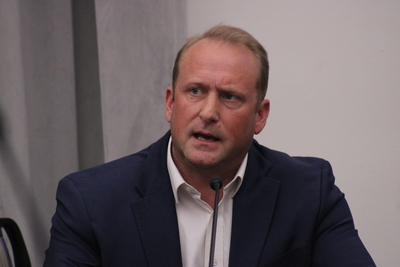
There was a time crunch with Ellsworth’s request, too. The fund that would pay the contract with Agile Analytics would expire in several days – on Dec. 31, 2024. After that, the money would revert to the governor’s office. The funding had been a part of the American Rescue Plan Act funds, Osmundson said on the stand.
“The contract was delivered to us, whether it was illegal or not, whether it was in compliance with procurement law, it was just delivered to us,” Osmundson said on the stand. “We didn’t have any input on it.”
Giles said her main concern was the contract called for paying the firm in advance, which contradicts state policy— the state does not pay before services are rendered. She said that it did not contain language the state requires in all of its contracts, including requirements for insurance as well as a termination clause. All state contracts contain a caveat that they can be cancelled at any time in an effort to give the state the ability “to protect taxpayer dollars,” Giles said.
Those were eventually added in a reissued contract that DOA staff produced, while consulting with Agile Analytics, she added. But even that contract was far from perfect, Giles said; it contained the minimum state requirements.
In a tense moment on Friday afternoon, attorneys for Ellsworth called for a mistrial after state attorneys drifted close to referencing an investigation by the Senate Ethics Committee, which had launched a similar investigation of its former leader. Details of those Ethics Committee actions are not allowed into the trial, according to orders by district court judge Christopher Abbott.
Abbott said the questioning though did not rise to the level of a mistrial.
Helena, MT