SC man to spend 9 years in prison for shooting at Black neighbor
Jul 16, 2026 | 6:23 pm ET
Description
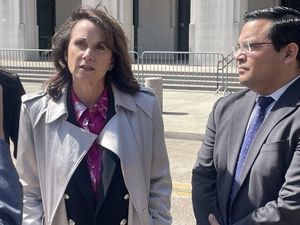
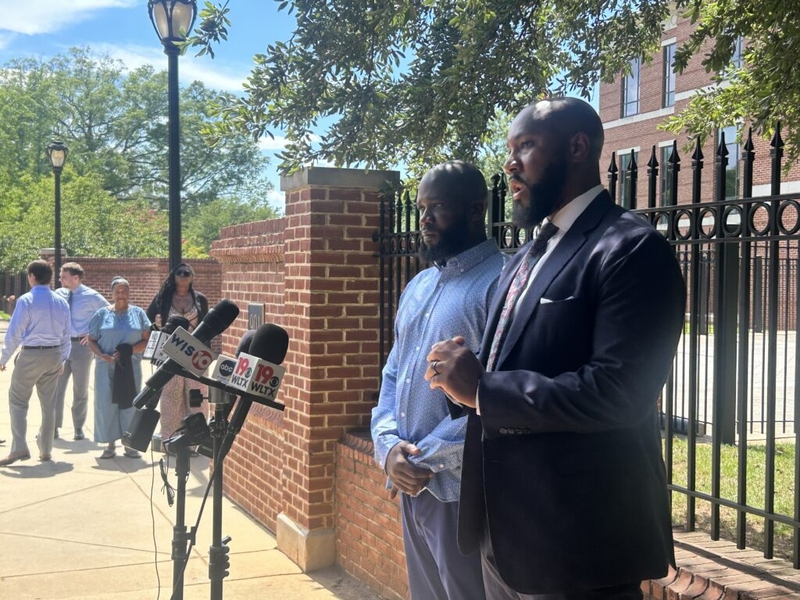
Jarvis McKenzie and his attorney, Tyler Bailey, speak to reporters outside the federal courthouse in Columbia, S.C., on Thursday, July 16, 2026. (Photo by Skylar Laird/SC Daily Gazette)
COLUMBIA — A white Columbia man will spend nine years in prison for shooting a gun in the air to frighten a Black man solely because of his race, a judge decided Thursday.
Jonathan Felkel pleaded guilty in March to a federal civil rights charge involving housing discrimination.
The decision from U.S. District Judge Mary Geiger Lewis came almost exactly a year after Felkel was arrested on the federal hate crime. After striking a plea deal that dismissed an additional gun charge, the 34-year-old agreed to spend between eight and 10 years in prison.
Lewis opted for a sentence on the higher end to show the severity of Felkel’s crime, which he admitted to committing, she said. She wanted the sentence to not only deter Felkel from making the same mistake again but to keep others from doing anything similar, she said.
SC man pleads guilty to federal hate crime for shooting at a Black neighbor
“I don’t want people to think they can do this,” Lewis said.
Felkel will receive credit for the year he spent at the Alvin S. Glenn Detention Center. He is not eligible for parole.
Once he’s released, Felkel will spend three years on supervised release, including requirements that he consistently take any mental health medications prescribed to him and undergo regular drug tests.
The crime
On July 17, 2025, Felkel spotted Jarvis McKenzie waiting for his ride to work in Spring Valley, a sprawling subdivision in northeast Columbia. They lived less than a mile apart but did not know each other. Felkel grabbed a rifle from his passenger seat and fired into the air.
As McKenzie ran, Felkel shouted after him, “You better keep running, boy,” prosecutors said. The term has historically been used by white supremacists when addressing Black people and can legally be considered evidence of racial discrimination.
“We’ve been Black a long time now,” McKenzie’s attorney, Tyler Bailey, who is also Black, told reporters. “We know what that means, if somebody says, ‘You better run, boy,’ with a gun, in July heat, early morning.”
After Felkel’s arrest, he continued espousing racist beliefs to police officers.
He told investigators he was trying to scare McKenzie out of the neighborhood because he was Black, Sheriff Leon Lott told reporters. Felkel also told officers he believed Black people were committing crimes and he decided a split second before he fired to shoot into the air instead of directly at McKenzie, Lott said.
Although McKenzie wasn’t injured, Felkel’s actions were still reckless and harmful, said U.S. Attorney Bryan Stirling.
SC man accused of shooting at his Black neighbor pleads not guilty to federal hate crime
“A bullet has no conscience,” Stirling said. “Once it leaves a gun, it could end up anywhere. It could have ended up in this victim. It’s just pure luck that it did not.”
Felkel told investigators he was patrolling the neighborhood, where he also lived with his elderly grandparents, looking for Black people wearing white shirts and driving white cars, his defense attorney said.
Felkel was experiencing delusions at the time, and he’d been abusing drugs, his attorney, Charles George, said. Among his delusions was the false and racist belief that Black people wearing white or driving white cars were part of an underground criminal organization, which led to him grabbing his gun when he saw McKenzie, who was wearing a white shirt, George said.
George recommended Felkel receive mental health and substance abuse treatment while in prison, and Lewis agreed to recommend he spend his incarceration in a federal prison with rehabilitation programs.
“When you’re released, hopefully you’ll come out of there a little more mentally healthy and move away from these hate- and fear-driven actions,” Lewis said to Felkel.
During a brief statement in court, Felkel apologized to McKenzie, his family and the Spring Valley community for the hurt he caused them.
“If I could go back to that day, I would’ve never done what I did,” Felkel said.
McKenzie and Felkel had never met before the shooting, despite living less than a mile from one another. Over the past year, McKenzie has felt the need to watch over his shoulder every time he goes to get the mail or take a walk around the block, he told reporters.
“It’s not a safe home no more,” McKenzie told the judge.
Lewis also grew up in the Spring Valley neighborhood. The idea of racist violence taking place there deeply concerned her, she said.
Felkel’s actions did far more than disrupt one person’s life, she said. He disturbed an otherwise peaceful community and caused people to live in fear of others like him, she said.
“It’s just an intrusion,” Felkel said. “I really do hurt for the people in the community who have to factor this into where they live and how they live.”
Hate crime law
Felkel was charged under a federal civil rights law prohibiting housing discrimination, including harassment from other neighbors.
South Carolina remains one of two states without a law specifically outlawing hate crimes.
Legislators in both parties have tried for years to get a law in place, and the Republican-dominated House has twice passed bills that would add penalties for people convicted of crimes motivated by another person’s race, gender or sexual orientation. Those proposals have never received a vote on the Senate floor, with opponents arguing prosecuting hate crimes requires prosecuting a person’s thoughts, not just their actions, and the state should punish violent crimes severely regardless of a person’s identity.
Federal prosecutors picking up the case showed people they can’t get away with targeting someone based on their race just because the state doesn’t have a specific law adding punishment for it, Lott said.
“Today is an example of what’s going to happen to you if you go out there and do it,” Lott said.
Richland County has an ordinance barring hate crimes, but that carries less weight than a state law. Although the federal prosecutor’s office is willing to step in and pick up cases involving civil rights violations, not having a statewide hate crime law undercuts that deterrent, Bailey said.
“The subliminal message is, ‘This type of stuff is permissible here,’” Bailey said. “That’s why we need a state hate crime statute.”

Columbia