RI state budget extends pilot program offering fruit and veggie discounts to SNAP recipients
Jul 16, 2026 | 5:02 pm ET
Description
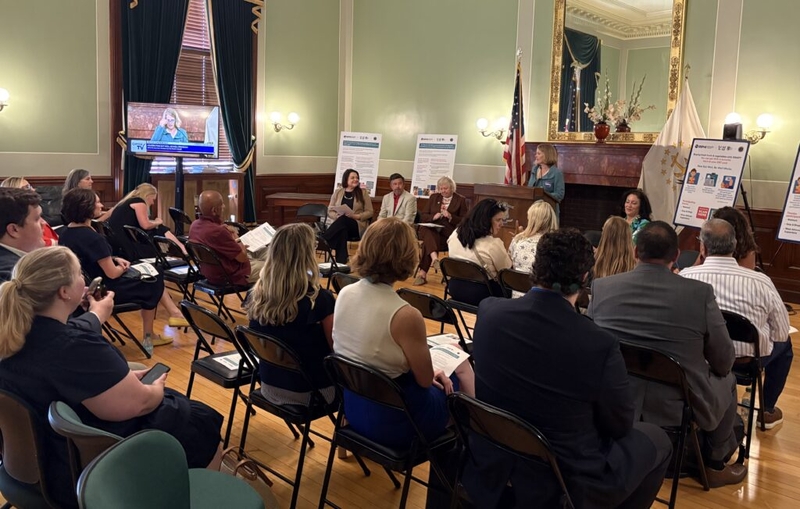
Amy Nunn, executive director of the Rhode Island Public Health Institute, speaks at a press event to celebrate the extension of Eat Well, Be Well at the State House on Thursday, July 16, 2026. (Photo by Nolan Page/Rhode Island Current)
More than 140,000 Rhode Islanders will have another year of access to fresh produce discounts at select grocery stores thanks to funding in the state’s fiscal year 2027 budget.
Since Eat Well, Be Well debuted as a pilot program in January 2024, more than 100,000 households have received a total of around $10 million in benefits, according to an evaluation by the Rhode Island Public Health Institute). The program pays Supplemental Nutrition Assistance Program (SNAP) beneficiaries 50 cents for every dollar they spend on fresh fruits and vegetables at participating retailers and automatically loads the rewards onto their Electronic Benefit Transfer (EBT) card, up to $25 a month.
The program was set to expire on June 30. But Eat Well, Be Well will now continue with $4.1 million allocated to the program in the fiscal year 2027 state budget, which took effect July 1.
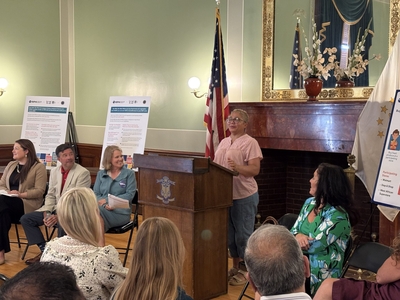
“It helps Rhode Islanders put healthy meals on the tables,” Kimberly Merolla-Brito, director of the Department of Human Services, said during a press event Thursday morning at the State House to celebrate the program’s continuation.
Amy Nunn, executive director of the Rhode Island Public Health Institute, said the funding will extend Eat Well, Be Well for about another year.
“Everybody feels a sticker shock at the grocery store, and it’s been a particularly difficult time with all the inflationary pressures on grocery prices,” Nunn said. “People want to eat right. A lot of people just can’t afford it.”
Providence’s West End is among the state’s communities with the most SNAP recipients, according to a report by the Economic Progress Institute. Eddie Lee was one of the neighborhood’s recipients until he recently lost his benefits.
Before that, the 28-year-old father of two said he regularly maxed out the program’s $25 limit when using his EBT card. Eat Well, Be Well offered relief as grocery store prices continued to rise, he said.
“It opens a lot of doors, puts a lot of different foods on people’s plates that they generally don’t even have the option to get,” Lee said.
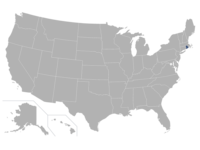
Eat Well, Be Well is the nation’s first and only statewide SNAP retail incentive program, according to the House budget. Among other states, Massachusetts has offered a similar incentive program since 2017, but benefits are unavailable at major grocery chains. Rhode Island’s program is available at every Walmart and Stop & Shop in the state, as well as West African Superstore, a locally owned market in Upper South Providence.
Lee usually gets groceries at Stop & Shop, where he learned about the program from members of the Rhode Island Public Health Institute. The institute reported 73% of SNAP households have used the program, but Lee still thinks there’s room to grow.
“I don’t think this program is as big as it should be,” Lee said. “I don’t think it’s being talked about and promoted as much.”
According to the Rhode Island Public Health Institute evaluation, 70% of SNAP recipients with children reported being able to feed their family more fruits and vegetables because of the program. About the same share of all SNAP recipients reported low food security and their benefits not being enough to feed their families each month.
Communities across the nation were reminded of the crisis of food insecurity when SNAP benefits and funding halted on Nov. 1 amid the longest federal government shutdown in U.S. history. The shutdown left Rhode Island’s more than 140,000 SNAP recipients without benefits until a federal judge on Nov. 6 ordered the Trump administration to fund the benefits meant to go out at the start of the month.
Programs like Eat Well, Be Well can help tackle food insecurity and support more nutritional options, Nunn said. While most people have heard of food deserts, Nunn explained that there are also “food swamps,” where communities are flooded with unhealthy fast food options. Nutritious food is especially accessible to children of color, she added.
“We have a moral duty to make sure that our children can access healthy foods,” Nunn said.
“It helps Rhode Islanders put healthy meals on the tables,” Kimberly Merolla-Brito, director of the Department of Human Services, said during a press event Thursday morning at the State House to celebrate the program’s continuation.
The program makes business sense too. One unnamed participating retailer reported $650,000 more revenue from fruit and vegetable sales than expected without Eat Well, Be Well, according to Rhode Island Public Health Institute’s evaluation.
Walmart comprises nine of the program’s 36 participating retailers, alongside Stop & Shop’s 26 locations.
“It made a lot of sense for us as a company, and it made a heck of a lot of sense for our own customers,” said Chris Buchanan, Walmart’s public affairs director.
West African Superstore, Rhode Island’s largest African market, is the only participating small-scale retailer.
Owner Luna Walker said her customers have been “very appreciative” of the program. She hoped to see Eat Well, Be Well expand beyond fresh produce to add frozen fruits and vegetables, which she said were commonly used in her culture. As the only current nonchain partner, Walker encouraged other smaller retailers to partner with Eat Well, Be Well.
Advocates also hoped this year’s funding expansion wasn’t the last step in the program’s development. Nunn said Eat Well, Be Well is looking to add more stores, with her targets set on Shaw’s, Aldi, Price Rite and Market Basket. She also hoped Rhode Island’s first-in-the-nation effort could inspire the federal government to embrace a similar initiative in its omnibus farm bill, which governs years of agriculture and food programs.
“That is my ultimate policy goal,” Nunn said. “We have to demonstrate that this works.”
Providence, RI