Amid political division, Alaska lawmakers close in on final compromise gasline bill
Jul 16, 2026 | 9:15 am ET
Description
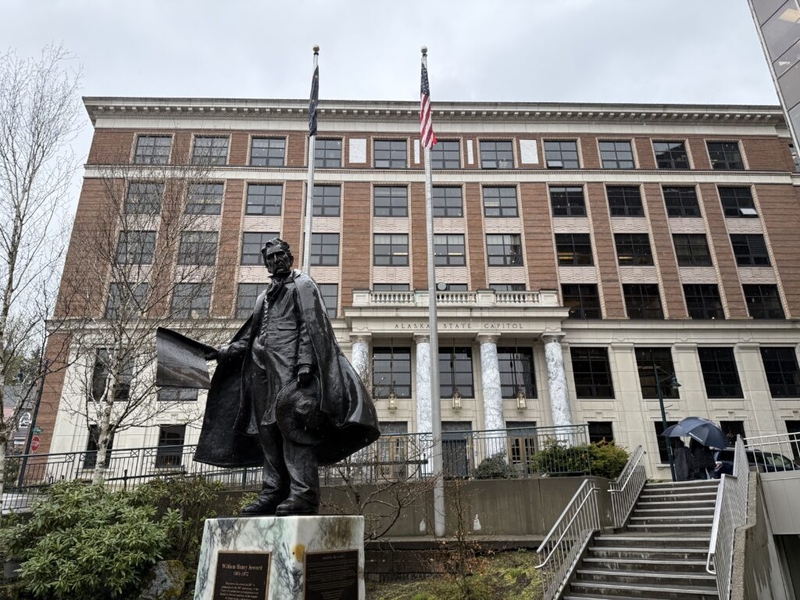
The Alaska State Capitol is seen on the last day of the legislative session on May 20, 2026. (Photo by Claire Stremple/Alaska Beacon)
Legislative leaders say they will introduce a final compromise tax bill for the proposed AKLNG gasline on Thursday, which is then scheduled to be taken up for a vote by the full House and Senate.
A six-member multipartisan conference committee of lawmakers from the House and Senate has been working throughout a second special session called by Gov. Mike Dunleavy on a compromise tax cut bill for the multibillion dollar project. Senate and House lawmakers did not come to an agreement on tax break legislation during the regular session.
The proposed project would include construction of a 807-mile pipeline for transporting natural gas from the North Slope to Cook Inlet, as well as gas treatment facilities in the North Slope and on the Kenai Peninsula to export gas internationally. The state owns 25% of the project, while the remaining 75% is owned by a private developer, Glenfarne, who has said the multibillion dollar tax break is essential to the project’s economic viability and attracting investors.
Rep. Calvin Schrage, I-Anchorage and chair of the conference committee, on Wednesday called the forthcoming tax bill “a true compromise piece of legislation” that he believes is workable for the gasline project.
“We’ve had productive conversations with all parties,” he said. “We’ve worked hard to, again, try and resolve differences where we can, come up with compromise language where we can, and put forward a product that we think will be a workable product that, in theory, should be able to help advance the project.”
“Whether or not we have something that’ll ultimately end up passing, we will have to see,” Schrage added.
The committee was expected to release the final compromise bill on Wednesday afternoon, but that hearing was canceled for further review of technical changes, Schrage said. The revised bill is set to be introduced publicly on Thursday morning at 8 a.m.
Lawmakers are flying in from their home districts around the state for a yes-or-no vote on the bill, scheduled for Thursday.
Amid debate on taxes, potential revenues, labor agreements and other issues, lawmakers have until Sunday at midnight before the second special session expires.
Whether the compromise version is agreeable to the majority of members of the Senate, House, Dunleavy and project developers is uncertain.
One of the most intensely debated provisions in the bill is a proposal to apply the state’s corporate income tax to privately-owned oil and gas companies that currently do not pay them. It’s commonly called the “S-corp provision.” The scope of implementing the tax is uncertain, but the Alaska Department of Revenue has estimated that Hilcorp and similar companies would pay somewhere between $0 and $100 million per year if the exemption is eliminated.
The final compromise bill will include the proposal, sought by many legislators but opposed by Dunleavy and others.
House Speaker Bryce Edgmon, I-Dillingham, said Wednesday the compromise bill is one he can support but he expects further revisions will be needed and taken up by the next Legislature in January and future years. He emphasized a tax bill of this size, scope and complexity would usually take legislators several years to negotiate.
“I would fully expect that if we did get a bill across, we did get a bill to the governor, and he was able to sign it, that the potential for coming back for additional fixes is very real, and almost I can tell you probably a certainty for the 35th Legislature,” he said. “But you know it all hinges on the S Corp (tax) tomorrow, and whether the votes are there in the Senate and certainly in the House.”
Schrage said the bill will include a modified version of the provision. “We’ve heard consistently from members of the Senate that that’s an important provision that they need to see in order to be able to support this bill,” he said.
He said that message is also coming from the public:. “I think one of the things I’ve seen over the last few weeks is a steady and increasing call from constituents to address this tax loophole that exists in our state law.”
Members of the House Republican minority caucus issued a statement on Wednesday urging focus on Alaska’s need for reliable energy, amid a looming natural gas shortage, particularly in the Railbelt region. They criticized Senate provisions in the bill as “threatening to derail the project in favor of heavy government taxes.”
“We cannot lose sight of why we are here,” said Rep. Justin Ruffridge, R-Soldotna, a member of the conference committee. “This isn’t about state government squeezing every last penny out of a pipeline that hasn’t even been built yet.”
Dunleavy was in the Capitol on Wednesday, and said in brief comments — after taking a photo with tourists on the third floor — that he couldn’t comment until he sees the final compromise bill.
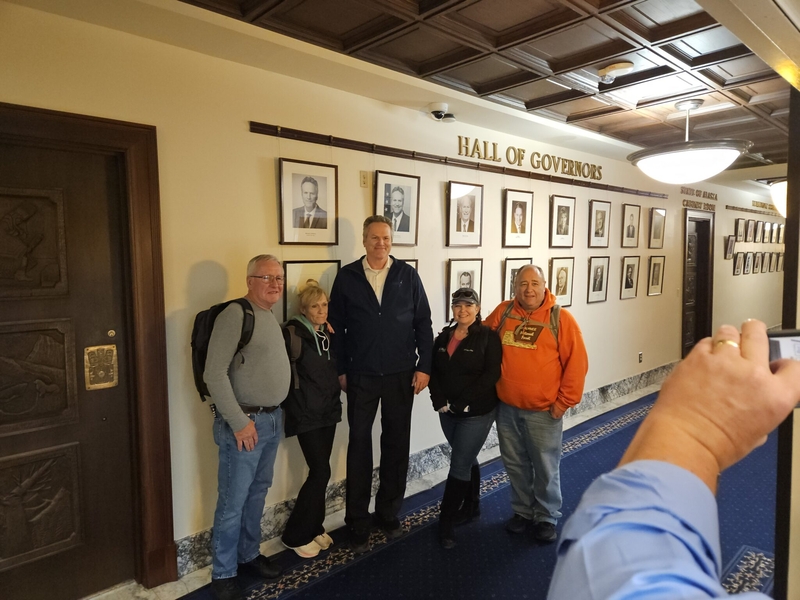
“I’ve got to see the bill. I haven’t seen the bill yet,” he said.
Dunleavy said he wasn’t surprised to hear the tax provision was included. “I’m sure it’s in there,” he said. “We’ll know tomorrow.”
“I hope it’s a bill that works and gets us a gasline and doesn’t stick it to other industry members,” he added.
Asked whether he would call another special session to require the Legislature to continue work on the tax bill, Dunleavy said it’s likely.
“If this doesn’t work out, our chances are pretty good,” he said.
But Edgmon and Schrage said there is very little appetite among lawmakers for a third 30-day special session this year, particularly as many legislators are running for re-election and the primary election is August 18.
“I think people are pretty exhausted. There’s campaigns they need to run. They’ve got their own personal affairs to manage after a very long five-month session. And my view is that there’s very little appetite to continue this process. I think this is our opportunity to pass a bill,” Schrage said. “And if this bill does not pass or is vetoed, I think that will be the end of the discussion for this year, and we’ll be looking at taking this back up in January.”
Juneau