Boulder City Council seeks to stop data center on BLM land
Jul 15, 2026 | 4:24 pm ET
Description
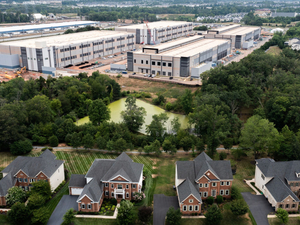
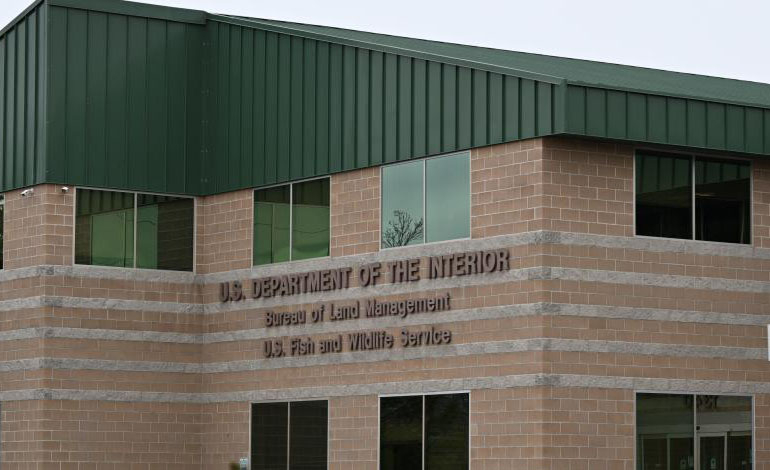
Boulder City Attorney Brittany Walker argued BLM's approval of the data center was a departure from BLM precedent and procedure, giving the city the right to appeal the decision “especially for a brand new use that, to my knowledge, has never been authorized on BLM land.” (BLM photo)
The Boulder City Council voted unanimously Tuesday night to appeal the approval of what officials say would be the first data center on U.S. Bureau of Land Management land.
The appeal follows a June 26 decision by the Bureau of Land Management to approve the construction of the Townsite Data Center on an 81-acre plot of BLM land in the Eldorado Valley desert about three miles southwest of Boulder City residences.
In addition to the data center, the facility would include a battery energy storage system, an electrical substation, and biodiesel emergency backup generators.
Townsite Solar 2 LLC — the project developer — originally received federal approval in 2023 to build a solar power generation and battery storage facility on the parcel, but requested an amended right-of-way grant in 2025 to build a data center instead.
City Councilman Steve Walton expressed disbelief that the federal government accepted a prior environmental impact study for a solar farm to allow construction of a data center.
“I don’t know in any world how they could have made the statement that that project is in any way similar to the original solar energy production and battery energy storage application,” Walton said. “This is absolutely out of line, just ridiculous. I don’t know how they could even come to that conclusion.”
Boulder City Attorney Brittany Walker argued the move was a departure from BLM precedent and procedure, giving the city the right to appeal the decision “especially for a brand new use that, to my knowledge, has never been authorized on BLM land.”
“The BLM essentially, sweepingly, approved a new land use without following processes in federal law, which include a meaningful engagement process with the City of Boulder City,” Walker said.
In an email, a spokesperson with the BLM confirmed the Townsite Data Center “is the only data center right-of-way that the BLM has approved.”
Boulder City Council said the BLM did not consult them when making their determination, adding they only found out about the move after the change was approved.
“We’re taking on a giant,” said Mayor Pro Tempore Sherri Jorgensen. “I cannot believe that this happened, but here we are.”
The approval to build on federal land effectively strips the city of any authority over the project, which was originally moving through the city’s land leasing process. During that process, the city’s planning commission voted unanimously in May not to recommend the construction of the data center on city-owned land.
Townsite Solar 2 LLC withdrew its application to build their data center on city-owned land following BLM approval to build on federal land.
Trump’s ‘AI Action Plan’
The BLM determined the data center “is essentially like the original” solar energy facility that underwent an environmental assessment in 2023, according to a BLM document. The agency noted both projects are industrial uses that are predominantly electrical in nature and that both would connect to external electrical infrastructure via the same proposed utility corridor.
The new project on federal land would also use the same location, same acreage, and same perimeter as the originally planned solar facility, according to the BLM.
In the record of decision approving the change, federal land managers said air quality in and around Boulder City would not be impacted by the data center. The agency notes the facility’s biodiesel back-up generators would only be used during testing and system emergencies.
The proposed data center would use a closed-loop cooling system with direct-to-chip liquid cooling, which does not rely on evaporative cooling and uses less water. Still, the data center is expected to use up to 2,000 gallons of water annually.
It would also require a one-time initial fill of 400,000 gallons of water, and another 500,000 gallons of water during the construction phase as a dust suppressant, according to the BLM.
Federal land managers acknowledged the data center “poses a larger fire risk than solar panel arrays,” but argued the project area and immediate surrounding areas are open desert with minimal vegetative fuel.
Development plans for the data center say the facility will use cooling towers to move heat produced at the site upward several hundred feet above the buildings and away from ground level.
In Townsite Solar 2 LLC’s development plan, the company said the expansion of data centers on federal land is vital to support technologies like artificial intelligence.
The company said the development of data centers on federal land is also a top priority for the United States government, as outlined in the Trump administration’s “America’s AI Action Plan” which was published by the White House in 2025.
The plan establishes new categorical exclusions under federal law to cover data center-related actions, including making federal lands available for data center construction by directing agencies large land portfolios to identify sites suited to large-scale development.
Under the plan, the Department of Energy identified four sites “well-situated for large-scale data centers,” including Idaho National Laboratory, Tennessee’s Oak Ridge Reservation, Kentuky’s Paducah Gaseous Diffusion Plant, and Georgia’s Savannah River Site.
If implemented on BLM lands, the plan could have major implications for public lands throughout the West, and especially in Nevada where about 80% of the land is managed by the federal government.
Editor’s note: This article was updated with a comment from BLM.
Las Vegas, NV