NM environment officials push for limits on contaminants in produced water while awaiting hearing
Jul 15, 2026 | 11:00 am ET
Description
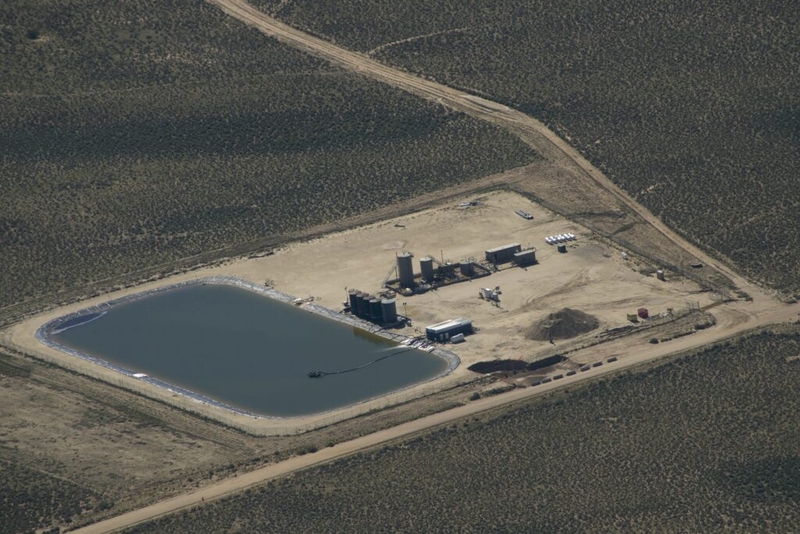
A produced water pond in the San Juan Basin in New Mexico. (Danielle Prokop/Source NM. Aerial support provided by LightHawk.)
New Mexico environment officials are pushing to establish limits on contaminants found in wastewater left over from fracking operations before the state water quality commission begins a rule-making process on the matter.
There has long been conflict among state leaders over whether the water, which is known as produced water and often contains radioactive material and other proprietary chemicals used by oil and gas operators in their fracking endeavors, should be put to use in New Mexico. Currently, operators sell much of it to Texas, which has more lax regulations for disposing the water.
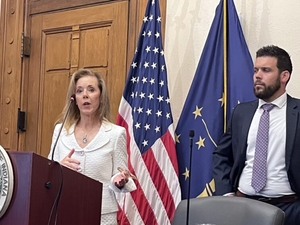
At an interim Water and Natural Resources Committee hearing Tuesday, Jonas Armstrong, the New Mexico Environment Department’s Water Protection Division director, told state lawmakers that a hearing before the state Water Quality Control Commission has yet to be scheduled. Any rules governing how the water is used beyond oilfields need strong protections, he said.
Unlike salty, brackish groundwater, which is often treated through a process called desalination, fracking wastewater is unique because it is a byproduct of a process that uses proprietary chemicals, meaning the public does not necessarily know what contaminants are in the water.
“We think we need numeric standards and limits for all contaminants that are known to be in that,” Armstrong told lawmakers. “We think that any contaminant that can’t be specifically identified needs to be reduced to a non-detectable level.”
Gov. Michelle Lujan Grisham has previously cited produced water as an important resource in shoring up the state’s water portfolio; her 50-Year Water Action Plan often mentions it alongside brackish water as “valuable resources” that need to be cleaned up.
New Mexico governor puts finger on scale in oilfield wastewater vote
The Water Quality Control Commission in May voted to restart the lengthy rule-making process at the request of a trade organization known as the Water, Access, Treatment and Reuse Alliance. Water and environmental advocacy groups opposed the move.
Armstrong added that he hopes the Water Quality Control Commission will be scheduled for next spring or summer.
While he acknowledged that the commission has a limited number of hearing officers and a full docket, that remark sparked a disagreement among lawmakers who said the state is in a race with Texas to use this water and those who said the public ought to know what’s in the water before using it.
“What is the hold up and what is the refusal to hold a hearing?” Rep. Nicole Chavez (R-Albuquerque) said during Tuesday’s meeting. “Until we do that, we really can’t move forward.”
Other lawmakers on the interim committee, though, questioned how New Mexicans could reliably assess the risks of expanding the allowed uses for this wastewater if some of its contaminants are proprietary to the fracking companies.
“I would love for produced water to be something that could really address this crisis that we’re in,” Rep. Kathleen Cates (D-Rio Rancho) said. “I don’t understand how we can determine the risk of produced water without knowing what the chemical is.”
Santa Fe, NM