Hawaiʻi Tsunami Panic: Most Who Evacuated Shouldn’t Have, Report Says
Jul 15, 2026 | 6:01 am ET
Description
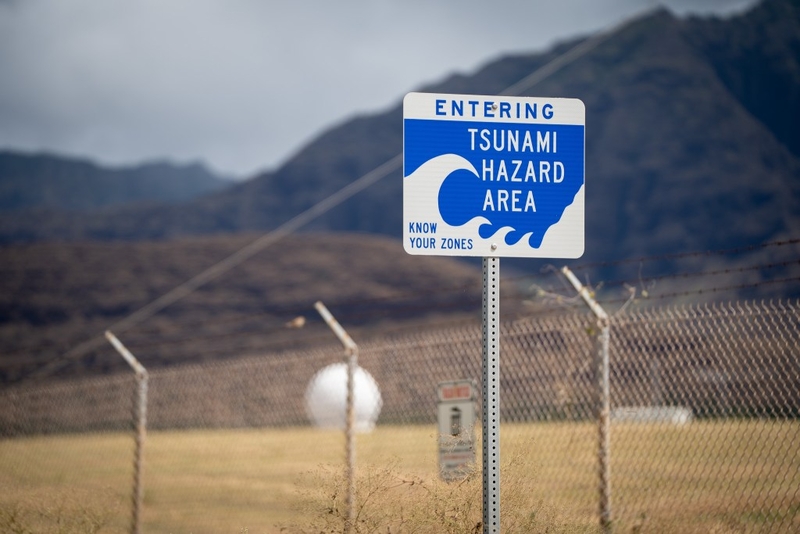
Photo courtesy of Honolulu Civil Beat
Kakaʻako resident Ashley Severson remembers the anxiety she felt last July as she attempted to evacuate her family inland from an impending tsunami threat.
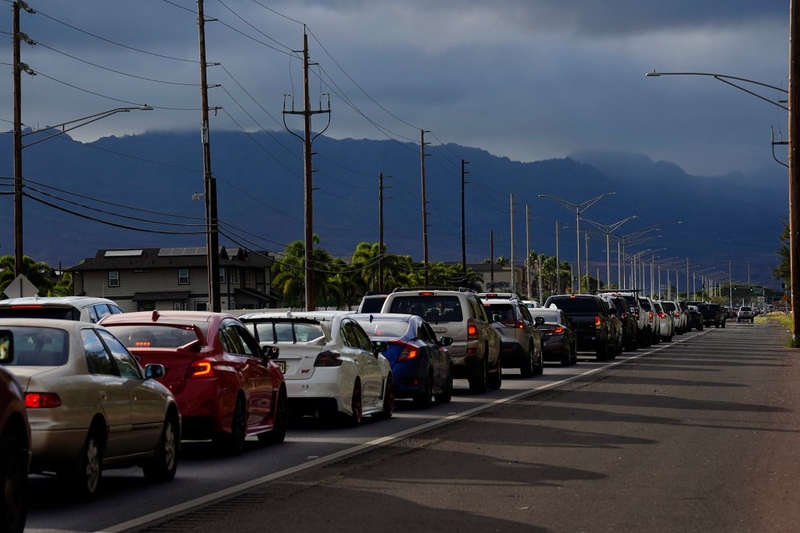
Severson, 32, and her husband stopped at Target Ala Moana to pick up diapers for their daughter before heading to an acquaintance’s house in Pālolo Valley. Leaving the mall’s parking lot, they found themselves stuck in impenetrable traffic for almost an hour.
“Do we abandon the car and just grab the baby and just run?” she remembers thinking.
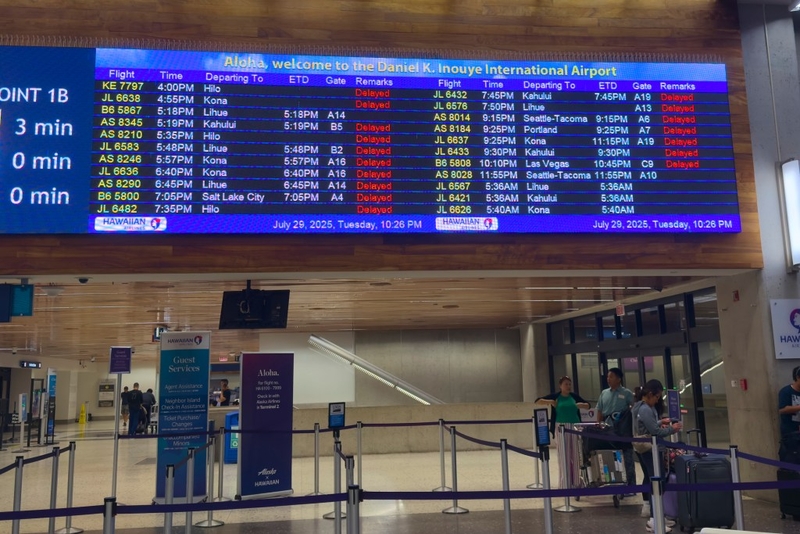
A large tsunami never materialized, but the panic was real. Severson’s experience on July 29 echoed countless others’ on Oʻahu. Long, standstill lines of traffic clogged major roads with panicked drivers who worried they might not escape the disaster zone in time.
Almost a year after the tsunami warning, Honolulu officials are now sharing how the evacuation process could have gone smoother.
In an after-action report released Friday, the Honolulu Department of Emergency said clearer communication with the public about how to evacuate and better internal coordination of responsibilities are two of its main takeaways.
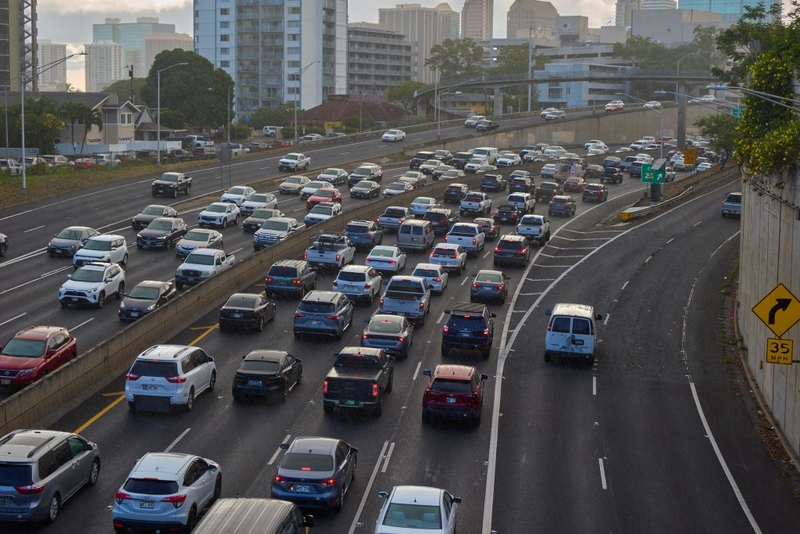
In the end, 92% percent of Oʻahu’s vehicle traffic during the snarl was unnecessary, the report says, citing initial findings from an upcoming congestion study by the state Department of Transportation. Many residents who chose to evacuate did not need to do so.
“There is understandably a desire not to be stuck at the office or away from home, and to drive home,” the report says. “However, reducing traffic congestion will rely on people who do not need to leave for safety reasons making the decision to stay where they are, even if it’s not where they want to be, to ensure those who do need to get out of harm’s way can do so quickly.”
Oʻahu residents near the coast who have access to tall buildings should get to a higher floor – called vertical evacuation, in emergency management lingo – rather than contribute to traffic. The report says this option should have been better emphasized and employed.
On the day of the tsunami warning, Hoʻopili resident Quentin Rita, 38, flew back from Kauaʻi to be with his four-year-old son, who was being watched by Rita’s mother-in-law.
Rita said he saw social media reports of the gridlock when he landed. To avoid getting stuck in it himself, he left his car parked at the airport and jogged to the then-nearest Skyline rail station, four miles away at Aloha Stadium.
“I got to get back to my son,” he remembers thinking, “because no matter what happens here I want to make sure I’m there.”
Rita said he lugged about 30 pounds of belongings with him, including his backpack and presentation materials he had needed for his work trip to Kauaʻi. He said he caught the last train from Aloha Stadium with no more than a minute to spare.
Better Staffing Needed
Several processes worked well, the report said.
The Pacific Tsunami Warning Center alerted officials with the city Department of Emergency Management of an 8.8 magnitude earthquake off the coast of Russia within minutes of it occurring. That helped city officials quickly activate their Emergency Operations Center.
And despite the chaos and anxiety wrought by heavy traffic, the congestion in the primary evacuation zone largely dissipated by the time the first wave was scheduled to hit shortly after 7 p.m. No fatalities occurred during the evacuation, the report says.
But there are also plenty of areas for improvement in the report, written by the Department of Emergency Management and Ascenttra, a Virginia-based emergency preparedness consultant.
The department could use more staff, the report says, and those staff members could have had clearer responsibilities during the emergency.
Deputy Director Jennifer Walter said in an interview that in an emergency, there are typically multiple teams, including groups focused on planning, coordination with different agencies, internal logistics and emergency procurement.
In a way, Walter said, the tsunami warning came at an unlucky time because some staff members were so new they were still essentially going through orientation. She also said there was a need to more clearly define which functions belong to which teams.
She said the department has already been working to create more organized checklists for each role in the year since the tsunami warning.
“We don’t wait to start fixing things,” she said.
At the time of the tsunami warning, the Department of Emergency Management had fewer than 20 positions. Honolulu City Council members added another 13 positions this budget cycle, which included eight positions the department requested and another five added by council member Esther Kiaʻāina.
“At the end of the day,” Kiaʻāina told Civil Beat, “it comes down to the staffing.”
Staffing can be expanded during emergencies using trained emergency responders from other departments and even retirees brought back part time, the report says. Walter said the extra positions the council has added will help, but even more staff is always helpful in an emergency.
“I don’t know if there’s a number that I would say, 'Problem solved,'” she said.
Jammed Roadways
There are many ways that the report says the evacuation process should be improved.
More assembly areas, locations such as parks where city staff can unlock bathrooms for people who need a last resort place to gather, could have been made available.
And while the list of assembly areas was quickly put together and disseminated to the public, the report says, many people expected more services to be available, as is the case during other emergencies where indoor shelters provide food and places to sleep. The purpose of assembly areas needs to be clearer, the report says.
And evacuation maps also could have been easier to understand.
Two tsunami zones are illustrated on city maps: one close to the coast for ordinary sized tsunamis like what was expected last July, and a larger one further inland for more extreme tsunamis. This distinction confused many people, the report says.
In the future, the report recommends, only the relevant evacuation zone should be shown on maps distributed to the public. The report also says that maps and evacuation information should be formatted to be easily shared on social media.
“They did not have readily available stagnant maps where we’re able to digitize it and then put it on our social media to be able to get out to the communities,” Kiaʻāina said.
The report also says there could have been better coordination when it came to sharing information with the public. This was especially the case as both city officials and state officials worked to get information out.
“The City and County of Honolulu and the State of Hawai’i did not synchronize joint public information activities resulting in the Mayor’s press briefings being interrupted by State of Hawai’i press briefings and Emergency Alert System messages,” the report says.
Several council members who spoke to Civil Beat appreciated the report’s recommendations.
“I think it’s a great initial evaluation with legitimate action items,” council member Matt Weyer said. “I think we need to continue the conversation with more specificity.”
A committee hearing will likely be scheduled next month for council members to discuss the report and ask officials questions about it, council spokesperson Aron Dote said.
The report was slow to come out, delayed in part by the Kona low storms. Department of Emergency Management Director Randal Collins, who stepped into his role two months before the tsunami warning, told council members in April his team would release the report within 30 days.
Fifty six days later, the report still was not released, and Council Chair Tommy Waters sent Collins a letter requesting the report’s release “immediately.” The department by then was undergoing final review of the report.
Part of the delay, Walter said, was that rather than assign the report to an individual in the department or a contractor, the department used its after-action report as a training opportunity for newer staff members.
“Had we known it was going to take so long,” she said, “we might have adjusted our approach.”
Honolulu, HI