Study finds about half of Atlanta’s public restrooms aren’t actually accessible
Jul 15, 2026 | 4:00 am ET
Description
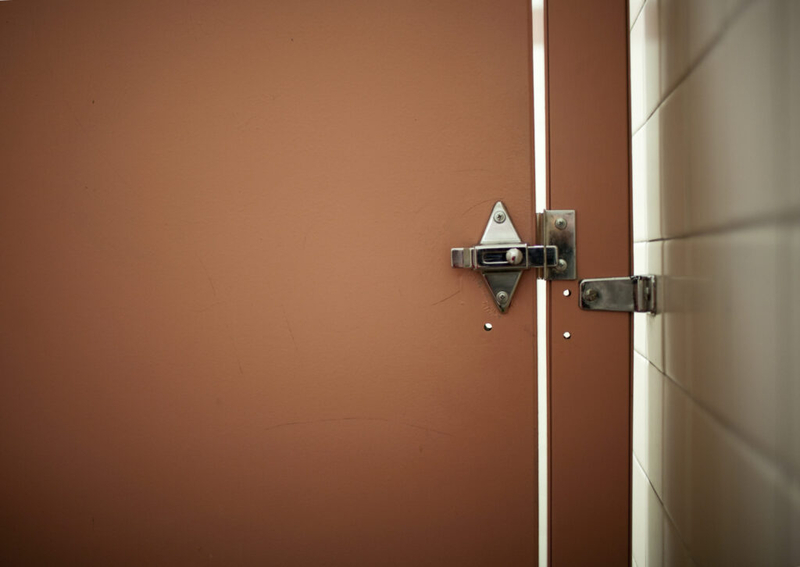
In times of need, a clean and safe restroom is a welcome sight. But getting to one in Atlanta can be a challenge, a Georgia State University study finds, and the lack of restrooms exacerbates the challenges of homelessness. Getty Images
Whether you’re a big shot wheeler and dealer or just trying to scrape by, everyone needs to make a trip to the restroom every now and then.
But a new study from Georgia State University’s School of Public Health finds that clean restrooms can be hard to come by in Atlanta – more than half of the 262 publicly available restrooms recently visited by researchers for the study were not actually open to the public.
“Relying on facilities like at gas stations, restaurants, coffee shops is probably going to be your best bet, but honestly, relying on one type of facility is not going to be enough, and so you really kind of have to keep your eyes out and just use the bathroom when you can because you don’t know if you’re going to find another one,” said assistant professor April Ballard, one of the study’s authors and co-leader of the university’s Center on Health and Homelessness.
Ballard said having nowhere to go when nature calls is a bummer for anyone out and about in Georgia’s capital city, it can be a crisis for people who have no home to return to.
Researchers visited both government-funded facilities like those in parks, libraries and transit stations as well as restrooms located in private businesses like gas stations, restaurants and retail stores. They found 55% were not open to the public, restricted to customers only or otherwise inaccessible.
Ballard said it’s hard to compare Atlanta to other major cities because this type of census hasn’t been performed in many other places, but she said the Atlanta toilet scene is not atypical of other cities that once relied on pay toilets, which required bathroom goers to insert a coin to enter the stall.
Those facilities fell out of favor in the 1970s and ‘80s after public outcry. They weren’t just considered inconvenient, but also sexist and anti-disability as it cost money to enter a stall while urinals were usually free of charge.
But the pay model was never replaced with free public restrooms.
“As a result of that advocacy, all of the paid toilets went away, which really kind of were our public toilet system,” she said. “Now we do have bathrooms in parks, for example, but we don’t have a lot of other public facilities once those paid facilities went away, and so as a result, we now rely on gas stations, large retailers or coffee shops.”
‘Just another way that people are just seen as less than human’
Ballard said delaying urinating or defecating or being unable to hygienically change menstrual materials are tied to conditions like incontinence, kidney damage and urinary tract infections among the homeless.
Unsanitary conditions can also exacerbate the spread of infections like Hepatitis A, which experienced a major multi-state outbreak among the homeless about a decade ago.
“That’s a fecal-oral transmitted disease, and so when you don’t have somewhere to use the bathroom and you don’t have somewhere to wash your hands, you’re more likely to transmit a disease like that,” she said.
Being forced to perform bodily functions in the open also harms mental health, said Brad Schweers, executive director of Intown Cares, an Atlanta-based nonprofit that seeks to alleviate homelessness and hunger.
“That constant experience of not being seen as a human being is magnified yet again when people are forced to use the facilities outside because there is no place for them to go,” he said. “The lack of restroom facilities is just another way that people are just seen as less than human.”
Schweers said people who haven’t dealt with homelessness often take having the ability to freshen up and feel clean for granted, but basic sanitation can be life-changing for people who have been living on the streets for long periods of time.
“Dozens and dozens of people die on the streets every year in Atlanta, and to help people move from that survival mode and the kind of trauma responses to feeling safe, to feeling part of a community, meeting basic needs like hygiene, like food, like basic safety, a lock on your door and a bed to sleep in, these are foundational pieces to helping people live more fulfilled lives.”
Local and state action
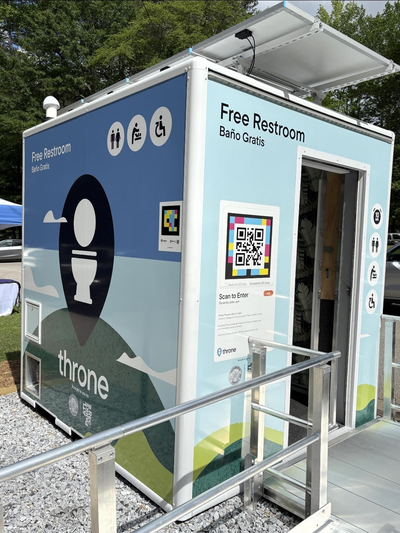
The city has taken some steps to expand restroom access, says Melisa Mims, communications and marketing director for Atlanta’s Office of Administration, Strategy & Innovation.
Mims pointed to the recent installation of 10 new self-contained, solar-powered smart restrooms across Atlanta’s parks, nature preserves and BeltLine.
“Atlanta is preparing for the daily needs of the people who live, work, and play here,” Mims said in an email. “Improving sanitation and restroom access remains a priority, and the Throne Labs deployment is one step in a broader, ongoing effort to ensure our public spaces are welcoming, safe, and functional for all.”
Schweers praised the effort and said he’s hopeful the city will continue to promote public sanitation after tourists attracted by the World Cup head back home.
“I’ve been really impressed with the city, and I think we’ve got some good momentum to carry forward, to learn from this particular moment in time, and also use this moment to address an issue that doesn’t just come and go with sporting events,” he said.
Ballard also praised Atlanta’s efforts and touted other strategies including creating an interagency group to oversee public restrooms and exploring opportunities for funding including selling advertising space on public restroom facilities.
Schweers said he was less impressed with the state’s recent work on homelessness.
Earlier this year, Gov. Brian Kemp signed House Bill 295, which allows property owners to sue their local government if they believe they have been harmed by a failure to enforce laws related to immigration or homelessness, including bans on public urination.
Schweers said the law reinforces a catch-22 for homeless Georgians – it’s illegal to urinate outside, but there’s often nowhere for them to urinate inside.
“At the end of the day, what they’re trying to do is to say that the city governments ought to be enforcing laws, i.e. arresting people for things like using facilities outside, when in fact we don’t provide enough of those,” he said. “And so maybe we’ll have to get to the point where we’re providing bathrooms so people don’t have to break the law by urinating or defecating outside.”
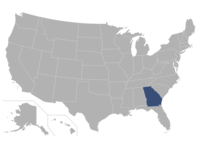
Atlanta, GA