Wyatt operator files for Chapter 11 bankruptcy protection
Jul 13, 2026 | 12:50 pm ET
Description
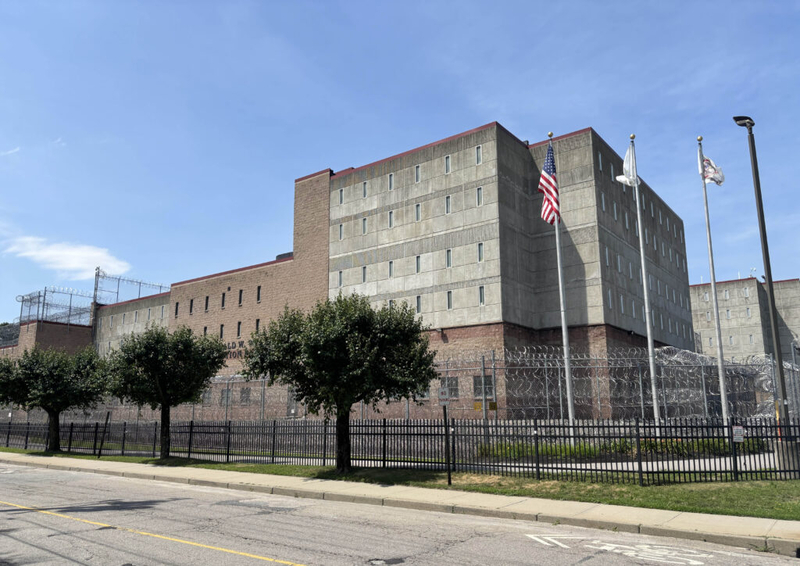
The governing body of the Donald W. Wyatt Detention Facility has asked a Rhode Island bankruptcy judge to approve a plan that would waive more than $100 million in debt and allow the facility to make guaranteed annual impact payments of $250,000 to the city of Central Falls. (Photo by Philip Eil/Rhode Island Current)
Rhode Island’s only municipal corporation-operated detention facility filed a Chapter 11 bankruptcy petition in Providence federal bankruptcy court Friday, in hopes of resolving long-running disputes with bondholders and its host city.
In federal court filings, the Central Falls Detention Facility Corporation, the governing body of the Donald W. Wyatt Detention Facility, presented a plan that would clear a path for its continued operation: Bondholders who underwrote the Wyatt’s mid-2000s expansion would waive more than $100 million in debt, leaving a balance of $67.5 million. That would allow the facility to make guaranteed annual impact payments of $250,000 to the city of Central Falls.
If the court approves, the bondholders’ $130 million lawsuit against the facility filed in 2019 would be dismissed. Settlement negotiations in that case have been ongoing for more than three years, according to the case’s docket.
The case will be overseen by Bankruptcy Judge John Dorsey in the U.S. Bankruptcy Court for the District of Rhode Island. The court has created a “Central Falls Detention Facility Corporation” webpage to provide information about the case. Dorsey presided over the first hearing for the case Monday morning in Providence.
Chapter 11 cases involve debtors who seek to reorganize their debts, not cease operations. And the Wyatt bankruptcy filings indicate that the facility has no plans to close, nor end its relationship with Immigration and Customs Enforcement (ICE) — goals Wyatt critics have called for in recent years.
Instead, the proposed plan will “allow the facility to remain viable and continue operating,” according to a February resolution passed by the Central Falls Detention Facility Corporation and included in the filings.
In a statement, a spokesperson for the facility described the bankruptcy as a win for multiple parties.
“This restructuring, which will be accomplished through a Chapter 11 plan, will adjust the bond debt to a sustainable level, reset the Facility’s relationship with the city, and position the facility for continued and reliable operations for years to come,” said Lisa Doucet-Albert, spokesperson for the Central Falls Detention Facility Corporation. “The filing will allow the facility to meet its obligations to its bondholders, operate the facility in a safe and humane way and employ more than 250 dedicated correctional professionals.”
Central Falls Mayor Maria Rivera — who, in 2019, as president of the Central Falls City Council, called for the facility’s closure — struck a more measured tone.
“For the first time in many years, Central Falls is finally receiving impact fees from the Wyatt, something Central Falls taxpayers have deserved all along,” Rivera said. “At the same time, I remain deeply concerned about the federal immigration policies that continue to drive the use of facilities like Wyatt. People seeking safety and opportunity should not be treated like criminals.”
Rivera vowed that the city will “remain vigilant” in ensuring that anyone held at the Wyatt is treated with dignity and receives access to healthcare and legal resources.
Lawyers for the bondholders did not immediately respond to a request for comment.
The Wyatt case appears to be what is known as a “prepackaged” bankruptcy, said Geoffrey McDonald, a professor of law at the University of Massachusetts who specializes in bankruptcy and reviewed some of the initial filings. In such cases, major stakeholders have reached an agreement before the debtor files its case. “It’s much longer and much messier if you don’t come in with your plan basically agreed to,” McDonald said.
“Pre-packaged” bankruptcy cases can be approved by a judge in a matter of months, McDonald said. The case will likely remain under court supervision for years to come, to ensure that the parties involved are abiding by the agreed-on conditions.
In the Wyatt case, a restructuring support agreement between stakeholders stipulates that the Wyatt must obtain a court order confirming its bankruptcy plan no later than Oct. 8, according to filings.
A new chapter
In April, the Wyatt made a payment of $250,000 to Central Falls, its first impact payment to the city since 2021. According to the plan submitted with the Wyatt’s Chapter 11 filing, the facility will pay the city $400,000 within 12 months, and $250,000 annually, as well as making annual charitable donations of $25,000 to “agreed-upon non-profits providing services in the City for public safety.”
The Wyatt opened in 1993 to meet a pressing need for pre-detention federal jail space in Rhode Island, resulting in excessive costs to taxpayers for shuttling pre-trial detainees to and from far-off jails for local court proceedings, longtime U.S. Marshal for Rhode Island Donald Wyatt said at the time. The facility is named for Wyatt.
The U.S. Marshals Service, which uses the facility to hold pre-trial federal defendants from around New England, remains the facility’s biggest client. The Marshals’ detainee population reported at the latest CFDFC meeting on July 6 was 554.
Several communities in Rhode Island, including Cranston, Hopkinton and North Kingstown, rejected proposals to host the new facility. But the tiny, cash-strapped city of Central Falls welcomed the detention center as a potential revenue source. In 1993, the year the facility opened, Donald Wyatt called it a “win-win’ situation for everybody.” The following year, then-Central Falls Mayor Thomas Lazieh, predicted in a Providence Journal op-ed that, once the city owned the facility outright after paying off its mortgage in 19 years, “the annual revenue to Central Falls won’t be $200,000 each year, but more than $3 million.”
This restructuring, which will be accomplished through a Chapter 11 plan, will adjust the bond debt to a sustainable level, reset the Facility’s relationship with the city, and position the facility for continued and reliable operations for years to come.
At the time it opened, the Wyatt was the nation’s “first publicly owned and privately operated adult secure correctional facility,” according to its website.
In its early years, the Wyatt did produce a windfall for the struggling city, with more than $5 million in payments flowing to Central Falls from 1994 to 2008, according to a 2012 Rhode Island Senate report.
That financial success, combined with an expected influx of immigration-enforcement detainees following the Sept.11, 2001, attacks, led administrators to green-light a massive expansion that more than doubled the facility’s capacity to 782 detainees. To pay for the expansion, the corporation issued $106 million in bonds in 2005. Construction was completed in 2006.
Friday’s filings acknowledge the facility has operated well below its maximum capacity for the past five years, with a daily population averaging 675 detainees.
One document from Friday’s court filings states the Wyatt has “been in default for over ten years” on its bond payments. The facility sought and received a temporary receivership in Rhode Island Superior Court in 2014, citing lagging population and an inability to make its bond payments.
The high-profile death of a detainee from apparent mistreatment and medical neglect in 2008 prompted ICE to withdraw as a client for a decade, leaving the facility struggling to pay bills.
ICE returned as a client in March 2019. In April, Wyatt’s oversight board — bowing to public outcry — voted to suspend the agency as a client, prompting the bondholders’ lawsuit over what they called a breach of the facility’s fiduciary duty. The agency has remained a client while that litigation has proceeded.
Friday’s filing was received with mixed emotions by lawmakers representing the city. During the 2026 legislative session State Rep. Joshua Giraldo, co-sponsored an unsuccessful bill that aimed to block any state or municipal entity from engaging in contracts for detaining people for civil immigration violations. The Wyatt is the only facility in Rhode Island which participates in such contracts.
In a May protest outside the Wyatt, Giraldo mentioned “repeated allegations of abuse, neglect, and inhumane conditions” inside the facility, and described it as a place that had “failed our city time and time again…and created far more harm than good.”
In response to the Friday’s filing, Giraldo said, “Central Falls should never have to depend on detention as an economic strategy. But as long as the Wyatt remains here, the City must be treated fairly and receive the resources it is owed.”
- July 14, 202610:01 amCorrection: An earlier version described the Wyatt as "Rhode Island’s only privately-operated detention facility." That is incorrect. When it opened, the facility was privately operated by Cornell Corrections (now the GEO Group). But since 2007, it has been operated by the Central Falls Detention Facility Corporation, which is a quasi municipal corporation created under state law, and subject to the Open Meetings Act and Access to Public Records Act (APRA).
Providence, RI