Interested in becoming a delegate to select Graham Platner’s replacement? Here’s how.
Jul 13, 2026 | 8:36 am ET

Description
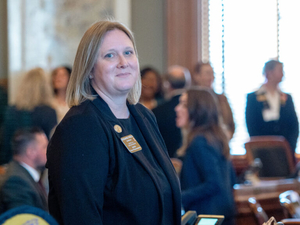
Attendees of the Maine Democratic Party's state convention in Bangor on May 31, 2024. (Emma Davis/ Maine Morning Star)
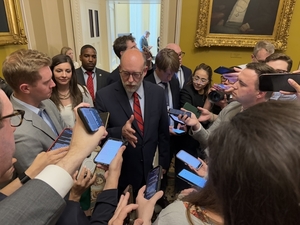
Since Graham Platner officially withdrew from the U.S. Senate race Friday, the Maine Democratic Party has finalized its process to select his replacement. That includes details about how to become a delegate, released over the weekend.
On July 18 and 19, all 16 counties will hold delegate nominating meetings, either in-person or virtually, during which 500 people will be selected to be sent to the convention on July 25 in Bangor to select the new nominee.
Anyone interested in serving as a delegate must file a declaration of intent by 5 p.m. on July 15, through the Maine Democratic Party website.
The convention will have 601 delegates total, with 101 members of the state committee also serving as delegates.
Only Democrats registered in a given county as of June 9 and listed as verified in the state party’s voter file are eligible to participate and vote in their county’s delegate nominating meeting. Participants are encouraged to preregister by 5 p.m. July 16 through the state party website.
Voters not enrolled with a political party — who were able to vote in the semi-open primary in which Platner had secured the nomination — are not able to serve as delegates or vote for delegates.
Maine Democratic Party Chair Charlie Dingman said in a statement on Saturday that the process was designed to be “representative, transparent, and accessible.”
“These county meetings are a key step in ensuring that Democrats across Maine will be the decisionmakers in selecting our nominee,” he added. “We encourage every eligible Democrat to get involved as we move forward together to nominate the strongest candidate to defeat Susan Collins.”
Platner’s exit clouds Democrats’ hopes of winning back the U.S. Senate majority and leaves just two weeks for the state party to name his replacement by a July 27 deadline.
Platner, who had secured the Democratic nomination on June 9, announced his intention to suspend his campaign in a video on Wednesday, after an accusation of sexual assault on Monday tanked his support from Democrats. He then submitted a formal withdrawal in writing to the Maine Secretary of State’s Office on Friday, making that decision official.
Platner had weathered a series of controversies during his campaign but the sexual assault allegation first reported by Politico resulted in national and local Democrats overwhelmingly calling for him to drop out.
The date, time and location of each of the delegate nominating meetings will be announced by the Maine Democratic Party no later than July 15. That’s also the same day candidates have to submit their declaration of intent.
Each county will get one-third of the delegates it received at the 2026 state convention, which were assigned based on the 2024 primary turnout. During these county meetings, the people who receive the most votes up to the number of delegates allotted, and alternates, will be elected. Counties will only administer one round of voting.
This differs from how voting will work at the July 25 convention.
At the convention, voting on candidates will be done in rounds until one candidate secures a majority. The five candidates who receive the most votes in the first round will advance to a second round, and each subsequent round will eliminate the candidate with the least votes until one candidate is chosen.
Each qualifying candidate will have an opportunity to address the delegates at the convention before they vote.
So far seven people have filed with the Federal Elections Commission to run for the Senate to replace Platner as the Democratic nominee. In order to qualify for the convention, candidates have to submit 500 nominating signatures from registered Democratic voters, among other requirements the party established over the past few days since specifics are not outlined by state law.
One of the prospective candidates, Nirav Shah, already announced on Sunday that his campaign reached that threshold, collecting more than 800 signatures in a few days, though the party still must verify them.
This comes after Shah, a former candidate for governor and director of the Maine CDC, has hosted two town halls since announcing his campaign for Senate, the first of which on Saturday drew a crowd of more than 200 according to his campaign.
Jordan Wood, who had run for Senate before switching to unsuccessfully run for the House, is back vying for the Senate seat and also plans to re-start his town halls.
And Wood followed Troy Jackson, former Maine Senate President and gubernatorial candidate, in trying to reach prospective supporters and delegates online. Both now have online forms circulating asking supporters if they would try to be chosen as a delegate by their Democratic county committee and nominate them at the convention, or attend a local caucus and support delegates.
Many have been asking for donations, as has the party itself, because whoever the new nominee is will have far to go to catch up to Collins when it comes to fundraising.
Augusta, ME