New report finds health of Snake River has improved, recommends further intervention
Jul 13, 2026 | 6:20 am ET
Description
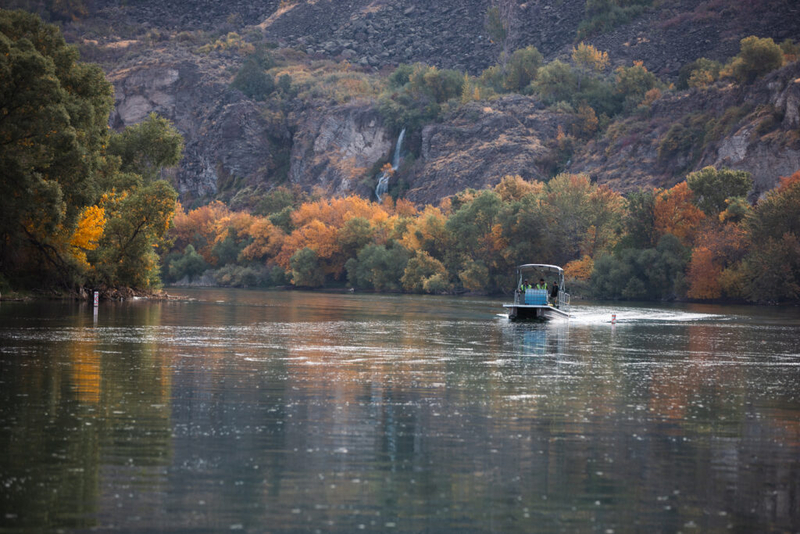
The water quality of the Snake River has improved, but it still faces threats from invasive species and nutrient runoff, according to the Idaho Conservation League (Photo courtesy of the Idaho State Department of Agriculture).
A new report by the Idaho Conservation League found that the Snake River, which spans the breadth of the state, has made dramatic progress in water quality, but ongoing threats still make the river unsafe in many areas.
In its first-ever ‘State of the Snake’ report, the ICL, a nonprofit dedicated to environmental issues in Idaho, used data from a variety of sources to capture a comprehensive understanding of the river’s health.
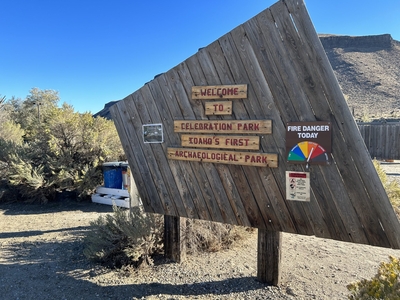
The ICL found that the concentration of phosphorus, historically the river’s main pollutant due to its use in agricultural practices, has declined substantially in the last three decades. Measurements taken at Celebration Park in Canyon County show that total phosphorus concentrations have decreased by around 33% since the 1990s.
According to the report’s author Josh Johnson, the ICL’s central Idaho director, improvements in certain areas of the river’s health are often complicated by changes in other factors.
“Even though…one issue with the river is getting better,” Johnson said, “we’re seeing these new emerging threats that are potentially getting worse, like quagga mussels and toxic algae, so it’s kind of a mixed bag in terms of the overall health of the river.”
Threats like drought, pollution remain a factor for Snake River’s health
While phosphorus concentrations have improved, agricultural runoff remains one of the largest threats to the river’s health. Concentrated animal feeding operations, which produce roughly 120 million pounds of manure daily in the Magic Valley alone, continue to pump excess nitrogen and phosphorus into the river.
And despite drought limiting the amount of water flowing through Snake River this year, Snake River trust users will not have to curtail their water usage, after Idaho Power reached an agreement with the state government.
Snake River water trust users won’t face water curtailment in Idaho this summer
As a result of pollution, the river has seen toxic algae outbreaks in reservoirs like Brownlee and Hells Canyon. Public health advisories have been triggered by such outbreaks in each of the past three summers, warning people, pets and livestock not to touch the water.
At the same time, quagga mussels, one the most destructive invasive species in North America, have posed a serious threat to the river’s ecosystem since they were first detected in 2023.
The state has taken dramatic action to fight the species, applying massive doses of copper-based molluscicide to a six-mile stretch of river near Twin Falls.
“One of our greatest success stories as a state has been the coordinated, rapid response to quagga mussels last fall, but we knew we would be on watch for a period of five years,” Idaho Gov. Brad Little said in a September 2024 statement after the invasive species was detected in the Snake River a second time. “I have great confidence in the team at the Idaho State Department of Agriculture and their many, many partners to continue to tackle this problem with minimal disruption to the public.”
While the intervention worked, a U.S. Geological Survey study found that invertebrate species in the affected area of the river decreased by as much at 94%, and over half of unique species were replaced by other organisms after the treatment.
“There is no real winning with this quagga mussel situation. You’re just kind of balancing the short-term harms versus the long-term harms,” said Johnson.
The report also makes a series of recommendations on how to improve the river’s health, including through better data collection and state funding to fight toxic algae.
A “watershed-scale restoration initiative” is also necessary, according to the report. The ICL envisions a unified group of state, federal, NGO, tribal, and private industry stakeholders coming together to clean up the river.
Still, Johnson acknowledges that it may not be so simple to get everyone on board.
“We need to find solutions to improving the water quality in the Snake River that don’t come at the expense of taking away the ability of the river to provide for agriculture or to provide for these other industries,” he said.
“In the long run, a healthier river benefits everyone ultimately, and so we just need to figure out the best way to do that,” he added.
Boise, ID