From Alligator Alcatraz to Ecuador: A Cuban detainee’s journey through ICE’s Arizona facilities
Jul 10, 2026 | 5:59 pm ET
Description
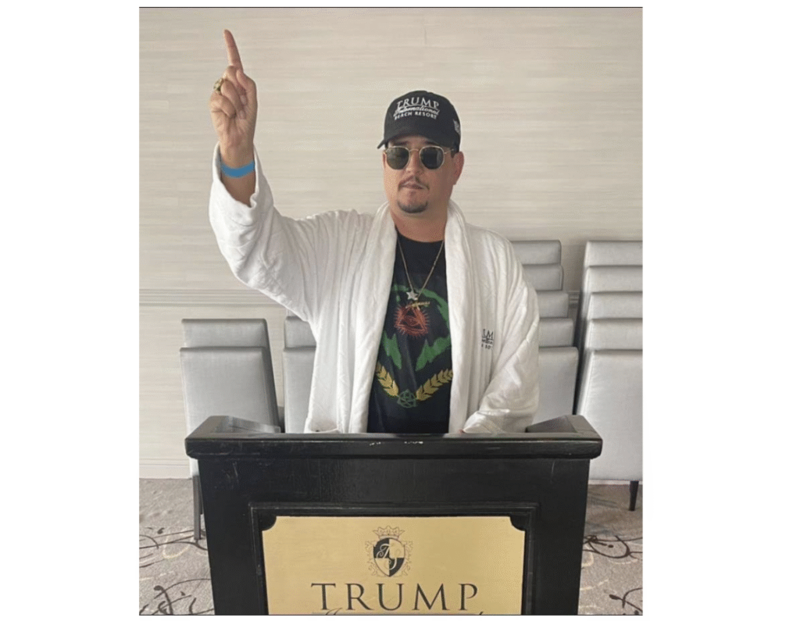
Rogelio Bolufé poses for a picture at a Trump resort in Florida in an undated photo. The 43-year old Cuban was deported by ICE in May 2026 and claims mistreatment while in their custody. (Courtesy Haymel de la Vega)
Rogelio Bolufé’s journey in U.S. Immigration and Customs Enforcement detention has taken him all over the country, including multiple stops at some of Arizona’s most notorious facilities. His journey ended with a deportation flight to Ecuador, a country the native Cuban had never been to.
The 43-year-old immigrant who had been living in Miami fought ICE and the U.S. Department of Homeland Security to avoid being deported back to Cuba, citing fears that many other Cuban immigrants have of returning to a country that has a documented history of violent retribution against dissenting voices. He arrived in the United States via Mexico in 2020, eventually finding his way to Florida.
Now Bolufé is in Guayaquil, Ecuador, where he tells the Arizona Mirror that he hopes the American people “wake up” to what he says are constitutional violations in detention centers across the country, including Arizona.
“When the rights of a few are violated and silence is maintained, the rights of all are and will be in danger,” Bolufé said in an interview conducted on the encrypted messaging app WhatsApp. “This is not an attack against me, but against the spirit of the American nation and its founding values. The First Amendment, freedom of speech, has been attacked. And this has been in retaliation for exercising my freedom of speech.
“All my constitutional rights have been violated, and that is an attack on due process, protected by the Fifth Amendment. Wake up!”
A spokesperson for DHS told the Mirror that Bolufé received “full due process” prior to his removal from the United States.
The spokesperson also said Bolufé overstayed a six-month B2 visitor visa issued to him in 2020 and has a criminal history of possession of cocaine. The cocaine charge, which is what brought Bolufé into ICE custody in Florida, was later dismissed in court prior to his deportation proceedings.
Bolufé said that the transfers he experienced and his eventual deportation were not part of the ordinary process, but the machinations of an organization seeking to silence him as he sought to call out abuses in the system. He was vocal during his time in detention, organizing with other detainees, writing letters to the editor and even started working to get elected officials involved.
And in the middle of a hunger strike to protest conditions, Bolufé started getting transferred more and more.
For long-time watchers of ICE and its detention centers, Bolufé’s story is not uncommon. But the mechanisms for oversight of the detention system have been gutted, making conditions worse for immigrants.
“These places were always overcrowded, there were always issues, there was always medical neglect, but we are definitely hearing that things are getting worse,” Liz Casey, a social worker with the Florence Immigrant and Refugee Rights Project told the Mirror, pointing to the closures of internal watchdog offices meant to take complaints of detainee abuse.
“There really is no way to get anybody accountability and help at this point,” she said.
FL – NM – TX – AL – AZ – WA – AZ – EC
Bolufé started his journey at the infamous “Alligator Alcatraz,” where he said he spent between seven and 10 days chained by his feet and hands for 24 to 36 hours at a time in freezing temperatures with the lights blaring on him and his fellow detainees at all times.
That experience left him with injuries to his left hand, and it was the first facility where he began gathering the testimony of other detainees. He had signed documents with up to 40 other people all agreeing that they were experiencing the same conditions.
After that, he was sent to New Mexico to the CoreCivic-run Torrance County facility, where he encountered more problems. While there, Bolufé told Source New Mexico, a sister publication of the Mirror published by States Newsroom, that he was denied access to legal counsel and his legal documents.
When Bolufé began a hunger strike over these issues a few months later, the transfers began.
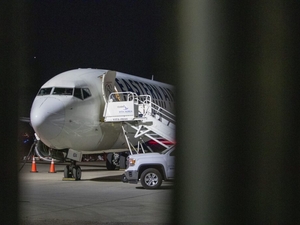
First he was sent to the Albuquerque ICE field office, then an ICE facility at Fort Bliss in Texas, then to Alabama. From there, he was shipped to the Arizona Removal Operations Coordination Center at the Mesa-Gateway Airport, where he was put on a plane to a facility in Tacoma, Washington.
All five transfers happened within the span of 48 hours.
“The frequency at which they moved Rogelio around was unique,” said Ian Philabaum, the program director for Innovation Law Lab, a group that does weekly legal visits at the Torrance facility in New Mexico.
Philabaum has been helping detainees there understand their rights since 2019 and said that, while moving people around is part of the immigration system, the rate at which Bolufé was moved was striking.
Eventually, Bolufé was sent back to Arizona, where he was held at ICE’s Florence Detention Center. While there, he continued documenting what he saw as he pursued an attempt to get a Green Card under the Cuban Adjustment Act of 1966.
While there, he told the Mirror that all his legal documents were confiscated including “ongoing legal strategies against (ICE), my notes, documents related to ongoing lawsuits, letters and correspondence to politicians explaining the situation of ICE prisoners, my contact book containing all the phone numbers of witnesses,” as well as religious items and his Cuban passport.
DHS did not respond to questions about what happened to Bolufé’s passport.
“I was denied medical attention, despite submitting 10 requests and four formal complaints. I suffered from migraines for three consecutive days without relief,” Bolufé said of his time at Florence. “There is relatively no medical care, which endangers the lives of the detainees, and denying them access to send and receive mail is illegal and unconstitutional and is considered ‘denial of access to courts,’ which is a fundamental right protected by the constitution.”
Medical neglect
Medical neglect has become a major issue at detention facilities, with Arizona taking center stage in some of these cases.
Earlier this year, Emmanuel Damas died from an untreated tooth infection while in ICE custody at the Florence facility. The death rate of in-custody deaths of migrants has doubled under the Trump administration, according to an analysis by Reuters.
“There is nobody to have eyes on them or to investigate this medical neglect that is happening that is leading to these additional deaths,” Casey from the Florence Project told the Mirror.
Florence Project this year reported that conditions in Arizona, particularly at the Florence Service Processing Center, have continued to deteriorate as the Trump administration has ramped up its mass deportation agenda. Additionally, increased attention at the Mesa-Gateway temporary hold facility seems to have caused ICE to overflow people to the Florence Service Processing Center as well.
This year, the Mirror reported on overcrowded conditions at the ICE facility at the Mesa-Gateway Airport, leading to increased congressional oversight visits. Now, ICE appears to be moving those people to other facilities in the state, Casey said.
Much like Mesa-Gateway, the Florence Service Processing Center is meant to act as a temporary holding facility: It is designed to house people for a short period of time, not the days or weeks that the Florence Project has found is actually happening.
Casey said that, in many cases, it is people “seemingly waiting for their deport” in rooms with no beds or adequate amenities, often wearing the same clothes they were arrested in — sometimes for weeks on end.
But according to Bolufé, the main detention center in Florence isn’t much better, either.
In a letter shared with the Mirror that was signed by approximately 50 other detainees at Florence, Bolufé and these detainees said that the facility lacked proper drinking water. Instead, those there were drinking out of a communal spigot and were not provided cups to do so.
Now that facility is reporting a measles outbreak, which is leading to the suspension of in-person visits from all non-legal representatives.
Bolufé also contends that high-level criminals were being detained alongside non-violent immigrants with no criminal records, including pastors and the elderly.
“Prisoners alongside murderers, violent criminals, traffickers,” Bolufé said. “In Florence they mix them all together.”
In a statement to the Mirror, DHS disputed Bolufé’s claims. It said that “all new arrivals are issued a cup” to use for water, and if the cup is lost, “CoreCivic staff promptly provide a replacement to ensure continued access to potable water.”
DHS also said that all detainees are provided with three meals a day, “clean water, clothing, bedding, showers, soap and toiletries.”
And ICE also contended that detainees are separated “based on security risk, criminal history, gang affiliation, and other safety factors. Known gang members and security threat groups are housed separately to protect other detainees, staff, and facility operations. ICE’s detention standards require facilities to maintain secure, orderly environments while maximizing detention capacity and public safety.”
Bolufé’s troubles didn’t stop at Florence.
Once he was transferred to AROCC for a final time in May, he also experienced other issues.
The Mesa facility made national headlines after a surprise oversight visit, prompted by the Mirror’s reporting, led to lawmakers discovering detainees packed in rooms “like sardines” at a facility that is meant to hold people for no more than 12 hours.
“They keep you for up to a week,” Bolufé said.
He called it a “very cold place” where no blankets are provided.
“They cram everyone into this place, and you have to sleep on the dirty floor without blankets,” Bolufé said. “For food, they give you bread with mortadella and water. In our case, they gave us the bread at 9 p.m. after we had asked for it a lot because we were very hungry.”
Other detainees of the Mesa facility have described clogged toilets that have flowed onto the floors where detainees sleep, a claim denied by DHS.
From Mesa, Bolufé was deported to Ecuador, which happened without any notice. He said he had no money and no cell phone, and the only clothes he had were what the detention center had given him.
“It’s unbelievable that all this is happening in the United States,” Bolufé said. “If I’m going to continue the fight to the end, this isn’t about me, it’s about the spirit of the American nation, which is the Constitution.”
But that fight is one that is increasingly more difficult.
Oversight of facilities like AROCC and Florence exists in theory, but appears to be minimal, at best. Such oversight generally is done internally by the Office of the Inspector General or internal DHS units that have all been gutted by the Trump administration.
The administration closed the office meant to provide oversight of detention center abuses earlier this year.
Additionally, facilities like the one in Eloy and the Central Arizona Florence Correctional Complex are run by private companies, making transparency even more difficult.
Those facilities are both run by CoreCivic, which reported a 25% increase in total revenue for the first quarter of this year, largely attributing government contracts with DHS and ICE to their success.
“Whether or not the federal government runs a better facility than CoreCivic becomes a moot point because the federal government is ultimately the entity where the buck is supposed to stop for the conditions and due process that occur in these privately run prisons,” Philabaum said of the differences between the two types of detention facilities. “So, there is no accountability, there is no transparency. The federal government, DHS and ICE, have private prison companies’ backs on any allegations and support them regardless.”
That lack of oversight chills the willingness of detainees to even report any abuses they may see.
“We hear that a lot, and people are absolutely afraid to report conditions or to file complaints even if the complaints aren’t doing a lot to even help,” Casey said of the complaint process and fears of reprisals by the government.
But both Philabaum and Casey said they’re dedicated to continuing to speak to those who need it and are willing to report what they’ve seen. That work, they said, is especially important given the gap now created by a lack of internal oversight.
In his conversation with the Mirror, Bolufé reiterated his call for the American people to “wake up” to what he says are abuses by ICE and DHS that could have a trickle-down effect on all United States’ citizens.
“If we cannot trust the agencies designed to protect the law and the Constitution, the United States is in danger — all of humanity and the world are in danger,” he said.

Phoenix, AZ