SC agency considers entering the carbon business to improve state forests
Jul 10, 2026 | 4:42 pm ET
Description
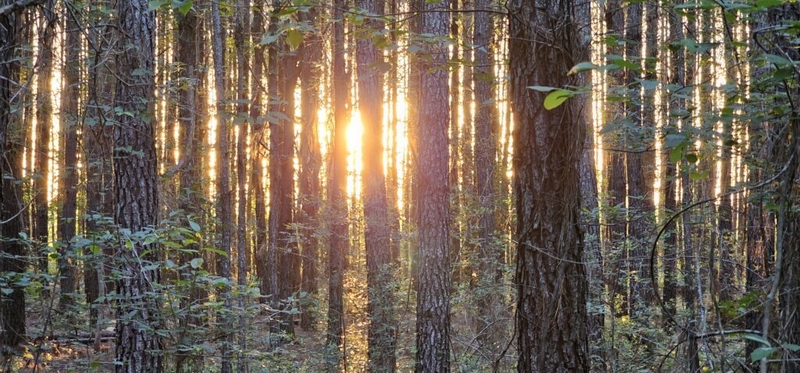
South Carolina’s Department of Natural Resources awarded a contract on Wednesday, June 17, 2026, to Milliken Advisors for a feasibility study on selling carbon credits. (Photo provided by The Conservation Fund)
COLUMBIA — South Carolina could generate money to manage the state’s protected forests by selling credits to polluting companies.
Exactly how that might work remains unknown. The state Department of Natural Resources is paying a consultant nearly $110,000 to report on whether it’s possible and how.
The winning contract, awarded last month, went to Columbia-based Milliken Advisors. It has until Dec. 16 to create a plan to make agency land eligible for so-called carbon credits, according to the contract posted on the state’s procurement website.
The agency manages 1.6 million acres total statewide, which includes forests, wildlife preserves and historically important sites. How much land might be involved in the credit swap remains unknown. Other questions include how many credits the state might offer and what prompted the agency to get into the carbon credit business in the first place.
Neither the agency nor the company responded to multiple messages sent over several weeks by the SC Daily Gazette.
Carbon credits are essentially a way for companies to invest in projects that reduce greenhouse gasses. The argument is, while a company may not be able to eliminate all of the carbon dioxide and other climate change causing pollutants emitted by its operations, it can fund projects that reduce carbon globally.
One carbon credit is equivalent to one metric ton of carbon dioxide, which is what one tree will absorb over a 40-year period, according to researchers at Texas A&M University. These credits are sold on carbon markets. Governments regulate credits done to comply with state or federal carbon reduction laws. Voluntary purchases by companies that want to tout themselves as green are handled on private platforms based on supply and demand.
What a company buys with a credit might include the planting of more trees, fewer trees cut down, and/or removal of growth that can contribute to forest fires.
In most cases, a carbon credit buyer does not have to purchase credits in the same state where it’s polluting. California’s program, for example, allows companies to use credits from approved projects anywhere in the United States.
Some of the largest buyers of carbon credits are oil and gas companies. Airlines and automotive companies also are major purchasers. And amid the boom in artificial intelligence, tech giants such as Google, Microsoft, Meta and Amazon are turning to carbon credits with increased frequency as they seek to offset the technology’s massive energy needs.
In the Department of Natural Resources’ case, the agency wants to improve forests located on the wildlife management areas, heritage preserves and conservation easements it controls, according to the agency’s request for bids, posted in April.
More trees mean more vegetation to absorb carbon dioxide in the atmosphere, releasing oxygen in its stead.
That’s where Milliken Advisors comes in.
The different swaths of land managed by the Department of Natural Resources come with different sets of rules about what it can and cannot do to alter its forests, depending on whether the land is geared toward wildlife or preservation. The advisory company will tell the agency what it’s legally allowed to do and whether those actions will be enough to meet internationally recognized standards for a carbon credit eligible project.
Milliken and its partners have done this kind of thing before, largely on commercial and working timber property rather than public lands.
Milliken consultants worked with Norfolk Southern Corporation on its 14,400-acre timber and wildlife preserve, Brosnan Forest, in the Lowcountry.
Beginning in 2008, Milliken helped the railroad giant restore the coastal wetlands and forest. The project was the state’s first improved forest management carbon project, according to Milliken’s 51-page application with the Department of Natural Resources. The agency provided a copy of the application in response to a public records request by the Daily Gazette.
Improved forest management refers to the process of increasing an existing forest’s ability to process carbon. This is usually done by reducing how often timberland is cut, allowing trees to grow older so they can take in more carbon, controlled burns to reduce the risk of forest fires and cutting back other vegetation that may compete with trees for nutrients.
At the Brosnan Forest, the company had more than 2,000 plots that were carbon credit eligible and selling the credits those plots generated brought in more than $1 billion over a 15 year period.
Milliken partner Lucas Clay, a forest ecologist at the Georgia Institute of Technology and adjunct professor at Clemson University, developed an improved forest management study for Clemson’s 19,200-acre experimental forest. Milliken called that project “a near-perfect analog” to what the Department of Natural Resources hopes to accomplish on its lands.
Columbia