Oklahoma June primary election saw low independent turnout
Jul 10, 2026 | 4:00 pm ET
Description
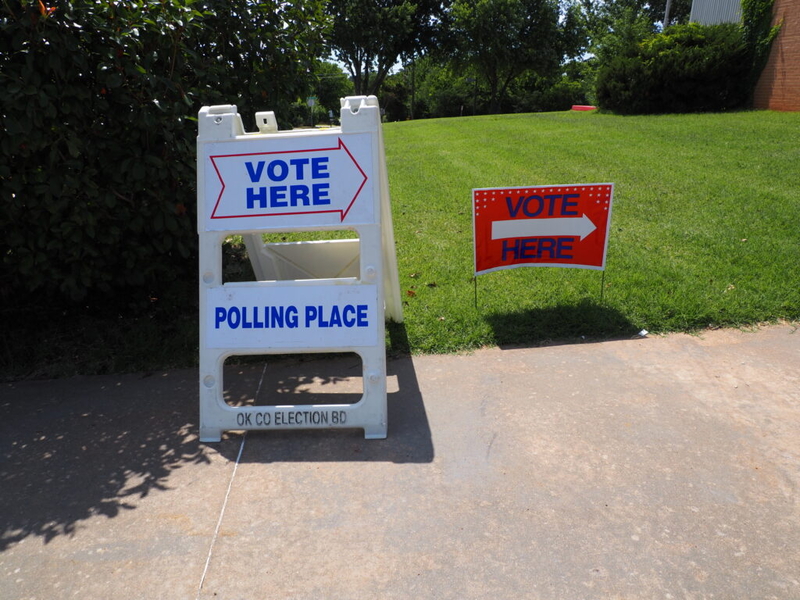
Signs point voters to the polling place at the Millwood High School Field House on June 16, 2026 in Oklahoma City, Oklahoma. (Photo by Courtney Bell/Oklahoma Voice)
OKLAHOMA CITY — June’s primary failed to draw independent voters, according to partisan participation numbers provided by the state Election Board.
Despite making up about a fifth of the state’s voters, only 9% of registered independents cast a ballot in the lone race that was open to them, according to the State Election Board.
Slightly over 45,800 independent voters weighed in on State Question 832, which had sought to gradually increase the state’s minimum wage to $15 an hour by 2029, records show.
Republicans composed the majority of the nearly 631,400 Oklahomans who cast ballots for State Question 832. Just over 64% of votes cast were from registered Republicans. Democrats made up about 28% of votes cast. Independents and Libertarians comprised about 7.25% and 0.4%, respectively. Libertarians, which make up nearly 1% of registered voters, had no contested primaries, so they too could only vote on the state question.
This primary was the first in about a decade where Democrats did not open their contests to unaffiliated voters, which likely damped turnout, said Seth McKee, a political science professor at Oklahoma State University, whose research specializes in political participation and elections.
Because independents were barred from weighing in on all but one issue on the ballot, McKee said their turnout numbers were “heroic.”
“Speaking as someone who’s unaffiliated, there’s almost no incentive,” McKee said, “and yet you still find a non-trivial number getting out there.”
The closed primaries coupled with Oklahoma being a Republican-dominated state explains why such a small percentage of independents participated, McKee said.
Overall, only 26% of registered voters cast ballots, marking a sharp decrease from the 2018 primary, the state’s most comparable recent election.
McKee said turnout could have been higher if Democrats opened their primaries, but even that could feel pointless in a state where Republicans outnumber Democrats by an over 2 to 1 margin.
Voter participation is expected to be even lower in the Aug. 25 primary runoff, but McKee says there will be a higher turnout for the November general election, in part thanks to unaffiliated voters who will show up. All registered voters can weigh in on candidates in the general election.
“When you think about those people who essentially have voluntarily disenfranchised themselves as unaffiliated, like myself, a lot of us will be there in November,” McKee said. “That’s our opportunity.”
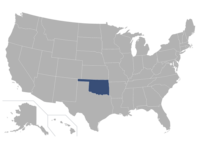
Oklahoma City, OK