Wisconsin Supreme Court rules Attorney General can send settlement money to specific accounts
Jul 10, 2026 | 2:32 pm ET
Description
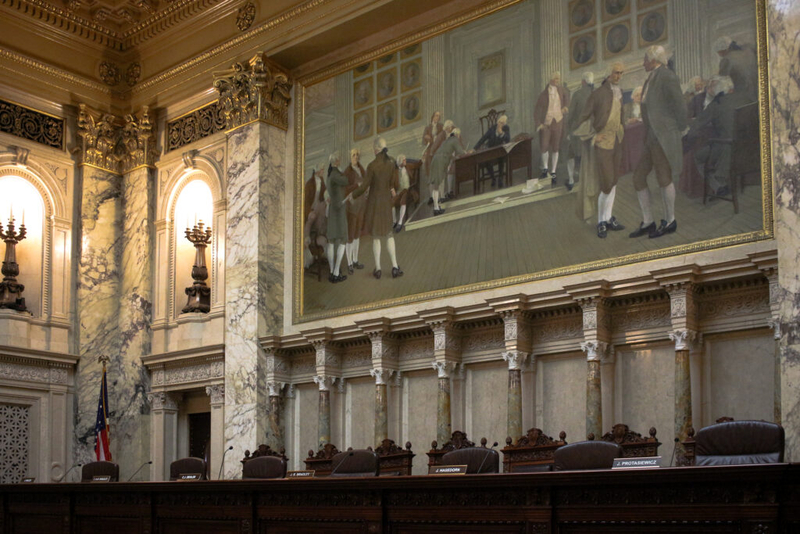
The Wisconsin Supreme Court chambers. (Photo by Henry Redman/Wisconsin Examiner)
The Wisconsin Supreme Court ruled Friday that the Wisconsin Attorney General can determine where to send money the Department of Justice receives through settlement agreements.
The 5-2 decision — which includes a partial concurrence from Justice Brian Hagedorn — strikes down a measure enacted by the Republican-controlled Legislature to take power from executive branch agencies after the elections of Democratic Gov. Tony Evers and Attorney General Josh Kaul in 2018.
During that lame duck period at the end of a Republican administration, the Legislature enacted a law that requires the attorney general to deposit settlement money into the state’s general fund, which is largely controlled by the Legislature. However within the general fund are many sub-accounts through which many of the state’s programs and services are rendered. State law distinguishes between depositing money into the general fund and crediting money to specific programs.
Since the lame duck law’s enactment, Kaul has put settlement earnings into the general fund and then credited the money to DOJ programs within the fund. The Legislature has argued that Kaul has been purposefully flouting the intent of the law, which was to give control over the money to legislative Republicans.
The legal dispute in the case, including at the oral arguments in March, has flipped the usual script in which Republicans argue for laws to be interpreted strictly, following exactly what a statute says.
“[The statute] entitled “Deposit of settlement funds,” provides in its entirety that ‘[t]he attorney general shall deposit all settlement funds into the general fund,’” Justice Rebecca Dallet wrote in the majority opinion. “This simple, declarative sentence identifies a class of state money (‘settlement funds’) and imposes a single, narrow restriction on where that money must be deposited (into the state treasury, specifically ‘the general fund’). It says nothing whatsoever about where that money may or must be credited after it is deposited.”
Dallet continued that the Court wasn’t buying the Legislature’s argument that a deeper meaning should be read into the language.
Quoting the Court’s precedent, Dallet wrote, “The problem with these arguments is that ‘we interpret the statutory language the legislature enacted, and will not read into a statute language that it does not contain or reasonably imply.’”
In a dissent, Justice Rebecca Bradley, partially joined by Annette Ziegler — both of whom signed off on many of the lame duck laws and their specific intent to disempower Democrats — argued that the Court’s majority was only aiming to give a legal victory to an elected Democrat in an election year.
“The majority refuses to apply the law, which favors the Republican-controlled legislature over Democrat Attorney General Josh Kaul. Lady Justice wears a blindfold, not blinders,” Bradley wrote in an opinion that also cited the 2004 film “Dodgeball.” “This is not the first time justice has taken a back seat to political interests. The members of the majority extend the Democrats’ almost unbroken winning streak in litigation against the Republican legislature since the progressives took control.”
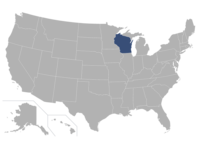
Madison, WI