RI ranked third-worst state in the country for business climate
Jul 09, 2026 | 4:58 pm ET
Description
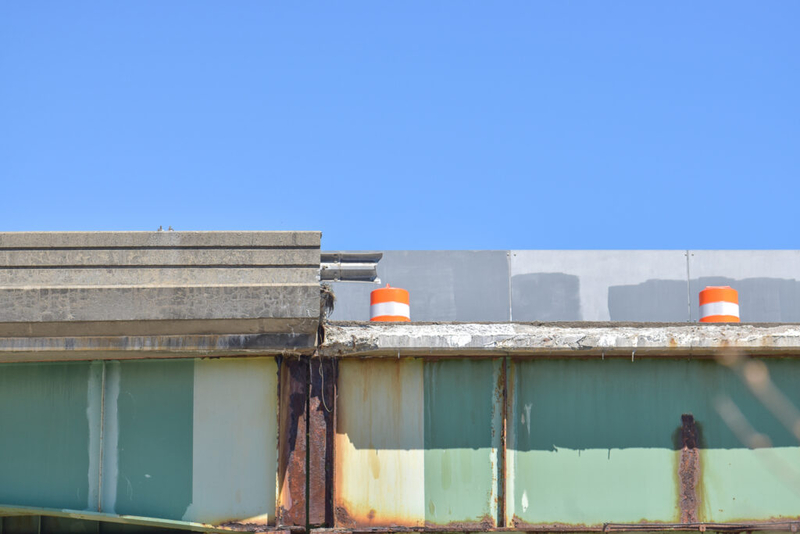
A section of the the ramp connecting Route 10 to Interstate 95 North was closed for over a week after a concrete barrier collapsed on to the train tracks below on the evening of April 24, 2026. (Photo by Christopher Shea/Rhode Island Current)
Despite Gov. Dan McKee’s repeated emphasis on “J-O-B-S,” Rhode Island’s business climate is one of the worst in the country, according to CNBC’s 2026 Top States for Business list published Thursday.
The annual ranking puts the Ocean State 48th in terms of business-friendliness, based on a 10-factor, 2,500-point scorecard that includes infrastructure, GDP and job growth, workforce development and quality of life issues. Rhode Island had the third-lowest score overall, above only Alaska and Hawaii, and finished dead last in the infrastructure category.
The state’s aging roads and bridges, including deferred maintenance and the closure of the Washington Bridge, is a frequent critique among residents and voters in public polls.
The only category where Rhode Island finished in the top half of states was quality of life, where it ranked 16th based on “livability” factors like per capita crime rates, healthcare, childcare, environmental quality, and voter and workplace protections.
Yet affordability remains a top complaint, according to a University of New Hampshire survey published Tuesday. More than four in five of the 604 residents surveyed considered the state “not very” or “not at all” affordable, while one-third were considering moving outside of Rhode Island in the next five years.
The Ocean State has a long history of poor performance on various business and economic assessments, including the annual analysis by CNBC. The TV network’s first set of rankings, published in 2007, also put Rhode Island at 48th, with poor marks in infrastructure, education and “cost of doing business.” Last year, Rhode Island ranked 46th. Its highest ever-ranking, 45th, last occurred in 2022, and the state has ranked 50th in multiple years, most recently in 2019.
The state’s poor business performance as scored by CNBC mirrors conclusions by the Rhode Island Public Expenditure Council. The tax and business policy group’s Economic Prosperity Scorecard, published in April, highlighted Rhode Island’s slow economic growth relative to other states, with the Ocean State falling behind in five out of six criteria considered over the last decade.
“These findings have serious implications for the state’s ability to create jobs, attract business investment, and grow revenue,” Michael DiBiase, RIPEC president and CEO, said in an email Thursday. “State leaders should act with more urgency to prioritize policies and strategies that stimulate economic growth and improve our business climate, and resist pursuing policies — like the millionaire’s tax — that make Rhode Island less attractive to employers and investment.”
Ohio received the No. 1 spot, with state programs providing shovel-ready development sites named as one example of its strong infrastructure program. Massachusetts ranked 15th, while Connecticut came in at 23.
CNBC says it routinely updates criteria to reflect changing economic factors as expressed by state leaders and businesses. This year’s list, for example, emphasizes infrastructure, which accounted for 18% of a state’s total score, acknowledging the need for easy access to transportation and utilities among manufacturing and data center developers. The rankings also factored in ease of permitting for the first time this year.
McKee pointed to Rhode Island’s more favorable standing in other rankings, such as those by U.S. News & World Report, WalletHub, and America’s Dashboard, as signs of his administration’s success.
“Since I have been governor, we have grown over 37,000 private sector jobs at a rate that is nearly double that of our pre-pandemic growth,” McKee said in a statement Thursday. “We are closing the education gap with Massachusetts, making higher education more affordable, improving our infrastructure at the state and municipal level, and creating policies that support families and make health care more affordable and accessible.”
- July 10, 20267:12 amUpdated to include comments from the Rhode Island Public Expenditure Council.
Providence, RI