Homelessness groups sue again in RI to block Trump’s latest HUD funding overhaul
Jul 06, 2026 | 5:38 pm ET
Description
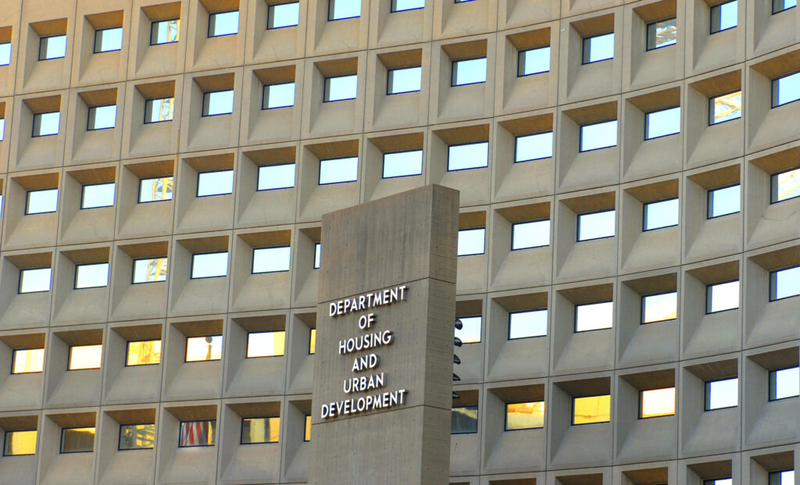
The U.S. Department of Housing and Urban Development headquarters in Washington D.C. (Photo by HUD Office of Public Affairs)
Three days after a Rhode Island federal judge struck down one version of the Trump administration’s homelessness grant rules, a coalition of communities and nonprofits is back in court challenging the latest attempt to reshape federal funding priorities.
The 68-page lawsuit, filed Thursday, July 2, in Rhode Island federal court, seeks to block a June 1 funding notice by the U.S. Department of Housing and Urban Development (HUD). The funding notice aims to shift $4 billion from HUD’s federal fiscal year 2026 Continuum of Care grants program away from so-called “Housing First” policies, which prioritize getting people into housing before providing services.
When HUD put out its original notice for its federal fiscal year 2025 grants last November, HUD sought to reallocate Continuum of Care funding toward transitional housing and other short-term interventions by capping how much money went to permanent supportive housing — units that provide a subsidized, stable residence for formerly homeless people, often those who have experienced mental illness or spent years on the streets.
“It’s essentially just more of the same, even if there are some things that have changed,” Amy Romero, chief legal counsel for the Lawyers’ Committee for Rhode Island, said in an interview Monday.
On June 29, Judge Mary S. McElroy ruled against HUD’s attempts to overhaul its fiscal year 2025 grants following lawsuits filed by a coalition of states co-led by Rhode Island Attorney General Peter Neronha and another group of cities and nonprofits.
RI federal judge strikes down HUD’s 2025 restrictions for Housing First initiatives
The same coalition of plaintiffs had filed a supplemental complaint on June 22 challenging the June 1 funding notice, but McElroy rejected the filing since it would “unduly elongate the court’s resolution of the NOFOs (Notice of Funding Opportunity) at issue.”
But the judge did leave the door open for future complaints.
“We took that as an invitation, and we accepted it,” Romero said.
In the new funding notice, HUD no longer plans to divert 60% of the funding historically dedicated to “Housing First” programs, like permanent supportive units, which have no preconditions for tenants, toward temporary transitional housing. The department instead seeks to redirect $1.3 billion — nearly a third of allocated funds for federal fiscal year 2026 — toward new projects, with a priority for transitional housing and supportive service projects.
“This threatens to destabilize communities’ homelessness response and defund proven strategies,” the lawsuit states.
HUD also intends to reject any applications submitted by organizations that operate “illegal drug injection sites” or “safe consumption sites,” according to its funding notice. Federal housing officials also encourage communities to “provide evidence” that it cooperates with local efforts to advance objectives such as quickly clearing encampments as part of its ranking criteria for federal funding.
“That’s going to make anyone in Rhode Island at a competitive disadvantage,” Romero said.
Since 2012, state law recognizes unhoused people have the right to use and move freely in public spaces, the right of privacy for their personal property, and the right to equal treatment by all state and municipal agencies.
The June 1 HUD funding notice also requires grantees to comply with federal immigration enforcement policies, along with following executive orders related to eradicating all DEI-related activities and not recognizing other gender identities beyond male and female.
“Plaintiffs and plaintiff associations’ members are all but guaranteed to lose significant amounts of funding for existing projects,” the complaint states. “They will lose hard-earned trust and goodwill in the process, both among landlords and other critical partners and among individuals and families they serve.”
Lead plaintiffs include the National Alliance to End Homelessness and the National Low Income Housing Coalition, along with Providence-based nonprofits Crossroads Rhode Island and Youth Pride Inc. — among other groups and cities across the country. Plaintiffs are represented by Democracy Forward, National Homelessness Law Center, Lawyers’ Committee for Rhode Island, and the ACLU of Rhode Island.
HUD maintains that housing and homelessness response programs must change.
“The ‘Housing First’ approach has funded this self-serving homeless industrial complex, enabling dangerous encampments, addiction, and government dependency,” a department spokesperson said in an emailed statement to Rhode Island Current. “Through our 2026 NOFO, we are restoring the program to fund results, not the status quo, establishing accountability, and putting recovery and self-sufficiency first.”
Plaintiff organizations are asking for expedited relief by Aug. 10, when many local continuums of care, including Rhode Island’s, intend to submit their formal applications to HUD. Final applications for the federal dollars are due by 8 p.m. on Aug. 26.
Providence, RI